Newsletters
 Risk Central
 Digital Edition
10 Questions for CorVel’s Candy Hammond

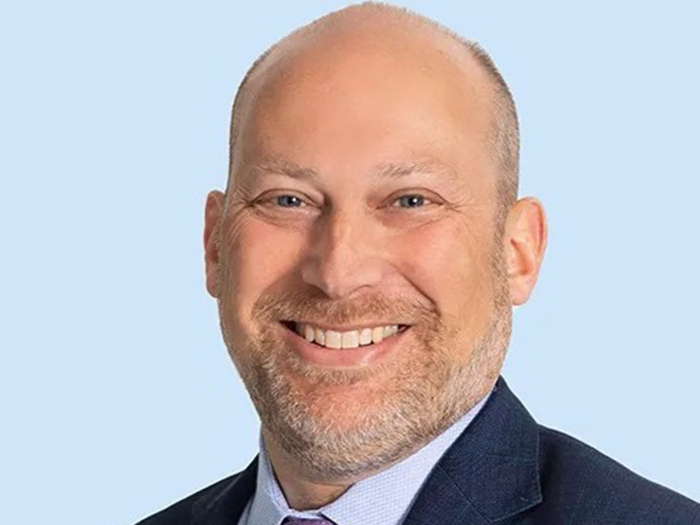
In early November, Dan Reynolds, editor in chief of Risk & Insurance, caught up with Candy Hammond, a Liability Product Manager for CorVel. What follows is a transcript of that discussion edited for length and clarity.
Risk & Insurance: Thanks for meeting with us, Candy. What regulatory changes are impacting the liability risk landscape for businesses?
Candy Hammond: We’re seeing a lot of regulatory changes, and while we often focus on the unfavorable ones, the specific type of regulatory changes determines the impact we experience. Some regulations have expanded the scope of liability or increased requirements for our clients, increasing penalties and expanding enforcement, especially when it comes to Medicare, privacy, and data control. Those areas can be a real challenge for organizations to manage.
On the flip side, we’ve had some regulatory changes that have provided relief to our clients. We’re seeing tort reforms in Florida, Georgia, and Louisiana. The changes in statute of limitations — Florida decreased from four years down to two, and Louisiana increased from one to two — both help elevate the probability and ability for people to resolve cases before litigation.
Some states have added regulations that impact the valuation of injury claims. They’re requiring disclosures around paid versus billed amounts of medical expenses and around third-party litigation funding. All of those types of regulations have had a very favorable impact.
R&I: Is there a consistent national trend in how states are approaching tort reform and insurance costs?
CH: I wish I could say that there is, but it’s really very state-dependent. What we’ve seen is that some states appear to be moving in one direction, then there’s a change in leadership within the state, and the approach shifts in the opposite direction.
This pattern can go both ways. Florida is a good example of a shift with reform. Florida was ranked #2 in nuclear verdicts prior to the 2023 reform and has already dropped to #10. It will be interesting to see what happens in Georgia. Georgia has been emerging as one of those difficult states for defendants, but has recently implemented tort reform. It’ll be interesting to see how these reforms ultimately impact outcomes.
R&I: What makes data privacy regulation so complicated?
CH: It’s very complicated because there are both federal and state components, much like insurance regulation. Additionally, the rapid pace of technology changes means that there are frequent updates which require continuous monitoring and adaptation to remain compliant.
R&I: What are the key factors contributing to the rise in nuclear verdicts?
CH: We’re seeing not just nuclear verdicts now, but thermonuclear verdicts, which is even more concerning. When you dig into what’s causing them, much of it has to do with the shift in jury dynamics.
There’s a different pool of jurors now with a different mindset, there seems to be a growing distrust of large corporations. When you factor in social inflation, plaintiff’s attorney tactics, and the rise of litigation funding, it’s not any one component driving this trend but rather the combination of all those things.
We’re also seeing decisions from lower courts that don’t seem to align with the causation standards we would have expected historically. Although there is no clear reason why we’re seeing these lower court outcomes.
R&I: What flags or indicators reveal whether an organization is proactive or reactive in liability management?
CH: Being proactive starts with loss prevention and the corporation’s culture.
Do they have a culture of transparency and accountability? Do they demonstrate a purpose? We can all think of those corporations where, when you consider what they do and what products they have, you also think about their broader impact.
From a cultural perspective, you can see how they approach their business, their community, and their employees. Those are the organizations that are being very proactive.
They’re probably seeing lower frequency across the board because they have a culture of strengthening their risk management. They have strong compliance programs and strong employee training. Employees feel cared about, and communities feel engaged.
When you think strictly of claims, frequency and severity are the two key indicators. If you see a lot of frequency, there’s likely opportunity for more proactive engagement.
Severity is where it can really start to be challenging. Even if frequency decreases—even if clients have strong cultures and do all the right things—some organizations are still seeing an increase in severity.
When we talk about shifting from reactive to proactive in liability management, it’s also about what we do after a claim. It’s about partnering with the right TPA to understand which preventative measures you need to focus on and how claims are managed after they occur.
It’s about having a prompt and thorough front-end investigation and utilizing the available services. At CorVel, we have a completely integrated program with our clinical reviews and predictive modeling, which allows us to identify high-risk cases before they escalate to litigation.
From a claims management and TPA perspective, we’re looking for those opportunities to identify cases that may have the propensity to escalate into litigation. This allows clients to really understand strengths and challenges to make informed decisions.
R&I: How do experienced adjusters and technology work together in liability management strategies?
CH: Experienced adjusters play a crucial role because predictive modeling and other AI tools, while providing strategy, don’t replace the nuanced judgment that human adjusters possess. They don’t have the understanding or negotiation skills that come with experience. In today’s world, a person isn’t going to negotiate with predictive models — we need those experienced adjusters.
Automation can streamline intake, document review, and data entry. It’s even reaching a point where it can identify potential risks. Predictive modeling can make projections, flag exposures, and identify potential recovery opportunities.
But it takes the adjuster to understand that, at the end of the day, on the other side of that claim is a person. This person has experienced an interruption to their life — whether it’s damage to their property, injury to themselves or a family member, or a combination of these. It takes that human touch to truly understand what that person is going through.
CorVel’s models ensure that experienced liability adjusters remain in control and central, using technology as a support system.
R&I: What are the first steps organizations should take to transform liability management into a strategic driver of resilience and trust?
CH: To transform liability management into a strategic driver, organizations must start with culture. This means embedding risk awareness throughout the organization.
Alignment to core values is critical. When a company says one thing and behaves differently, it creates significant challenges. Organizations need to ensure that everyone understands both the company’s values and the decision-making process.
When it comes to liability management, companies also need to partner with an insurer or TPA that shares those core values.
R&I: What emerging liability risks should company leaders be paying attention to?
CH: Nuclear verdicts are on everybody’s radar right now, and it’s the volatility that’s making it more difficult. It used to be that certain workers’ compensation claims were highly volatile and had a significant financial impact. But now, in the liability world with nuclear verdicts and expanding regulations, one claim can make a difference — millions of dollars.
Sometimes with the jury awards we’ve seen in these nuclear verdicts, people in the business are scratching their heads. When you look at the fact patterns, it’s one of those cases that shouldn’t even be in court, and yet here we are getting multimillion-dollar nuclear or even thermonuclear verdicts. That volatility is definitely a risk that needs to stay in everybody’s eyesight.
Cyber threats are another area of concern, a trend we’re seeing, and we’re going to continue to see. Companies are holding organizations’ data hostage or taking personal information and distributing it.
The expansion of regulations and their impact should be closely monitored as well.
R&I: Why are adjusters critical in an increasingly automated industry?
CH: This goes back to why adjusters are so important. If the whole world were automated, that might eliminate the need for that human touch. But adjusters understand that, regardless of what any AI or predictive model might say, there are people involved.
These people are going to make decisions — whether it be the person who was hurt or injured or the jurors — based on where they come from, their experiences, and how they feel about any given topic. These are things we have yet to figure out how to understand in the AI world, so they will remain with people.
R&I: Are there any additional aspects of liability management worth highlighting?
CH: I’d like to highlight what CorVel brings to the table for companies navigating these challenges. Our integrated platform brings together all of our data and analytics, which allows us to be very transparent with clients about their own data. This transparency makes it easy for them to access and understand their information.
The data is presented in ways that help them identify which areas to focus on to reduce frequency and spot high-potential-severity cases — even those that don’t appear to be high-potential-severity cases.
Ultimately, this balance of technology, transparency, and people is something CorVel does well. &