Newsletters
 Risk Central
 Digital Edition
Who Speaks for Labor?
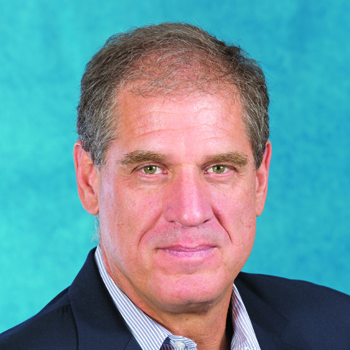
Dan Reynolds is editor-in-chief of Risk & Insurance. He can be reached at [email protected].
As a proud Boomer who attended grade school in the late 1960s, I feel fortunate that part of my early education involved exposure to the folksongs and folktales that amplified the struggles and heroics of working men and women.
In music, we were serenaded by the likes of Pete Seeger, Woody Guthrie and Joan Baez. Our storybooks included passages or references to Paul Bunyan, the fictional giant who represented the strength and stamina of loggers; and John Henry, the legend with a hammer in each hand who, the story goes, outdrove a machine in carving out a tunnel.
Our understanding of the accomplishments and sacrifices of World War II was bolstered by references to Rosie the Riveter. She was the icon who represented the courage and power of working women entering the factories to help build ships and planes. That female workforce, with so many men away on the battlefields, is credited with an important role in the Allied victory.
Much has changed, and as usual, insurance finds itself in the thick of things.
In today’s workers’ compensation landscape, insurance payers and workers’ compensation vendors find themselves in a pitched battle against organized fraud rings and attorneys bent on extracting the largest settlements possible from injury cases.
I wonder, as insurance executives talk about the “social inflation” that leads to massive liability judgments, that what we are fighting against is at its roots a cultural problem. The problem being that a society that does not honor labor results in a disaffected, spiritually injured workforce that sees revenge against deep pockets as their only way out. I wonder why our media covers tech giants ad nauseum, while the imagery, music and narrative that celebrates labor is so absent.
Of course we no longer need John Henry, that steel drivin’ man, to bore a hole through a mountain. And thanks to workers’ compensation and other reforms, work is nowhere near as dangerous as it used to be.
But we still need workers, despite the technological advancements that phased out the horse-drawn carriage, the scythe used to harvest wheat and, for the most part, the typewriter. One need only look at any number of industries where labor shortages and labor unrest are impeding progress.
Agriculture, transportation, construction and health care are just four that come to mind immediately.
In April of 2026 alone, Nike announced that it was laying off 1,400 workers, Meta announced that it was laying off 8,000 workers, and Snap Inc., said it was laying off 1,000 workers. Clearly, the tech giants are no friend of working men and women.
They’d much rather invest in a data center than a person. A laid off worker is not just a number on a balance sheet. It is a life upended, a family stressed, and in many cases, hollowed out communities.
Risk isn’t simply measured in financial increments. It is also measured in personal and societal harm. I think we need to do a better job of understanding these different types of risk, and not just by a financial measuring stick. We need to do a better job as a society in honoring workers.
If we don’t, I fear nuclear verdicts and higher insurance premiums are just the beginning of the price we will pay as a society. &