Newsletters
 Risk Central
 Digital Edition
Westfield Specialty’s Kevin Koehler on Financial Sector Risk
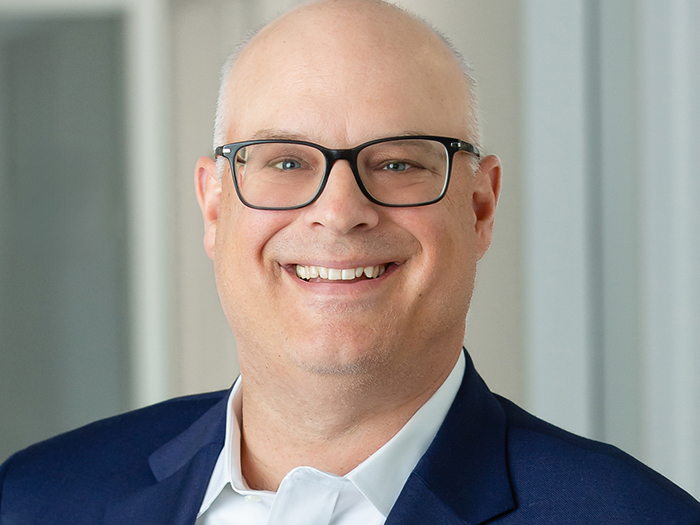
As part of our expanded coverage of our 2026 Finance Power Broker® winners and finalists, Risk & Insurance® recently spoke with Kevin Koehler, SVP and Head of Financial Institutions for Westfield Specialty. Westfield Specialty is a sponsor of the finance category in this year’s contest. What follows is a transcript of that discussion edited for length and clarity.
Risk & Insurance: Thanks for meeting with us, Kevin. What distinguishes an excellent broker relationship from a poor broker relationship when it comes to assessing risk and binding coverage for financial lines clients?
Kevin Koehler: FI business, by its nature, tends to be more sophisticated as far as coverages go and by industry class. To really get the best result from the underwriter and the most competitive pricing and terms for the insureds, it really helps for brokers to be additive in the process as opposed to just being transactional.
We’ll ask questions and request subjectivities. Brokers who help facilitate getting those answers on a timely basis — going back to the insured or prospective insured and providing detailed answers — are extremely helpful for us. Those brokers who really have a functional knowledge of the inner workings of their clients’ businesses are invaluable.
Brokers who focus on understanding their clients and their business and sharing that critical information with us typically get better pricing and coverage, in part, because they can advocate on behalf of their clients and alleviate the concerns that we might have about the risk.
R&I: How critical is it for brokers to have a deep understanding of their clients when presenting risks?
KK: It’s very important. You do run into brokers who are not as focused on that — they’re much more transactional. Depending on market conditions, they may be able to get a good result for their clients.
But on the tough-to-place stuff in particular, and some of this complex FI risk, it really helps to have a broker who understands their client and works with us to get the difficult questions we need to ask answered.
R&I: How apparent is it when brokers haven’t done their homework?
KK: You can tell right away. In many financial institutions, long-standing brokers truly understand their clients and are genuine professionals. They work hard to stay on top of developments and issues that the insured might have and anticipate these in advance of soliciting quotations, whether for renewal or new business.
When brokers act as advocates and provide answers to sometimes tough questions, they usually get better results.
R&I: What emerging risks should clients in your sector be monitoring?
KK: We could probably spend our entire time discussing this topic, as there are many emerging risks. However, I’ll focus on a few. I just returned from the American Bankers Association risk management forum.
One thing that’s top of mind — just as we see in the press every day — is AI: the use of AI, decision-making around AI, disclosure around AI, and how it’s use is communicated to customers or clients. We’re seeing the regulatory environment become more formalized and sophisticated, particularly in the financial institution sector.
It’s something on the minds of all the risk managers we spoke to, and it’s germane across industry groups within FI. It runs the gamut from banking all the way to registered investment advisers, broker dealers, and other insurance companies.
The key concerns are how transparently AI use is disclosed and reported. You also have things like model risk failure that can cross over between different industry groups and create additional potential risk.
AI is what’s keeping risk managers awake these days — or I should say, causing sleepless nights — as they try to ensure they’re properly addressing and disclosing it.
R&I: How significant is the requirement to disclose AI use to regulators in the financial industry?
KK: It’s huge. It’s not only about interfacing with regulators, but in the financial institution space — whether it’s a publicly traded bank or an insurance company — it’s about how AI use is disclosed and represented in the marketplace.
With regard to the asset management space, where companies are largely private, you’re starting to see more pervasive use of AI in modeling and to assist businesses in the development of investment strategies. If you have model failure in these kinds of AI applications, it could result in significant exposures.
R&I: What is an example of a situation where your team’s approach to claims handling made a significant difference to a client and strengthened the relationship?
KK: I consulted with the head of our claims department on this question, and several situations came to mind. One particular instance involved a mix of excess and primary business where we were positioned in the middle of a tower on a private equity risk.
There was a concern regarding coverage in the lower part of the tower — specifically whether the exposure was more transactional risk than traditional general partnership liability E&O for a private equity firm. The carriers below us in the tower had actually declined or denied coverage.
We took a more holistic approach, looking at the totality of the claim from an allocation perspective. We adjusted the claim, made our determination, and went to the insured, explaining that while certain parts probably weren’t covered, other parts were, and we wanted to proceed accordingly.
We essentially helped unclog a logjam for them. Ultimately, they achieved a positive result — they were able to access their insurance coverage and receive a significant portion of the proceeds of their policy limits. On the flip side, we were able to not payout part of our limit based on that allocation assessment.
The insured was very pleased because we recognized that carriers beneath us were taking a more absolute position, which we didn’t feel was appropriate under the terms of the policy and the applicable facts and circumstances. We worked it out to the advantage of both the client and us.
It put us in a position where we were able to earn the right to do additional business with the insured. They placed us in a primary position on future policies because of our strategic approach.
R&I: What products create the most confusion and require better dialogue between insureds, brokers, and carriers?
KK: We write professional liability lines, management liability, and other ancillary lines for financial institutions. A couple of things come to mind regarding the breadth and limits of coverages available and the need to make sure our insureds understand the policy they are purchasing and the coverages it provides.
For example, they need to understand a derivative demand investigations coverage limit and how it’s communicated. In many cases, it’s a sublimit that is provided to the insured. Insureds need to understand they don’t have the totality of their limit available to them in these circumstances.
Most brokers properly communicate the way this sublimit works, but it is important that all insureds make their purchase decisions fully appreciating that limitation. In the asset management space and with some D&O policies, insureds also need to understand that entity investigations coverage is not usually guaranteed. While typically such policies provide coverage for investigations or regulatory action against individuals, entity coverage is not always included in the policy. It is often available only via an endorsement. To access that coverage and make sure that they have the full scope of regulatory coverage they need or want, insureds should be checking on that.
Most brokers — or at least the good brokers — will make sure they communicate these differences in coverage because it’s something insureds should be aware of long before a potential claim arises. It’s a relatively common sticking point of coverage that needs to be discussed with every insured before the policy is placed and bound.
R&I: What business opportunities are you most excited about heading into 2026?
KK: As technologies like AI evolve, we’re focused on how our E&O policies respond and how we curate those policies to ensure the full scope of potential coverage is provided. On the flip side, we want to make sure that exposures we may not fully understand are excluded from coverage or are subject to manageable limits under the policy. We’re looking to provide more certainty to our customers and clients.
We’re also seeing more often the blending of coverages from a cyber, fidelity, and E&O standpoint. I think we’re going to see more evolution in this space moving forward.
In fact, fourteen months ago Westfield Specialty introduced a new asset management policy where we blended traditional first and third party cyber coverage into that policy creating a one-stop shop approach for purchasing your financial lines insurance, and that’s a good thing.
R&I: What advantages does this bundled approach to cyber insurance offer to small and medium-sized enterprises?
KK: Cyber has become a more prominent issue at the board level for all Fortune 500 companies. It’s no longer the case that you can assume cyber incidents won’t result in substantial D&O claims — they can and do with increasing frequency.
I think this is a good approach, especially in the SME space. There’s still some reluctance to invest in buying standalone cyber insurance. You can buy it in a policy like the one we and other carriers have.
That way, if you have a bad cyber event where there is a data breach and private or confidential information becomes public, it doesn’t become an existential event for your company. &