Newsletters
 Risk Central
 Digital Edition
Tort Reform Making Some Progress in Forestalling Massive Jury Awards
Outsized verdicts have been crushing general and professional liability insurance markets for years. Long-overdue tort reforms, however, are finally curtailing eye-popping amounts awarded to plaintiffs that tip the scales of justice.
A “nuclear” verdict is defined as at least $10 million, while a “thermonuclear” verdict is $100 million or higher. Both amounts significantly surpass what would have been awarded in comparable cases historically, reflecting a hyperaggressive push by plaintiff attorneys in an increasingly litigious society.
Industry research reflects that in 2023 alone, there were 27 court cases awarding compensation of more than $100 million each, according Francine Minervini, SVP and Chief Technical Claims Officer for Arch Insurance. She cautions that the higher verdicts are growing at a faster rate than ones in the $10 million range, though they’re not nearly as prevalent.
“What happens when these verdicts come out is that they drive up the excess carrier’s rates,” said Kanwar Gil, head of claims for Across America Insurance. While a $10 million verdict was rare 10 years ago, he says they’re handed down in nearly every state just about every month, if not every week.
C-Suite Concern
Recent actuarial analysis from Triple-I and Casualty Actuarial Society suggests that legal system abuse and inflation together have driven more than $230 billion in higher liability losses over the past decade, underscoring a structural cost problem vs. short-term cycle.
CEOs and business owners are increasingly concerned about this phenomenon. As many as 69% of about 1,200 business leaders polled in Sentry’s 2026 C-Suite Stress Index believe a single nuclear verdict would likely put their company out of business. Nearly half of them report higher insurance premiums or rising legal costs directly related to litigation.
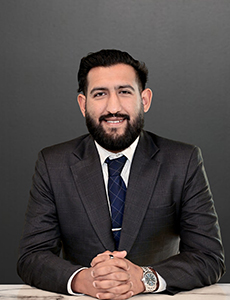
Kanwar Gil
Head of CLaims
Across America Insurance
“An alarming common denominator of nuclear verdicts is that while the damages to indemnify the plaintiff might be 10% of the total verdict, the rest of the 90% are just punitive damages and attorney fees – and all that cost has to go somewhere,” notes Tony Trenzeluk, managing director of government affairs, legal and compliance for Sentry Insurance. “We’re at an inflection point with insurance where we can’t just keep increasing rates year over year over year.”
One driver is early attorney involvement in cases. Trenzeluk points to a 33% increase over the past eight years in attorneys being involved within the first 30 days. Minervini agrees, noting “a complete shift in our culture around normalizing litigation” in which people are more inclined to hire counsel soon after a claim is filed.
Trenzeluk said insurers need to move much faster in reaching out to insureds as the first point of contact when a claim is made. Mindful of this urgency, Sentry has partnered with Trucker Cloud and Motive, a dash-cam company and data aggregator that tracks truck stopping and braking if someone crashes into that truck. “We know immediately when that happens,” he said.
Tort reforms are helping reduce huge damages that trigger outsized verdicts, especially in commercial auto insurance, and limit the jury’s perspective on issues that plaintiff attorneys exploit for a sympathetic ruling, Gil explains.
In the commercial auto litigation space that his company serves, the best example of a backlash against nuclear verdicts involves the Texas Supreme Court. Last June it reversed a $100 million jury verdict against trucking company Werner Enterprises.
An appellate court had upheld that 2018 verdict stemming from a fatal crash when a pickup truck barreled across the median on a slick interstate and slammed into a Werner 18-wheeler.
Social media is having a massive psychological impact on juries when plaintiff attorneys heavily advertise on Instagram, TikTok, X and YouTube about recovering huge amounts for those involved in an accident, Gil observes.
From ‘Judicial Hellhole’ to Gold Standard
Many states are creating rules for disclosure of third-party litigation funding, as well as considering collateral-source rules and caps on non-economic damages. “Those are things that can impact either frequency or severity of these nuclear verdicts,” Minervini explains.
A handful of states that have responded to headwinds around the frequency and severity of large verdicts are helping reshape the landscape, observes Michael Walder, VP of healthcare programs for Nationwide E&S Specialty.
The best example is Florida, which has shed its “judicial hellhole” reputation as the ultimate destination for enterprising trial attorneys with ubiquitous billboards advertising their services. In 2023, Florida Governor Ron DeSantis made tort reform a top priority and the legislature passed some of the most historic and meaningful reforms in the state’s history.
Sweeping changes marked a shift from pure comparative negligence to modified comparative negligence, changes to medical damages proof, shortened statutes of limitations for negligence actions and reforms that address negligence security presumptions. The result has been a significant decline in verdict awards.
Two more recent adopters of tort reform include Georgia, which now requires a bare minimum amount disclosure of any third-party funders investing in litigation, and West Virginia, which has placed a $5 million cap on certain damages in trucking accident lawsuits. Other efforts are under way in Missouri, South Carolina, Alabama and Indiana in hopes of duplicating the immediate impact of reforms on Florida and Georgia consumers.
On the federal side, there has been renewed attention on litigation funding disclosure in mass tort and class-action contexts – efforts that can be politically complex and take time to translate into measurable outcomes, notes Jayson Taylor, head of casualty for MSIG USA.
Stepping in the Right Direction
While there’s no single tactic that eliminates nuclear verdict risk, Taylor says there are several practical steps that can help reduce the likelihood of an outsized outcome. They include treating severity as a strategic risk, not just a claims outcome, and building a documentation and decision trail that can stand up to pressure. Other strategies involve engaging early and communicating often with brokers and carriers, pressure testing assumptions and aligning risk programs to the environment.
Whatever action is taken, it’s critical that insureds formulate a joint defense strategy with insurance carriers that drives a mutually sensible outcome, Walder suggests. “In today’s paradigm, there is more frequency of cases being litigated a little bit longer,” he said. “The plaintiffs’ bar in some jurisdictions is relying very heavily on time-limited demands to apply pressure.”
Trenzeluk recommends that risk managers and claims managers work closely with state legislatures to create more balanced legal environments to increase predictability for insureds.
To help decrease claim frequency or diminish a verdict amount, Minervini says risk managers need to sharpen their focus on prevention, including improving compliance and transparency, early case triage and identification of potential exposure, very specific proactive claims management with analysis around the venue and engaging appropriate counsel.
Most insurers have in-house safety consultants who fan out in the field ensuring that businesses follow OSHA guidelines, propane tanks aren’t next to their assets, etc., to prevent worker injuries and stem the flow of claim filings, Trenzeluk adds.
The role of advanced technology is expected to revolutionize the anticipation of outsized verdicts. Artificial intelligence, for instance, can analyze past judicial behavior or attorney performance docket analysis to identify trends in pending cases, as well as process and analyze voluminous medical records that may highlight damages issues.
“All of these various tools can help identify litigation risks in a more time-sensitive way,” Minervini said. &