Newsletters
 Risk Central
 Digital Edition
Plains Drought Could Deepen for Years as Super El Niño Risk Grows
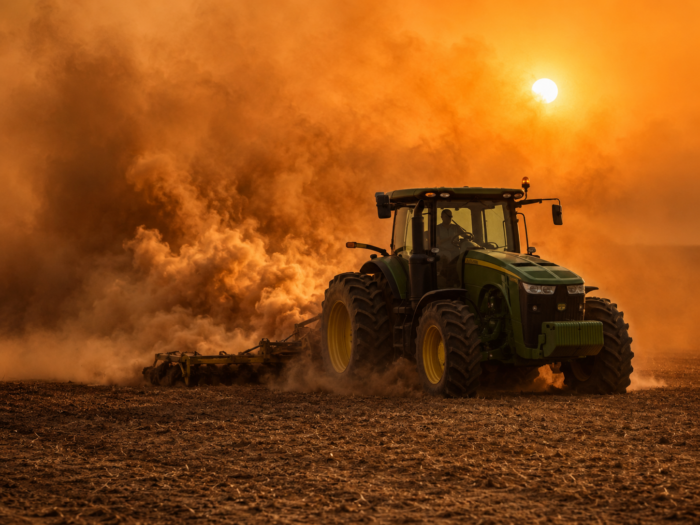
Meteorologists at AccuWeather are warning that a multi-year drought threatening crop yields and water supplies may be taking shape across the Plains states, with current precipitation deficits already running 40% or more below normal in key agricultural regions — and conditions likely to worsen.
AccuWeather assigns a 70% probability that the El Niño event that began in early June 2026 will intensify into a “Super El Niño,” a classification reserved for some of the strongest such events in recorded history. If that threshold is reached, the organization says historical precedent points to significantly drier conditions persisting across the Plains for two to three years after the event ends.
Drought Conditions Already Severe Before El Niño Peaks
The breadth and speed of the current drought’s expansion underscore the scale of the emerging risk. According to AccuWeather, several Plains states that reported virtually no extreme drought conditions a year ago are now facing dramatic deterioration. Nebraska has gone from 0% of its area in extreme drought as of June 2025 to 50% as of June 16, 2026. Wyoming jumped from 0% to 41% over the same period, while Oklahoma and Colorado each saw increases of 30 percentage points.
Precipitation data from major cities in those states illustrates the depth of the deficit. Cheyenne, Wyo., has received just 3.87 inches of precipitation year-to-date through June 17, 2026, against a historical average of 7.42 inches, a shortfall of 48%. Oklahoma City is running 42% below its average, and Kearney, Neb., has received 6.41 inches against an average of 12.03 inches, a deficit of 46%.
AccuWeather Founder and Executive Chair Joel N. Myers noted that the nationwide dryness, when averaged across the country, represents conditions that occur in fewer than 5% of years on record.
“Here we are before El Niño is really getting going, and many areas of the country are already experiencing drought,” Myers said. “In fact, when you average the rainfall across the country and give equal weight to all parts of the nation, you are talking about a level of dryness that occurs in less than 5% of the historical record.”
Historical Precedent Points to Prolonged Disruption
AccuWeather points to three prior Super El Niño events — in 1965-66, 1982-83 and 1997-98 — as evidence that the aftermath of such events can be prolonged and damaging to the Plains. Following each of those events, especially dry conditions developed or worsened across many areas of the region, in some cases persisting for years after the El Niño itself had ended.
AccuWeather long-range expert Paul Pastelok emphasized the compounding nature of the risk.
“After El Niño ends, the following two to three years can end up being significantly drier in parts of the Plains from Texas into the Dakotas, which are already experiencing extreme drought conditions,” Pastelok said. “The stronger the upcoming El Niño conditions get, the longer it takes for weather patterns to return to their historical average.” The current El Niño is expected to remain through early 2027 before fading.
Food Production and Water Supply Face Mounting Pressure
The implications for agriculture and infrastructure could be significant if AccuWeather’s projections prove accurate. Myers raised the possibility of a “mini-Dust Bowl” scenario, citing already-stressed soybean crops and the potential for reduced yields in affected regions. “If that happens, it will have a negative impact on food production, leading to price inflation,” Myers said. “Furthermore, water supplies will be harmed, as well.”
AccuWeather describes a self-reinforcing drought cycle as a key risk factor, one observed during the Dust Bowl of the 1930s. Dry soil drives higher temperatures, which increase evaporation, which deepens the drought, which further raises temperatures. Myers noted that despite decades of global warming since then, record high temperatures for many states still date to that era, a signal of how extreme the conditions became and how difficult they were to reverse.
AccuWeather said it is not predicting a repeat of the 1930s disaster, citing improved farming practices, but characterized the current situation as one it is “taking very seriously.” &