Newsletters
 Risk Central
 Digital Edition
National Comp 2026: Workplace Wearables, Opportunities and Best Practices
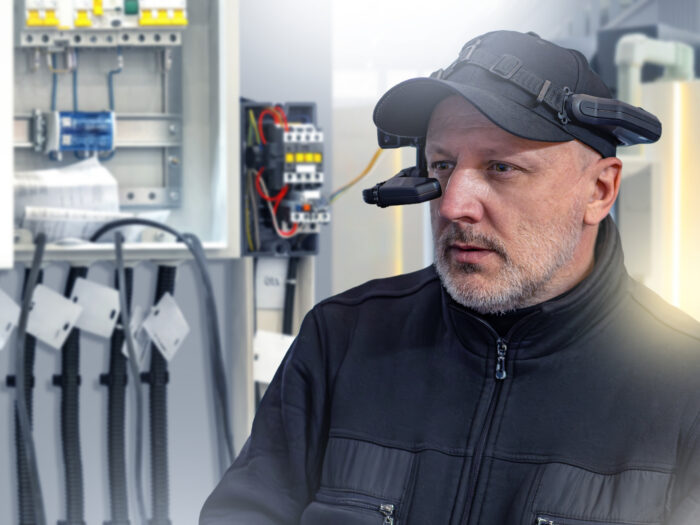
At National Comp in Las Vegas, an expert panel on Sept. 29 offered tips and guidance on the best ways to implement wearables in the advancement of workplace safety.
Workplace injuries tied to manual material handling, repetitive motion, and cumulative trauma remain some of the most costly and persistent challenges facing employers. Strains, sprains, and musculoskeletal disorders often result in lost time and mounting claims costs, and traditional safety measures — inspections, audits, signage, and barricades — can only go so far. Human error, complacency, and the sheer impossibility of monitoring every task in real time leave gaps that lead to preventable injuries.
That’s where wearable technology, powered by artificial intelligence, is beginning to reshape how organizations approach risk management.
“You can’t be everywhere, right? You just can’t be aware of everything that’s happening in the workplace,” said Erica Baird, risk control manager at Safety National. “Having tools like A.I. that can actually fill that gap — that can actually observe what’s happening in the workplace on a regular basis — really helps with identifying those hazards and correcting problems.”
Real-Time Data That Drives Proactive Safety
Wearables have been in the workplace safety space for roughly a decade, evolving from simple devices worn around the arm or waist into sophisticated tools that capture real-time data on worker movement. The original goal was to address the high frequency of pushing, pulling, lifting, bending, and carrying injuries — and to do so proactively.
“The idea was to identify proactively instead of just looking and waiting for claim activity to happen,” said Steve Simon, senior risk control manager at Safety National. “Can we capture real-time data on every movement of the worker to identify and pinpoint and laser in where the issues are proactively before it’s too late?”
Many devices now include haptic feedback — a slight vibration that reminds workers to reinforce safe lifting practices in the moment. Over time, the technology has expanded to address noise dosimetry, indoor air quality, lone worker communication, and forklift collision warning systems, making wearables valuable across a wider range of industries.
The data flowing in from these devices populates dashboards that give safety teams a clearer picture of where risks are concentrated. That, Simon explained, opens the door to more informed conversations.
“It gives you an opportunity to have a discussion with the workers, collaborate with your safety teams, your ergonomic champions, your EHS staff, and something to bring back to senior management to say, ‘I think we can work here to help build a business case of why we might need to make a change,'” Simon said.
Newer A.I.-powered ergonomic applications extend the concept even further. By uploading a short video of a task from a phone or tablet, an AI algorithm can analyze the movement, identify the body parts under the most stress, and suggest potential solutions — often in under two minutes.
“This is not to replace an ergonomist, but we can’t have a safety professional observe every task in every single minute of the day with every single worker,” Simon said. “It’s just impossible.”
Obstacles: Privacy, Comfort, and Alert Fatigue
Despite the promise, wearable adoption is not without its hurdles. Physical comfort remains one of the most frequent complaints from employees.
“Wearables can be really bulky and uncomfortable,” Baird said. “There are different size employees and different size wearables, so they don’t always fit everyone very well.”
Beyond the physical challenges, wearables also raise questions around data collection and employee monitoring. While most current devices do not capture biometric information, employees may still feel uneasy knowing that their movements are being tracked throughout the workday.
“It’s a very sensitive issue,” Simon said. “Employees might feel concerned about some of that information being shared.”
Baird noted that organizations need to think carefully about the scope of data they’re willing to collect and manage. “Think about what you do and don’t want to be responsible for in terms of information collected on employees,” she said.
Alert fatigue is another growing concern. As wearables generate more notifications — from posture warnings to environmental alerts — workers and managers alike can become overwhelmed. Baird pointed to driver telematics as a cautionary example, where fleet managers can be inundated with alerts for every minor infraction across a large driver pool.
“Every single thing that they do wrong could potentially be an alert for a fleet manager, and that can be overwhelming at times,” she said. “Thinking about how you design the system and how you set it up, and when you want an alert to actually go out, is really important.”
Cost is a further consideration. Monthly wearable expenses can range from $500 to $1,500, with full rollouts potentially reaching $20,000 to $40,000 depending on organization size — investments that require careful justification.
Best Practices: Support Decisions, Don’t Replace Them
The most successful wearable programs share a common trait: they treat the technology as a tool that supports managerial decision-making rather than a substitute for it.
“They’re just tools,” Baird said. “They’re not things that replace safety professionals. They’re things that you can use as a tool to make your life easier, to make it simpler, to provide resources to address hazards.”
Simon emphasized that the greatest returns come when wearables supplement — rather than displace — existing safety fundamentals like training, inspections, and proper equipment.
“This isn’t to replace traditional safety and risk management efforts,” he said. “If you’re doing your training, you’re doing your inspections, you have good equipment in place, you’ve done some work around ergonomics — great. This should only supplement and enhance.”
Piloting the technology in a specific area or department is one of the most effective ways for organizations to evaluate whether wearables are worth scaling. A smaller pilot allows employers to build a business case, measure return on investment, and — perhaps most importantly — gauge employee acceptance before broader deployment.
Simon cautioned that ROI shouldn’t be measured in claims reduction alone. Employee morale, culture, and productivity all factor into the equation.
“We know when employees are injured — even if they are working in discomfort and they’re working under a lot of duress and fatigue — you’re not going to get the productivity from that employee, and so then it affects the overall business,” he said.
Perhaps the most important best practice is engaging employees early and addressing their concerns about being monitored or replaced by technology.
“Technologies are there to make the jobs easier. They’re not there intended to replace employees,” Simon said. “We’re talking about technologies today that can help employees handle the more challenging, more difficult tasks of a job, so they don’t have to get hurt. When employees see that and they buy into that, you’re going to have more success.”
For organizations willing to invest the time in thoughtful implementation, wearables can deliver meaningful gains in injury prevention, productivity, and workplace culture — as long as they’re deployed as a complement to, not a replacement for, human judgment. &
To learn more, visit www.safetynational.com.