Newsletters
 Risk Central
 Digital Edition
Risk Scenario
Lefty Left No Blueprint
Disclaimer: The events depicted in this scenario are fictitious. Any similarity to any corporation or person, living or dead, is merely coincidental.
PART ONE: GAINING YARDS
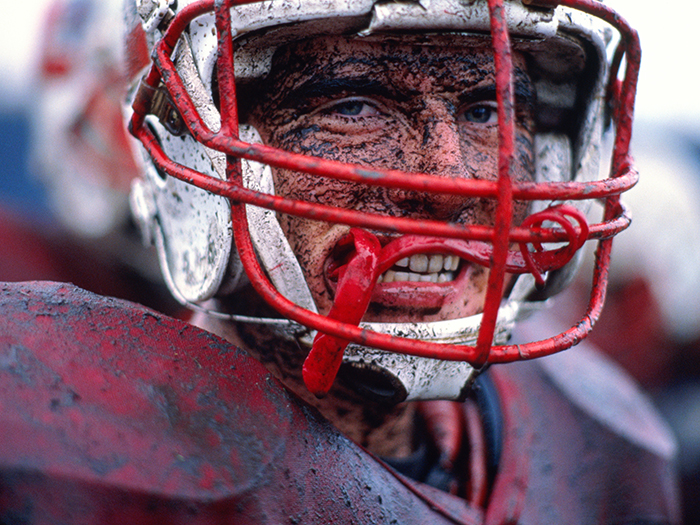
Mention the name of Lefty Sadauskas to anyone who followed Northeastern Pennsylvania high school football in the 1980s and you should get at least a nod of recognition. As a fullback for Nazareth Area High School in 1985, Lefty simply ran over people who tried to stop him. His school won the Quad-A state championship in Hershey that year, beating Woodland Hills, 35-3 in the final. Lefty gained 223 yards in that final game, played on a muddy field in a driving November rain.
No one was too shocked when Lefty decided to skip college and enter his family’s construction business, Superior Builds. With his larger-than-life personality and regional name recognition, not to mention a relentless work ethic, Lefty soon became a trusted lieutenant to his father Lanny, who had founded the business in 1970.
Lefty’s sales talent and inherited business acumen helped his father build Superior Builds into a major regional player with specialties in sports, entertainment, and public sector projects. When Lanny Sadauskas died in 2012, Lefty took over the reins as CEO, heading a company that crested $40 million in revenue.
Fast forward to 2025 and Lefty heads a business that records $120 million in revenue. A father of two sons, both of whom have joined the business, Lefty is enjoying the fruits of his labor and good fortune.
That September, the company is about halfway through the construction of a new middle school in Montgomery County, Pa. when Lefty and his sons take a quick break to do some striper fishing off of their boat, which they moor in the bay of a Delaware shore town. Per a longstanding family tradition, Lefty skippers the boat while his sons handle the fishing gear and make sure there is enough to drink and eat.
Lefty’s son Daniel, the company CFO, is inspecting some fishing tackle on the back of their boat when the boat suddenly careens, threatening to run into a stone jetty.
“Hey! Dad!” Daniel shouts, and runs to the front of the boat, as cries break out from the other passengers.
Daniel sees Lefty, his right arm still hooked to the steering wheel, bent double over the port side.
“Dad!” he shouts again.
But nothing Daniel can say or do is going to alter a grievous outcome.
Lefty Sadauskas, the pride of Nazareth, is dead from a massive heart attack at the age of 58.
PART TWO: FAMILY SCHISMS
Lefty was a force of nature on the football field, but as a succession planner, his game needed some work. His death leaves a wake of confusion and tension as his two sons, hardened sibling rivals, struggle to determine who should lead the company, as Lefty left no blueprint.

Adding to the tension is the fact that macroeconomic factors have spiked the price of aluminum and lumber. Halfway through the middle school project, cash flow issues beset the company.
Reviewing their options, Daniel and his brother Saul note they provided a surety bond to the school district that will make the school district whole should they default, and which also covers the HVAC and other subcontractors should they not be paid.
The bond was issued by Premium Surety, a respected division of a major commercial P&C insurer.
“Honestly, I’m not even sure how this product completely works. Do you think we should call them?” Daniel says to Saul, in the aftermath of a tense meeting with a subcontractor, who is pushing to get paid on an overdue invoice.
“How can they help us? I think they can only step in if we default,” says Saul.
In March of 2026, with the company facing major cash issues, Daniel Sadauskas calls Premium Surety to inform them they may be headed towards defaulting on their project very soon.
“You’ve been having cash issues for six months, why didn’t you call us earlier?” the executive at Premium Surety says.
“What could you have done?” asks Daniel.
 “Now, not so much, but there was plenty we could have done. We could have helped you with advice, thinking through strategy options and as a last resort, funding your company through this cash crunch,” the executive says.
Daniel goes silent.
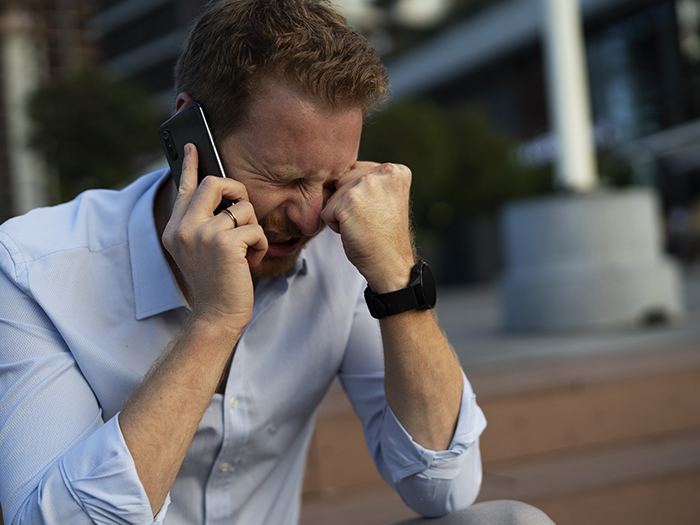
“Well, what did they say?” Saul asks after Daniel hangs up the phone, his face gone pale.
“It seems, it seems like they could have stepped in earlier and helped us; with a loan even,” Daniel says.
“Wow,” says Saul.
“I had no idea,” Daniel says to Saul as they try to digest what they just heard.
“Neither of us had any idea. It was Dad’s relationship, and we didn’t know enough about it,” says Saul.
“Let’s face it. Everything was Dad’s relationship,” Daniel said, his voice catching.
Dead silence permeates the room.
PART THREE: LEFT WITH CRUMBS
Troubles beset Superior Builds to the point that it can’t complete its work on the middle school project. The school district has stopped cutting its checks, and Premium Surety paid to complete the project and paid all the subcontractors, to the tune of $15 million.
Superior Builds survives as a company, but at a horrible cost. The money owed to Premium Surety in connection with the middle school project catapults the company into an eight-figure loss for 2026. Add to that the reputational damage the company suffers as an out-of-state contractor is called in to complete the middle school contract.
“Locals Fail, Taxpayers Foot the Bill,” is the headline on the digital edition of the Allentown Morning Call, which details Superior Builds’ shortcomings in excoriating detail.
“We Thought We Knew You Lefty,” is the title on an editorial written by the editor of the Lehigh Valley Press.
Once a go-to contractor for headline-grabbing projects, Superior Builds is practically shut out of any contracts it might have bid, including work on a new minor league baseball project the Sadauskas brothers desperately wanted to land.
The two brothers are morosely picking over the remnants of some pumpkin pie at Thanksgiving, 2026, after the rest of the family left the room. Saul watches as Daniel’s eyes drift to a framed picture of their father from his playing days, gripping a football and grinning.
Saul sees the shadow of doubt in Daniel’s eyes as he regards the picture.
“He was a good guy,” Saul says defensively.
“Was he?” Daniel counters.
“We can’t blame him entirely,” Saul continues. “We had the ego and the opportunity to take over the company, but we lacked the education to do so effectively. We both have to shoulder this,” he adds.
“Who knew an insurance company and a surety could have been our best friend, if we only knew enough to let them,” Daniel adds.
“If only, if only,” answers Saul and his voice trails off. &

Risk & Insurance® partnered with Berkshire Hathaway Specialty Insurance (BHSI) to produce this scenario. Below are BHSI’s recommendations on how to help mitigate the losses presented in the scenario. This perspective is not an editorial opinion of Risk & Insurance®.
According to Berkshire Hathaway Specialty Insurance’s Geoff Delisio, Head of Global Surety, Courtney Turnage, Head of U.S. Contract Surety and Jeffrey Jubera, Head of Surety Claims, there are lessons to be learned from the Superior Builds’ unfortunate situation.
Part One:
- Have a plan when it comes to your commercial well-being.
- When developing a business plan for a construction company, always try and understand the risks inherent in your chosen specialty. A public sector focus will always require a surety bond program. A surety bond is different than an insurance policy, and the mechanics of the surety bond product must be understood by all the players on Superior Builds’ team.
Part Two:
- It is important to have a business continuity plan in place before it is needed, as key people can leave the business for any number of reasons.
- Price escalation impacts must be negotiated prior to executing a contract.
- Understanding your surety program is vital for a public works contractor. Defaults can impact your ability to bid new work as well as exposing some key players to personal liability through the indemnity agreement.
- Surety is an indemnity product, meaning that the contractor and any individual indemnitors must repay the surety for any losses it suffers.
- Surety companies try to act preemptively as a declared default will almost always increase the ultimate loss.
- In general, the surety’s obligation is to complete the work and pay all those who supplied labor and material to the project. If involved early enough, the surety can assist the contractor in that effort as waiting for a default will likely increase losses through the addition of liquidated or actual damages and potential vendor interest payments.
- A different contractor finishing another’s work will almost always cost more than utilizing the original contractor, if that contractor can remain solvent and keep its key personnel.
Part Three:
- It is likely that Saul and Daniel (and possibly their spouses) were signatories to the indemnity agreement with the surety. This alone should have motivated them to understand the surety product and the result of a loss.
- Not only did the reputation of Superior Builds take a hit, but with its current balance sheet and surety debt, it will be very difficult to secure the additional bonding that is necessary for work in the public sector space.
The information contained in this article is for general informational purposes only and does not constitute an offer to sell, or a solicitation of an offer to buy, any product or service. The advice of a professional insurance broker and counsel should always be obtained before purchasing any insurance product, any surety bond, or any other service.