Newsletters
 Risk Central
 Digital Edition
Fire Remains Costliest Cause of Business Interruption Globally as Claim Severity Surges
The average value of a business interruption insurance claim now exceeds €850,000 ($952 million), about 70% higher than the corresponding average property damage claim of close to €500,000 ($560 million), according to Allianz Commercial.
The insurer’s analysis of 7,888 business interruption claims worth approximately €6.74 billion ($7.55 billion) between January 2021 and December 2025 found that while claim frequency has stayed relatively stable, severity has climbed sharply, with average claim values rising more than 30% annually over the past two years.
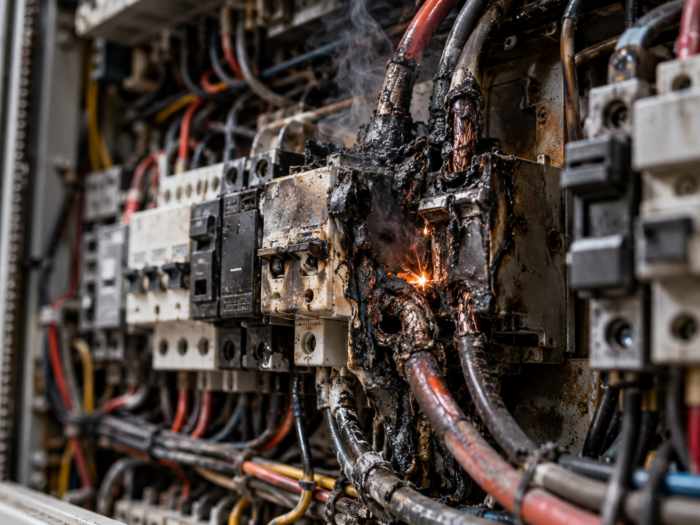
Fire and explosion was identified as the single most expensive cause of loss, accounting for over 40% of total claims value analyzed, equivalent to roughly €2.9 billion ($3.25 billion), and was responsible for nine of the 10 costliest man-made business interruption events in the five-year period.
“The scale of physical damage alone no longer determines the ultimate cost of a business interruption. Even a relatively contained incident can have consequences across production networks, customers and markets. Businesses therefore need to identify and better understand not only their own critical assets, but also those of the suppliers, technologies and infrastructure on which their operations depend,” said Thomas Lillelund, CEO of Allianz Commercial.
Fire and Natural Catastrophes Dominate Losses
Fire and explosion ranked as the top cause of loss by value in several countries including Germany, Singapore, the United Kingdom and the U.S., with electrical faults featuring prominently among the causes of major events, Allianz Commercial said. Industries most affected included semiconductors, energy, metal processing, chemicals and defense.
One case cited in the report involved a fire at a small-scale manufacturing unit that caused relatively limited physical damage but disrupted downstream operations so severely that it produced a nine-figure group-wide business interruption loss. Sarah Versavaud, chief claims office, business interruption global practice group leader at Allianz Commercial, said the challenge is “often not the fire itself, but the interruption of a critical activity on which the wider business depends.”
Natural catastrophe activity ranked as the second-costliest cause of loss by value, at 34% of claims, and the most frequent cause overall, at 26% of claims analyzed. Together, fire and natural catastrophes accounted for more than 75% of total claims value. Five of the 10 costliest natural catastrophe events analyzed occurred in the U.S., with hurricanes, winter storms and hailstorms making up five of the events and flooding accounting for four.
The report noted that climate-related exposures are increasingly “long-tailed”: many claims from Hurricane Helene in September 2024 remain unresolved nearly two years later, not because of coverage disputes but because affected businesses have taken that long to recover amid supply chain delays, labor shortages and volatile material costs.
Despite the prominence of natural catastrophes in headlines, Allianz Commercial found that non-natural catastrophe activity, including fires, water damage and machinery breakdown, drove 66% of business interruption claims value and 74% of claim numbers over the five-year period.
Concentrated Supply Chains and Rising Costs Amplify Losses
Concentrated production in specialist sectors is amplifying business interruption vulnerabilities, the report found. The two costliest non-natural catastrophe events analyzed over five years both involved fires at semiconductor factories, where strong demand, constrained capacity and limited alternative sourcing options mean even short disruptions can produce outsized losses.
Alberto Barani, business interruption group leader, risk consulting at Allianz Commercial, said organizations remain focused on efficiency, “holding less stock, streamlining operations and concentrating supply,” which has reduced their margin of safety against disruption.
Geopolitical tensions, including the war in Ukraine and conflict in the Middle East, are adding cost and complexity to recovery through their effects on energy prices, logistics costs and inflation, the report said. Tariffs are compounding the problem, particularly in metals, manufacturing and technology sectors reliant on imported materials, by raising the cost of securing replacement equipment or production capacity overseas, the report said.
Cyber risk, while not among the top causes of business interruption loss by frequency or severity, is an emerging driver, with ransomware attacks, cloud outages and software failures rippling through supply chains. More than 48,000 outages were tracked across cloud and software services in 2025 alone, the report said.
A November 2024 ransomware attack on a logistics provider disrupted multiple U.K. retailers, while an attack on a U.S. automotive software provider caused a weeks-long outage for about 15,000 car dealerships at an estimated cost of $1 billion. The report added that A.I. is increasing the speed, scale and sophistication of cyber-attacks even as A.I.-powered detection and response tools help some companies shorten interruption periods.
Obtain the full report here. &