Newsletters
 Risk Central
 Digital Edition
Enhancing the Claims Experience Through Data and AI

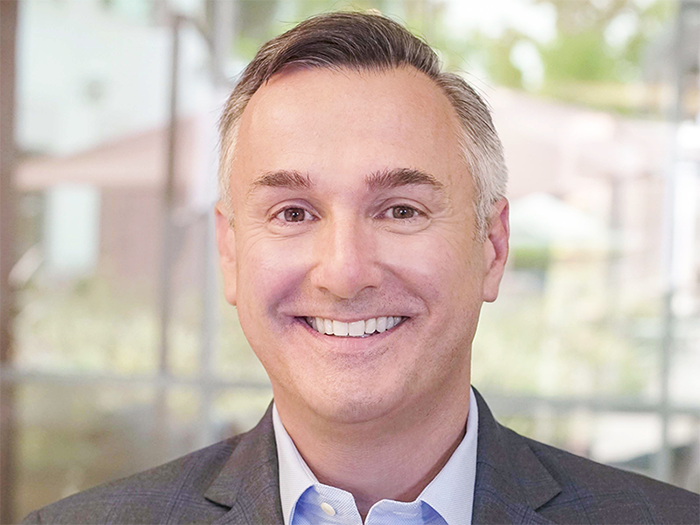
Pam Ureta oversees AXA XL’s Global Operations including end-to-end Insurance Transformation and Enterprise Shared Services while also having oversight of the global legal and compliance functions. As Chief Claims Officer, she leads AXA XL’s claims strategy, standards, and governance globally. She has served in several leadership roles throughout her career, including as Senior Vice President and Chief Counsel of Litigation for MetLife. Prior to that, she spent 15 years at AXA Equitable Life Insurance Company in various legal roles. Pam is admitted to the New York and California bars.
Claims is where insurance proves its value. It is where risk materializes, uncertainty peaks, and the quality of our response matters most. It is also where our clients form their most lasting impression of who we are, how we respond in critical moments, and how effectively we help them move forward.
For clients, a claim is rarely just a process. It is often a moment of disruption and uncertainty, where decisions carry real consequences. The way we respond shapes not only the outcome of that claim, but the level of trust and confidence that follows.
The environment in which we operate is changing quickly and in ways that are reshaping how claims are handled day to day. Risks are more complex, events are more interconnected, and client and broker expectations continue to rise. At the same time, advances in data, analytics, and AI are creating new possibilities for how we work and what we can learn.
This combination of greater complexity and greater capability creates both challenge and opportunity. By leaning into the opportunities in front of us, we can strengthen how we solve problems, support our clients and brokers, and learn from experience in a more consistent and meaningful way.
A resolution-oriented mindset, shaped by experience
Before joining claims, my background was in litigation. One of the most important lessons I carry with me is that progress rarely comes from focusing on winning or losing. Instead, the most durable outcomes come from understanding the problem, grounding decisions in the facts, and working toward resolution.
That mindset translates directly into how we approach claims. A loss event is often stressful and disruptive for clients, and empathy, clarity, and technical expertise remain essential. But claims is not only about defending positions or interpreting policy language. It is about working through complex situations in a way that is practical, fair, and focused on outcomes.
This means working closely with clients and brokers to understand what has happened, what matters most in the moment, and how recovery can be supported in a way that reflects both the technical and human dimensions of the situation.
At its best, this work is both analytical and relational. It requires sound judgment, but also listening. It requires expertise, but also perspective. It often brings together multiple parties, including clients, brokers, experts, and partners, to reach a shared understanding and a workable path forward.
In many cases, the challenge is not a lack of information, but making sense of it. Claims handlers operate across multiple inputs, viewpoints, and constraints, balancing technical considerations with the practical realities facing the client. That is what makes the role both complex and essential.
AI as an enabler of better decision-making
Supporting that work is where AI begins to make a difference. Its role is not to change the nature of claims handling, but to make it easier to navigate complexity and focus on what is most relevant.
In practice, this means organizing large volumes of information, highlighting key patterns, and helping clarify options. This allows claims handlers to spend more time understanding the situation, engaging with clients and brokers, and working toward thoughtful, practical outcomes rather than being drawn into administrative tasks.
AI in claims is being shaped through day-to-day use, informed by those closest to the work. Its value lies in strengthening judgment, not replacing it. It helps bring structure to complex information, improves consistency in how it is presented, and allows greater focus on the decisions that require experience and context.
Over time, this can support a more deliberate approach. Similar situations can be approached with greater consistency, while still allowing for the flexibility that complex claims demand. The objective is not speed alone, but clarity and sound decision-making.
From individual claims to broader understanding
Beyond supporting individual claims, these capabilities are beginning to change how we support our clients. Instead of each claim being handled in isolation, we are better able to recognize patterns, share what we learn, and apply that experience more consistently in how we respond.
This is where claims becomes more than a process. It is where we see how risk actually plays out, where assumptions are tested, where coverage meets reality, and where operational and environmental factors come into focus.
In practical terms, this allows us to connect experience across geographies, industries, and lines of business in ways that were previously difficult to achieve consistently. It supports more informed discussions with clients and brokers, grounded not only in the specifics of a single claim, but in a broader understanding of how similar situations have developed.
By making these patterns more visible and accessible, we can help inform how risks are assessed, how policies are structured, and how clients prepare for future events. This shifts the role of claims from responding to individual losses toward contributing to a more practical understanding of risk.
For clients, this results in a more informed and consistent experience. The response to a claim is not only effective in the moment, but also shaped by a wider perspective on similar events and emerging trends. &