Newsletters
 Risk Central
 Digital Edition
Discerning Coverage Nuances for Contractors

Many contractors assume their general liability insurance provides comprehensive protection for their operations. After all, GL policies are designed to be a catch-all for business risks. However, this assumption overlooks critical exclusions that can leave contractors exposed when professional decisions lead to project problems.
The reality is that general liability policies contain significant carve-outs for professional services and pollution-related exposures that are increasingly common in construction work. For contractors making field decisions every day, understanding these potential coverage gaps is essential to avoiding uninsured losses.
“This is one of the biggest questions that comes up when contractors are thinking about buying insurance: ‘I buy general liability insurance, so why should I buy pollution or professional liability?'” said Kaitlyn Dudzinski, VP, Design and Construction Professionals at Westfield Specialty. “First and foremost, your general liability coverage is likely going to have an exclusion for any professional services that you provide.”
Understanding the General Liability Gap
General liability policies operate on a straightforward principle: they cover everything except what’s explicitly excluded. Professional liability falls squarely within common or typical policy exclusions, meaning contractors who rely solely on GL coverage may find themselves without needed protection when claims arise from their professional judgment.
“They very rarely are able to get language that reinstates coverage for a subset of excluded risks on policies with very small sublimits and very limited coverages,” Dudzinski said. “That occurs only on certain classes of risks, with certain carriers. It’s not widely available.”
The professional liability exposure extends far beyond what many contractors realize. While most think of professional liability as applying only to licensed engineers or architects who stamp designs, the reality encompasses a much broader range of activities.
“What I think contractors often overlook is how their delegated design decisions, value engineering, and field changes affect the overall design,” Dudzinski said. “For example, they may move an HVAC system because mechanical equipment is in the way. The design documents show it in one location, but it ends up being moved 10 feet, effectively changing the design.”
These everyday decisions create potential professional liability exposure because they’re based on the contractor’s skill, qualifications, and experience. Even small adjustments can have significant consequences down the line.
“That’s a professional liability exposure they often don’t realize they have,” Dudzinski said. “They may think, ‘This isn’t professional liability, I’m not stamping a design.’ But because they’re giving a professional opinion and making changes based on their qualifications, experience, and contractor’s license, this would be considered a professional liability exposure.”
There’s also a structural reason professional liability is managed separately from general liability. GL policies operate on an occurrence basis, which works well when you can pinpoint exactly when an incident happened. Professional liability claims are different.
“It’s very difficult to cover professional liability on an occurrence basis because it’s hard to pinpoint when the error actually occurred,” Dudzinski said. “Design work happens over time, with multiple changes made throughout a project, so it’s rarely clear exactly when the error was introduced. That’s why most professional liability policies are written on a claims-made or claims-made-and-reported basis.”
Best Practices for Reporting Professional Liability Claims
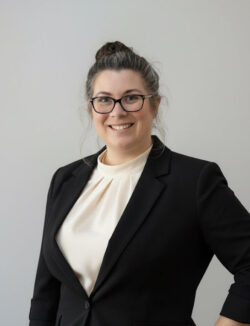
Kaitlyn Dudzinski, VP, Design and Construction Professionals, Westfield Specialty
The claims-made nature of professional liability policies creates unique reporting requirements that contractors must understand. Unlike occurrence-based policies where reporting is more straightforward, professional liability requires proactive communication with insurers.
“What we tell contractors, and what brokers and agents should tell their contractors, is if you think that this could potentially be a professional liability claim, you should report it as a circumstance,” Dudzinski said. “All that means is you’re letting the insurer know something happened. You may not know anything else other than that, but you’re putting them on notice.”
This approach helps ensure contractors meet their policy’s reporting requirements even when they’re uncertain whether an issue will develop into a formal claim. Many business owners hesitate to report potential issues, fearing automatic premium increases, but that concern is largely unfounded when it comes to professional liability coverage.
“Generally, that’s not the case in professional liability,” Dudzinski said. “That may occur with respect to some of the personal lines, but in the professional liability space, it’s usually the paid claims, when something goes wrong and there was an identifiable error, which most likely will impact your premium. Even then, a rate or premium increase isn’t guaranteed every time, with every claim. Sometimes things just happen. It’s life.”
Contractors face no penalty for reporting circumstances that ultimately result in no claim. The benefits of early reporting, however, can be substantial.
“We’d just rather know upfront, one, that there’s potentially something going on that could result in a claim. And two, we want to jump in and help the insured if we can as soon as possible,” Dudzinski said. “The other thing is we’re going to reach out to the insured’s general liability carrier and start working with them right away so we can help in that process as well.”
Beyond reporting potential professional liability claims, contractors can also improve their risk profile through better documentation practices. When making field changes to design, getting those changes signed off by the appropriate authority, whether that’s the general contractor, supervisor, engineer, or architect of record, can make a significant difference in claim outcomes.
“In those instances when it’s signed off by someone, the claim typically results in a lower payment, and it’s a much better outcome than when contractors just make the change,” Dudzinski said.
Selecting the Right Carrier
When evaluating carriers for professional liability and pollution coverage, contractors and their brokers should look beyond price to examine the depth of experience available.
“I think the most important factor to consider in selecting a carrier is whether it has experience in both the professional and the pollution side of things,” Dudzinski said. “There’s a lot of carriers out there that have really excellent technical pollution experience…and then they also write professional, but they don’t have the necessary depth of experience regarding both exposures, or vice-a-versa.”
Carriers that specialize in only one area may tend to treat the other as an afterthought and leave gaps in coverage or claims handling. The ideal carrier brings a depth of knowledge and experience to both disciplines.
At Westfield Specialty, this dual specialization and expertise is built into the team structure. Dudzinski focuses on professional liability coverages while Dennis Willette, SVP, Head of Environmental, concentrates on the pollution liability side of the equation, ensuring both areas receive dedicated attention.
Dudzinski said “”We have both, professional liability and pollution coverage expertise so you can get the best of both disciplines.”
The team’s collaborative approach extends to how they evaluate risks. Regular discussions bring together perspectives from both the professional and pollution sides of the business.
“Our team gets together three times a week, and we talk about risk,” Dudzinski said. ” Our underwriters, get to bring risks to these calls and hear how we think about and how we would approach the risks from both the pollution and profession liability viewpoints.”
Contractors should also consider where a carrier falls on the spectrum between standardized and customized coverage. Some carriers focus exclusively on small business with quick, cookie-cutter solutions. Others specialize in large, complex risks with highly customized approaches that take more time to underwrite.
“Westfield Specialty falls somewhere in the middle,” Dudzinski said. “We look at all sizes of risk, and we strive to be efficient for small contractors and customize coverages for all potential insureds where it makes sense. We also try to be as consistent as possible.”
This consistency benefits both brokers and insureds. Brokers know what coverage they’re selling, and claims teams can better anticipate what policies will look like when claims do arise. Our underwriting team works hand-in-hand with claims professionals on endorsements and complex risks, ensuring alignment throughout the policy lifecycle.
For contractors navigating the complexities of professional liability and pollution coverage, collaborating with a carrier that brings genuine expertise, consistent coverage, and collaborative claims handling can make all the difference when issues arise. &