Newsletters
 Risk Central
 Digital Edition
Crisis Management Teams Navigate Surge in Threats as Terrorism Insurance Prices Fall
Despite accelerating geopolitical conflict, surge in politically motivated violence, and large-scale civil unrest across the United States in 2025, the terrorism insurance market moved in the opposite direction—toward cheaper premiums and wider availability—according to a crisis management review from WTW.
The past year fundamentally reshaped the global security landscape, according to the report. Geopolitical conflicts intensified in Ukraine, the Middle East, the Sahel, and South Asia, triggering supply-chain disruptions and aviation emergencies. Meanwhile, virtual kidnapping schemes powered by artificial intelligence matured rapidly, and organized crime networks expanded aggressively across Latin America and Sub-Saharan Africa.
Globally, threat notifications surged by more than a third in 2025, and accounted for 37% of all incidents managed by the WTW crisis team. Of those threat incidents, two-thirds originated in the U.S., which marked a dramatic shift that exceeded long-standing regional patterns.
Active assailant events — with schools, workplaces, and places of worship being targeted — drove this spike, with 70% of all U.S. threat notifications stemming from active assailant policies. The year’s incidents ranged from the July attack on Manhattan’s 345 Park Avenue, which claimed four lives, to the Annunciation Catholic School shooting in Minneapolis in August that killed 23 people, making it Minnesota’s worst mass shooting by casualty count.
Beyond workplace and commercial violence, the year witnessed a disturbing trend of targeted political assassinations, according to WTW.
In June, a gunman attacked Minnesota state legislators in their homes, killing state representative Melissa Hortman and her husband. In September, conservative activist Charlie Kirk was fatally shot by a single round from a rooftop at Utah Valley University during a public speaking event. These incidents underscored how digital footprints enable perpetrators to stalk and target high-profile figures in their daily routines.
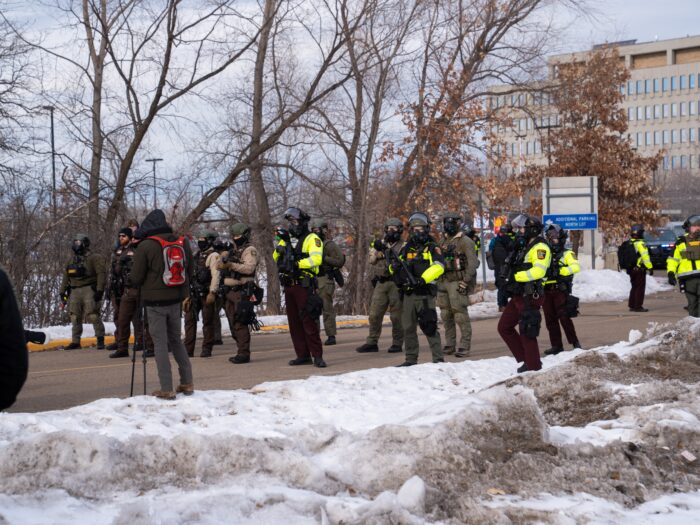
The backdrop of U.S. political turbulence fueled historic protest movements, the report noted. The “No Kings” demonstrations, which began in June 2025, rank among the largest protests in U.S. history, with organizers claiming millions participated across all 50 states. A second wave in October generated similar turnout across 2,700 events.
While largely peaceful, these demonstrations created material operational challenges for organizations, disrupting transportation networks and drawing heavy law enforcement responses that further polarized already tense urban centers.
Market Dynamics Drive Risk Reality
What makes 2025 remarkable is the disconnect between these escalating threats and insurance market response, WTW said. Rather than hardening — the traditional insurance industry response to rising risk — the terrorism insurance market continued to soften, delivering lower rates and expanding capacity to buyers nationwide.
WTW’s U.S. Terrorism Insurance Index showed that placements in the fourth quarter of 2025 averaged a 10.4% price reduction, with some accounts negotiating discounts as steep as 40%. The maximum total limit available jumped to exceed $2 billion, with at least two carriers now offering individual lines of $500 million. The number of active underwriters dedicated to terrorism coverage expanded to more than 25 across 14 insurers, the report said.
This counterintuitive market movement reflects several structural drivers rather than changed risk assessments, according to WTW. U.S.-based carriers have aggressively expanded their participation in terrorism and political violence classes. Competition intensified among both incumbent and emerging players.
The absence of major industry-shaping terrorism losses in recent years has created a prolonged period of favorable underwriting results, pushing insurers to deploy larger capacity at increasingly competitive rates. This “soft” pricing cycle attracts new capital to the market, which exerts downward pressure on rates regardless of real-world threat evolution, the report said.
Reassessing Coverage in an Uncertain Environment
The widening gap between risk trends and insurance pricing creates both opportunity and obligation for risk managers, according to WTW.
The entry of local capacity to the market and price reductions provide a moment to reconsider coverage gaps and limits that may no longer align with current threat landscapes. Risk managers should evaluate whether standalone terrorism coverage might offer cheaper, broader, and longer-term protection than traditional TRIA-linked policies.
A vibrant market has emerged for previously uninsurable perils, including cyber-linked attacks, active assailant incidents, standalone strikes, riots, and malicious damage — many of which represent the most prevalent threat scenarios of the modern era, WTW said.
Obtain the full report here. &