Newsletters
 Risk Central
 Digital Edition
Sponsored Content by One Call
Why Transportation and Language Services Are Essential to Injured Worker Recovery
In health care, missed appointments account for an estimated $150 billion in additional costs each year, according to Healthcare Finance News. The reasons behind those missed visits often have little to do with the treatment itself — and everything to do with whether the patient could physically get to the office.
A study by UC Davis Health revealed that 5.8 million Americans annually delays or avoids health care because they lack access to transportation. In workers’ compensation, that same dynamic plays out every day: claims stay open longer, treatment plans stall, and outcomes suffer when injured workers can’t get to their appointments.
Language barriers can create similar challenges. According to the U.S. Census Bureau’s 2017-2021 American Community Survey, 22% or roughly 73 million people in the U.S. speak a language other than English.
“These services need to be an essential part of the treatment plan in order to achieve the outcomes we want, which is getting injured workers back to work quicker, closing claims faster, and lowering costs,” said Leigh Kuhns, Sr. Director and National Product Leader, Transportation, Language and Dental at One Call.
“Transportation and translation services are often perceived as support care rather than as an integral component to recovery, but they really are integral. Excluding them usually creates barriers and significantly affects outcomes.”
Recognizing the Real Barriers Injured Workers Face

Leigh Kuhns, Sr. Director and National Product Leader, Transportation, Language and Dental, One Call
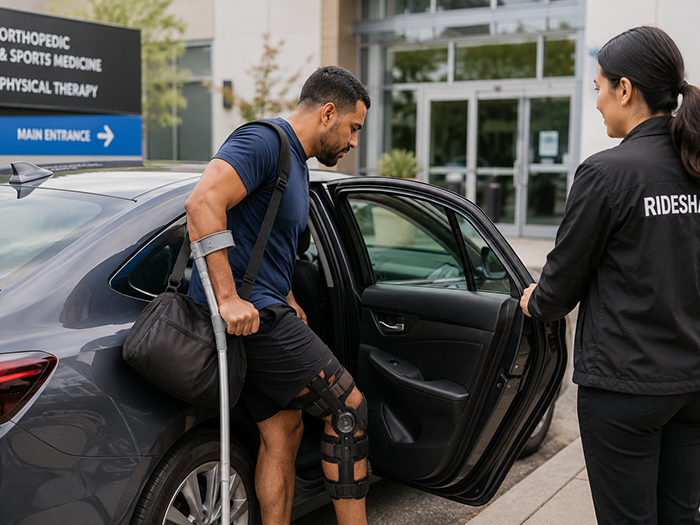
For injured workers, the obstacles between home and a health care appointment can swiftly compound. Consider a one-car household where the spouse drives to work each morning, or an injured worker with a broken leg who uses public transportation to commute to work.
Add to that a steady drumbeat of medical appointments stretching over months.
“Everything becomes harder when they have to go to physical therapy multiple times a week,” Kuhns said.
“Providing these services supports them and helps them get back to where they need to be from a health care perspective, staying on track.”
Most injured workers welcome the support. According to Kuhns, transportation assistance ferries workers safely and consistently, particularly when medications, mobility limitations, or geography make the journey difficult.
Language services play an equally critical role; often a more sensitive one. Workers with limited English proficiency may struggle to understand a diagnosis, medication instructions, or the importance of a follow-up visit, leading directly to non-adherence and prolonged claim durations.
“It’s a trust thing,” Kuhns said. “If you’ve ever had a conversation with someone who has limited English proficiency, there’s frustration on both sides when you don’t have somebody to help navigate it. One missed word can cause significant miscommunication and a lack of trust, and it spirals from there.”
Well-intentioned workarounds can make the problem worse. Offices sometimes ask bilingual employees to interpret, or family members are brought in to translate for a loved one. Both introduce bias, Kuhns said, and both can result in information being filtered, softened, or left out entirely.
“Having a non-biased interpreter in the room is extremely important,” she said. “They provide the patient with all the information needed to make an informed decision.”
The stakes are high not only for the injured worker, but for the provider. Miscommunication can lead to medical errors, compliance issues, and liability exposure, which are risks that no party in the workers’ compensation system wants to absorb.
Delivering Services in a Patchwork Regulatory and Geographic Landscape
Coordinating language and transportation services for injured workers is rarely as simple as booking a ride or dialing an interpreter line. Requirements vary significantly from state to state. Some states mandate interpretation and transportation services and others do not, which creates what Kuhns described as a regulatory patchwork.
Even where regulations don’t require these services, the business case for providing them is clear. “If you don’t provide the services that patients need, their care may be delayed,” Kuhns said.
And as we know, any delay in providing proper care in workers’ compensation leads to less optimal outcomes.
The majority of sedan transportation services are coordinated through a combination of traditional sedan networks and rideshare partnerships, with assignments matched to the geography, regulatory environment, and needs of the injured worker. But availability isn’t guaranteed everywhere.
Rural areas pose a particular challenge, especially when an injured worker must travel outside their immediate geography to find a provider who accepts workers’ compensation. Gas prices, vehicle maintenance issues that lingered after COVID-era parts shortages, and hired driver preferences for either short or long trips have all reduced the available pool of drivers in some regions.
“Can we find transportation providers everywhere anymore? No,” Kuhns said. “All of those dynamics affect how many drivers are available, even for rideshare.”
Cost and quality of care are additional considerations. A missed appointment due to transportation issues can mean additional medical management and indemnity costs, not to mention suboptimal medical outcomes.
The language side faces its own supply crunch. Only about 80,000 interpreters serve the entire country, a number that’s dwarfed by the population of individuals with limited English proficiency, let alone injured workers specifically.
“We’re going to have to come up with more virtual-type solutions to increase access and ensure injured workers understand their care,” Kuhns said. While many providers still prefer on-site interpreters, video and over-the-phone interpretation are becoming more common, particularly as telehealth becomes a routine part of medical practice.
AI-based translation apps, however, are not yet part of the equation for live medical conversations. “I don’t think there’s a doctor that’s going to trust AI to do an interpretation when they can’t validate it,” Kuhns said.
AI does play a role in health care document transcription, but a human reviewer always checks the output for accuracy. That’s a standard that will need to reach near-perfection before AI is entrusted with live clinical conversations.
How One Call Helps Keep Care Moving Forward
One Call has been coordinating language and transportation services for injured workers for many years, building out a national footprint through acquisitions and ongoing investment in its provider networks. In 2018, the company became an early adopter of rideshare for workers’ compensation transportation through its RelayRIDESM program.
“Traditional sedan networks come with significant costs; things like wait times, minimum mileage requirements, and other fees,” Kuhns said.
“Our rideshare approach eliminated those expenses.” The result has been a more cost-effective option for payers and a smoother experience for injured workers, who benefit from the same ride quality and rider satisfaction standards that transportation network companies are known for.
Today, One Call coordinates hundreds of thousands of trips per year and maintains at least a 98.5% success rate across its language and transportation services. Referrals come from insurance adjusters and employers, and One Call’s compliance team helps payers navigate the state-by-state regulatory variations. The company maintains access to certified medical interpreters, court-certified interpreters, and standard interpreters, along with on-site, video, and over-the-phone options.
The mission, Kuhns said, is to remove the barriers that prevent injured workers from getting the care they need and to do so in a way that benefits everyone in the claim.
“When we don’t delay care, they get better faster and return to work sooner,” she said. “All of these elements support their ability to access the care they need.”
As workers’ compensation continues to evolve, payers and providers alike are recognizing that transportation and language services aren’t ancillary line items. They are foundational to compliance, trust, and outcomes. The organizations that treat them that way are the ones positioned to close claims faster and at lower cost.
To learn more, visit onecallcm.com.


This article was produced by the R&I Brand Studio, a unit of the advertising department of Risk & Insurance, in collaboration with One Call. The editorial staff of Risk & Insurance had no role in its preparation.