Newsletters
 Risk Central
 Digital Edition
Sponsored: ICW Specialty
Taking Back Control of Liability Insurance Costs

Liability insurance costs have been climbing steadily for more than five years, reshaping the risk landscape for businesses across industries. What began as a cyclical hard market has evolved into a sustained structural shift, driven less by short-term pricing corrections and more by fundamental changes imposed by insurers. In response to deteriorating loss experience, adverse reserve development, and the accelerating impact of social inflation, carriers have not only raised rates but also redefined how liability programs are constructed. There has been a fundamental shift towards more self-insurance, retraction in coverage, all while prices have increased.
Although market conditions have stabilized, year-over-year cost trends continue to increase in the high single digits to low double digits, and the fundamental drivers of liability cost pressure remain firmly entrenched. Persistent claims severity, record-setting jury verdicts, and an increasingly challenging litigation environment continue to test insurers’ ability to price long-tail risk with confidence. Policyholders who resist adjusting their coverage strategy at renewal risk paying a premium for maintaining current coverage levels or accepting reduced protection to manage costs.
Rather than reacting to industry dynamics, organizations can regain control over liability costs by re-evaluating the role insurance plays within their broader risk management strategy.
Rethinking the Role of Insurance
At its core insurance is a mechanism for accessing someone else’s balance sheet, converting uncertain, potentially large losses into a fixed, predictable cost. Carriers can do this efficiently because they aggregate thousands of independent risks; what is catastrophically unpredictable for any single policyholder becomes statistically manageable across a large enough portfolio. This is the fundamental value proposition of insurance and for a long time it was a straightforward transaction: carrier capital was cheap, limits were plentiful, and the math strongly favored transferring risk.
That calculus has changed. As liability costs have climbed, carriers have responded by increasing pricing, tightening terms, raising retentions, and scrutinizing long-tail exposures more aggressively. Sophisticated risk buyers with strong balance sheets, premium rates on line > 20%, disciplined safety programs, and stable loss histories are often questioning if there is any benefit remaining to the premium trade. This begs the question, Why are we even buying insurance?
A more effective framework is to view your organization as an insurer underwriting its own risk portfolio. A disciplined insurer does not transfer all exposure; it retains predictable, manageable losses while reinsuring the scenarios that could threaten financial stability. The question shifts from, How much does coverage cost to, What is the right amount of risk to retain, and, What should be transferred to a carrier?
The Alignment Problem

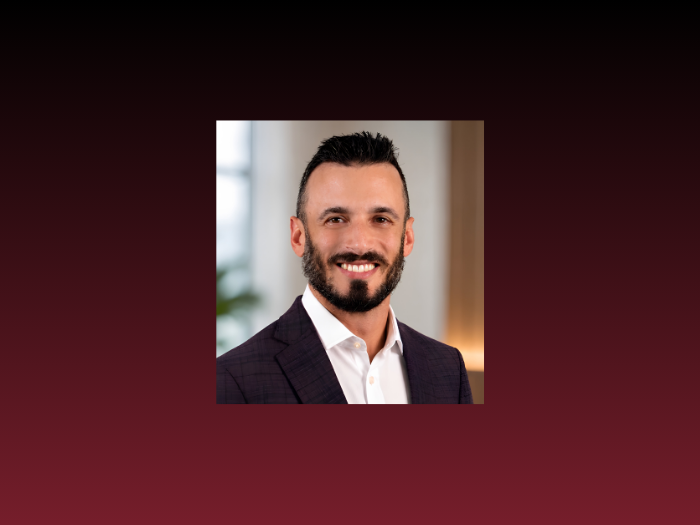
Travis Murnan, Head of Alternative Risk Transfer, ICW Specialty
One of the most revealing exercises a company can undertake is also one of the simplest: ask key stakeholders how much risk the company is prepared to retain. The answers are rarely aligned, and the gaps are telling.
Consider the following conversation playing out across a single organization:
Risk Manager: “We’ve maintained a $500,000 deductible for several years and loss activity has been manageable. Based on that history, somewhere in the $1 million range feels like a reasonable place to start evaluating higher retentions.”
CFO: “That depends on the nature of the exposure and the expected return, but I’d frame it as a percentage of EBITDA, somewhere in the range of 3 to 5 percent feels financially defensible.”
Plant Manager: “Insurance costs flow directly to my P&L, but I have no visibility into how to plan for them. In a clean year they’re a rounding error. In a bad year, they can define the year.”
CEO: “We’re a strong enough business. We could absorb a $5 million loss if we had to.”
These are four people at the same company, ostensibly managing the same risk, although they speak four different languages. The Risk Manager is anchored to claims history. The CFO is thinking in terms of capital efficiency. The Plant Manager is concerned with budget predictability. The CEO is making a judgment about enterprise resilience. There is no shortage of valid perspectives. What’s missing is a common alignment that binds them into a coherent direction. That misalignment is exactly why most companies end up with an insurance program that was designed by the market rather than by the business.
Before engaging with a carrier about program structure, companies that want to take back control need to surface and resolve these differences internally. The value of this process is not in the answers themselves — it is in the alignment it creates. The questions worth working through go beyond retention levels:
On risk appetite and capital
- What is the company’s cost of capital, and how does that compare to what a carrier charges to hold the same risk? (This question is sometimes framed using hurdle rate)
- At what loss threshold does a single event become a balance sheet event rather than an operational one? How does that threshold interplay with key financial levers?
On business trajectory
- Is the company planning acquisitions or divestitures, new distribution channels or products that would materially change the risk profile in the next two to three years?
- Are there specific business units growing faster than others, and does the current program reflect that concentration?
On operational risk reduction
- Are current safety and risk management programs being measured for effectiveness? What capital investments in safety, automation, or technology are planned? Have these been factored into loss projections?
- Does the organization have the internal claims management infrastructure to support a higher retention, or does that need to be built?
When a company enters a carrier conversation with a clear, internally consistent view of its risk appetite, financial constraints, and operational trajectory, the dynamic shifts entirely. That is the difference between approaching the market with a strategy and being shaped by whatever the market is willing to offer.
Shrinking the Risk Before Transferring It
The alignment conversation is an important internal exercise, but it should be in parallel with an equally important one centered around the question: Has the organization done everything within its control to reduce the size of the risk in the first place?
This goes beyond cost containment. Investing in safety and risk management fundamentally changes a company’s loss profile, and a better loss profile changes the retention equation. Demonstrably lower claim frequency and severity translates directly into greater retainable risk, stronger carrier negotiations, and a program built on a loss history that was shaped intentionally, not inherited passively.
Consider fleet safety: telematics upgrades (driver monitoring systems, collision-avoidance technology, real-time route data) have measurably reduced both the frequency and severity of auto-related claims for companies that have invested in them. The effect compounds: fewer claims mean a cleaner loss history, which supports higher retentions, which reduces premium spend, which improves the return on the original safety investment. The same logic applies across virtually every exposure type. Premises and operations risks respond to safety training programs, facility audits, and contractor management protocols. Professional and product liability exposures can be meaningfully shaped by quality control investments and contractual risk transfer strategies.
The broader principle is this:
|
” Companies that view safety investment purely as a compliance obligation are leaving value on the table.”
— Travis Murnan, Head of Alternative Risk Transfer, ICW Specialty
|
Those that view it as a lever for shaping their own risk profile and by extension their insurance program are operating with a fundamentally different and more advantageous posture. They are, in effect, betting on themselves. And carriers notice. A company that can demonstrate a culture of risk management and a track record of loss reduction is a more attractive partner, which creates additional leverage in program negotiations.
This is the foundation on which a more sophisticated, retention-oriented program gets built. With that foundation in place, the conversation can turn to the structure best suited to sustain it.
Structured Casualty: Built for the Long Haul
Traditional insurance addresses volatility by spreading risk across a large number of policyholders. Structured Casualty takes a different approach: spreading risk across time. Rather than resetting the program at every renewal and absorbing whatever the market dictates, a multi-year structured program locks in the key variables rate, terms and conditions, limits, retentions, and attachment points over an extended horizon–typically three years. The result is a program designed around the insured’s specific loss profile and financial objectives rather than around market averages.
This structure delivers value in two distinct ways. The first is operational: budget certainty. When rate and terms are fixed, finance and operations teams can plan with confidence rather than bracing for renewal surprises. The second is strategic: insulation from market cycles. A company in a well-structured multi-year program is not exposed to the pricing volatility, coverage reductions, or capacity constraints that affect the broader market mid-term. That insulation is particularly valuable in the current environment, where the underlying drivers of liability cost pressure (social inflation, claims severity, litigation trends) show no signs of near-term resolution.
Structured Casualty is not a product for every company. It rewards those that have put in the alignment and risk reduction work described above, because the program is only as strong as the foundation on which it is built. For those companies, however, it represents a meaningful shift in posture from reactive buyer to intentional architect of their own risk program.
Finding the Right Partner
Structured Casualty is a multi-year relationship, and like any relationship built to last, it requires genuine alignment between both parties from the outset.
That alignment operates on several levels. At the most fundamental level, there needs to be a shared view of the risk itself. A carrier that sees the underlying exposure differently than the insured–whether on frequency assumptions, severity trends, or the trajectory of the business is not a partner. It is a counterparty. The actuarial and underwriting perspectives need to be close enough that both sides have reached the same fundamental conclusions about the risk, with complementary roles in how the program is structured.
Beyond technical alignment, there needs to be strategic alignment on the goals the program is meant to achieve. Is the primary objective budget certainty? Capacity access? Reducing total cost of risk over time? The answer shapes how the program gets constructed, and a carrier that doesn’t understand or share those objectives will optimize for the wrong outcomes.
Finally, and perhaps most importantly, there needs to be trust. For the insured, that means confidence that claims will be handled fairly and promptly when they arise–that the carrier’s appetite for the risk doesn’t evaporate the moment a loss occurs. For the carrier, it means belief in the insured’s commitment to the partnership: that the relationship is built on transparency, a genuine investment in risk management, and a long-term orientation rather than a willingness to walk away at the first favorable renewal market.
The companies that find that alignment and invest in maintaining it are the ones that get the most out of a structured program over time. The carrier becomes less of a vendor and more of a stakeholder in the insured’s risk outcomes, which changes the nature of every conversation that follows.
Taking Back Control
The liability insurance market has made one thing clear: companies that wait for conditions to improve are ceding control of a significant and growing cost center to forces entirely outside their influence. The path to a more stable, efficient, and strategically sound insurance program doesn’t run through the market, it runs through the organization itself.
The companies best positioned to take back control share a few characteristics. They have done the internal work to align key stakeholders around a shared, financially grounded view of risk appetite. They have invested in safety and risk management programs that actively shape their loss profile rather than simply accepting it. And they have found a carrier partner with the technical capability, strategic alignment, and long-term orientation to build a program around their specific financial reality.
Structured Casualty is a vehicle through which that program takes shape by bringing together customized retention levels, fixed terms, and multi-year stability into a structure designed to hold up through market cycles rather than bend to them. For the right company with the right foundation in place, it represents something the traditional insurance market has struggled to offer: genuine control over one of the most volatile line items on the balance sheet.
The work is not simple. But the companies that do it stop reacting and start building, and that shift in posture is where the real value begins.
To learn more, visit the https://www.icwgroup.com/specialty/.


This article was produced by the R&I Brand Studio, a unit of the advertising department of Risk & Insurance, in collaboration with ICW Specialty. The editorial staff of Risk & Insurance had no role in its preparation.