Newsletters
 Risk Central
 Digital Edition
Sponsored Content by Travelers
How Are Global Property Risks Evolving for U.S.-Based Organizations?

The landscape of global property risk has fundamentally shifted for U.S.-based organizations. What were once isolated incidents now represent interconnected threats that ripple across entire networks of operations, supply chains and geographic regions. Today’s risk management demands a holistic view – one that anticipates how vulnerabilities compound across borders and how disruptions in one location can amplify throughout an organization’s global footprint.
Charlie Verfurth, SVP and President of Travelers National Property, and Tony Giannone, VP of Travelers Multinational Practice, discuss how large organizations are adapting their property risk strategies as domestic and international exposures become increasingly intertwined – and why coordinated program design, governance and execution matter more than ever.
Risk & Insurance®: What elements are driving today’s property risks, and why does it matter to U.S.-based organizations?

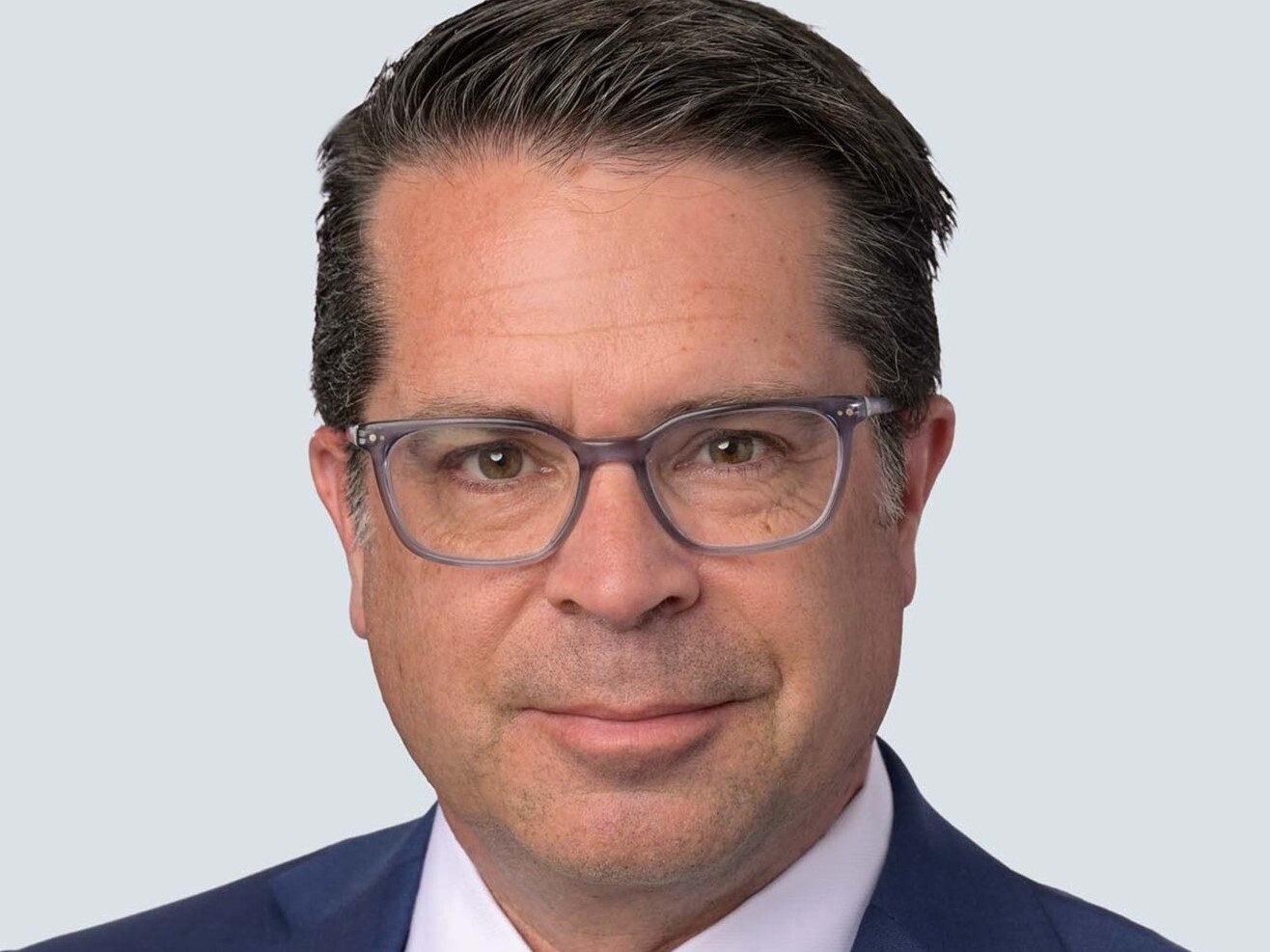
Charlie Verfurth, SVP, President, Travelers National Property
Charlie Verfurth (CV): When we assess today’s property environment, the most meaningful shift is not any single peril but how overall exposure has transformed. U.S.-based organizations continue deploying capital internationally, often through larger, strategically significant facilities that are deeply integrated into production, distribution and long-term growth objectives.
That trend is well-supported by recent data. According to PwC’s 2025 analysis, large-scale cross-border M&A rebounded sharply in 2025, with more than 110 transactions exceeding $5 billion. That level of investment reflects confidence in global growth, but it also means more value is concentrated across fewer locations and jurisdictions.
For U.S.-headquartered enterprises, this matters because decision-making and capital remain centralized domestically, while risk is increasingly distributed across global operations. As footprints expand, exposures become more interdependent. A loss at one overseas location can influence supply chains, customer commitments and operational planning back in the U.S.
Today, property exposure is less about stand-alone events and more about how aggregation, concentration and geographic spread influence enterprise outcomes. As a result, CFOs and risk leaders are prioritizing stability, resilience and long-term program durability rather than reacting solely to individual loss scenarios.
R&I: What trends are shaping global property risks over the next few years?

Tony Giannone, VP, Travelers Multinational Practice
Tony Giannone (TG): Property exposures are becoming more correlated, which makes them harder to compartmentalize. Catastrophe patterns continue to expand geographically, but that represents only part of the challenge. Many organizations are consolidating higher-value assets, specialized equipment and mission-critical operations into fewer sites. As operational dependencies increase, an incident that once might have been contained to a single facility can now carry enterprise-wide financial and operational consequences.
Nearshoring is another force reshaping exposure profiles. Relocating operations closer to the U.S. can enhance visibility and oversight, but it does not eliminate loss potential. Instead, exposure shifts to regions with different catastrophe patterns, construction standards, infrastructure resilience and regulatory frameworks. Variations in fire protection, sprinkler reliability and emergency response capabilities can materially influence outcomes if not evaluated proactively.
Program architecture also plays a growing role in managing these dynamics. When multinational property placements are fragmented across multiple local carriers without coordination, companies may encounter inconsistent terms, coverage gaps or inadvertent regulatory noncompliance. These discrepancies often emerge only after a loss, when implementation precision is essential.
Organizations that are better positioned amid ongoing volatility typically integrate governance, exposure assessment and delivery across their portfolios. The objective is not rigid uniformity, but cohesion among program design, local servicing and claims handling. When policies, risk engineering and claims administration operate cohesively, companies can achieve greater predictability and have fewer unwelcome surprises as their footprints evolve.
R&I: How should large organizations approach property risk as their operations become more global?
CV: As organizations expand internationally, coordination becomes critical. Global operations introduce additional variables, including different regulatory environments, local protection standards and catastrophe profiles, which can be difficult to manage in isolation. That is why a coordinated global framework, supported by strong local execution, is so important.
Travelers advances this model through integrated multinational property programs and strategic alliances within the International Network of Insurance (INI), delivering local expertise and compliance support in more than 150 countries. For organizations with expansive footprints, Travelers offers capabilities that connect domestic and international property strategies within a single coordinated platform.
When domestic and overseas considerations are harmonized early, organizations can proactively address coverage consistency, compliance obligations and claims administration before a loss occurs. Absent that cohesion, multinational programs can become disjointed, with policies placed through multiple carriers without a governing structure to ensure consistency with enterprise objectives.
TG: Most midsized and large enterprises no longer categorize property exposure as purely domestic or international. They are focused on safeguarding earnings, sustaining operations and protecting balance sheet strength across the organization. From a National Property perspective, we see many U.S.-based companies with increasing concentrations of overseas asset values.
The key challenge is ensuring that property strategies scale alongside that complexity. As Charlie noted, Travelers addresses this through centralized leadership combined with in-country delivery, helping multinational programs remain cohesive, resilient and responsive as organizations grow.
R&I: Why does a multicarrier approach continue to challenge multinational insurance programs?
TG: When multinational programs are assembled across multiple carriers, inconsistencies can emerge in policy language, limits, documentation standards, currencies and claims procedures. Organizations may also face unintended regulatory issues in certain jurisdictions. These variations often surface only after a loss, when precise coordination is critical. Even thoughtfully constructed programs can falter if domestic and international placements are not synchronized or if in-country policies diverge materially from the master intent.
The goal is not to eliminate necessary local distinctions but to ensure that delivery across jurisdictions supports overarching program objectives. When local policies, engineering services and claims handling function in concert, organizations improve certainty and reduce the likelihood of disruption during a loss event.
R&I: What will a large global property loss reveal about the program design?
CV: A significant global loss will quickly test the strength of a program’s design. In one instance involving a large warehouse fire in France, the event reflected many of the challenges inherent in global property risk, including jurisdictional requirements, local claims handling, cross-border communication, and consistency between local policies and the master program.
In situations like this, complications can arise early: delayed notification, uncertainty around regulatory compliance, inconsistent information flow or divergence between coverage intent and field-level application. In this case, those potential issues were mitigated by an integrated framework already in place. Local partners were mobilized promptly, communication channels were established early, and the loss was managed within a structure linking local response to enterprise oversight. The experience reinforced that effective multinational property programs are engineered well before an event occurs, through disciplined design, governance and claims administration.
Travelers has experience supporting both domestic and international property risks for large organizations, with the capacity, services and financial strength to respond to complex global exposures.
R&I: How can executives and risk managers develop a global property mindset?
CV: Developing a global property mindset starts with recognizing just how interconnected today’s operations have become. Assets, suppliers and production are often spread across regions, even when leadership and decision-making remain centralized. That means an event in one location can quickly have implications elsewhere, including the protection of physical assets and the continuity of income.
For company leadership, it comes down to viewing property risk as an enterprise exposure rather than a collection of individual locations. As risk becomes more geographically dispersed, resilience, predictability and claims certainty become part of everyday governance.
TG: At its core, a global property mindset is really about coordination. It’s about bringing structure and execution together across borders. Travelers can help guide that shift by providing consistent program frameworks and consultative risk control insights that connect local conditions and protection standards to the overall program design. When governance, structure and claims response are aligned domestically and globally, organizations are better positioned to protect assets, preserve income and manage complexity over time.
Learn more about Travelers’ global property coverage.
The Travelers Companies, Inc. (NYSE: TRV) is a leading provider of property casualty insurance for auto, home and business. A component of the Dow Jones Industrial Average, Travelers has approximately 30,000 employees and generated revenues of approximately $48 billion in 2025. For more information, visit travelers.com.


This article was produced by the R&I Brand Studio, a unit of the advertising department of Risk & Insurance, in collaboration with Travelers. The editorial staff of Risk & Insurance had no role in its preparation.