 Newsletters
 Risk Central
 Digital Edition
Automation Is Changing Manufacturing Safety. Leaders Need to Change With It.

Erika Melander serves as Manufacturing Industry Leader at Nationwide. With over 20 years’ experience in various underwriting and manufacturing-specific capacities, she is passionate about helping protect manufacturers from unintended risk. At Nationwide, Erika leads a team focused on helping ensure manufacturers are best prepared to prevent and mitigate disruptive losses and keep their people safe.
Manufacturers have spent the past several years under pressure to do more with less. Labor remains tight. Production expectations have increased. And costs are rising in many categories.
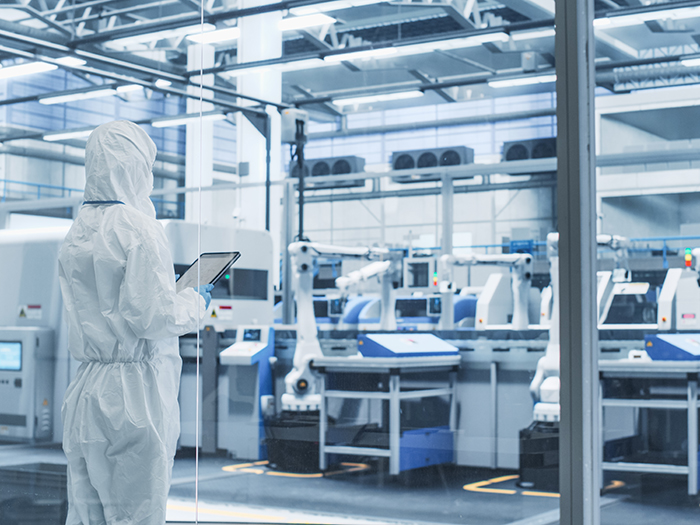
Across the sector, technology is helping companies keep lines moving when hiring is difficult and demand is unpredictable. From robotics and automated material handling to AI-enabled quality systems, manufacturers are redesigning how work gets done on the plant floor.
While this shift is helping manufacturers stay competitive, it’s also altering the safety and risk landscape of today’s operations in ways leaders need to take seriously.
Less injuries, but greater severity
From a safety perspective, initial results are encouraging. Injury frequency rates across much of the manufacturing sector continue to trend downward. Work that once required repetitive motion, heavy lifting or put employees dangerously close to hazardous operations or chemicals is now more often automated. Past exposures are removed through process designs with advanced operating controls.
Yet the incidents that happen in increasingly automated environments can be more severe. When fewer people are interacting with faster, more complex and higher-energy systems, a single failure, shortcut or misunderstanding can lead to an amputation, a struck-by injury or a hospitalization rather than a minor event.
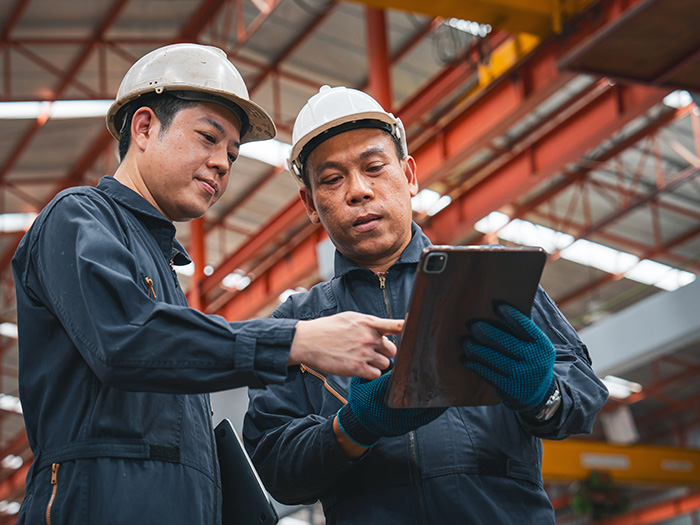
Automation also changes the type of work employees are doing. Instead of performing routine manual tasks, employees are more often troubleshooting, clearing jams, resetting systems, maintaining equipment and working across mechanical, electrical, pneumatic and software-driven processes. Those are often non-routine moments, and non-routine moments are when risk tends to concentrate.
In other words, many plants are safer by design, but when something goes wrong, the margin for error is smaller. When automation systems break down, are overridden or operate in unexpected ways, the outcome can be catastrophic.
Why this matters beyond compliance
For plant leaders, the impacts of a severe incident go well beyond the injury itself.
A serious event can take an experienced employee out of the workforce, disrupt production, trigger an investigation, create expensive downtime and make an already difficult hiring environment even harder. In a market where manufacturers have worked hard to recruit and keep skilled people, protecting the workforce is a significant part of protecting throughput.
That’s why automation can’t be treated as a productivity strategy alone. It’s also a margin, risk and talent strategy. The same investments that help keep lines moving are happening alongside efforts to retain skilled workers, maintain business continuity and avoid disruption when something goes wrong.
Today’s challenge is not whether to automate, it’s how to scale it without creating gaps in training, maintenance and change management. Safety and risk management must evolve at the same pace as the technology and the workforce.
Four actions leaders should take now
1. Reassess hazards around non-routine work
If your risk reviews are still centered mainly on normal production, they are missing where many of the most serious exposures now live. Revisit tasks such as maintenance, startup, changeovers, troubleshooting, sanitation and jam clearing. Those are often the moments when guarding is opened, interlocks are challenged or stored energy is still present.
2. Refresh lockout/tagout for the way the plant actually runs
A written lockout/tagout policy is not enough. OSHA requires procedures, training and periodic review for controlling hazardous energy. In practice, that means making sure machine-specific procedures are current, understandable and usable during real maintenance conditions, not just during audits. If equipment or workflows have changed, energy-control practices should change with them.
3. Train for decision-making, not just task completion
As work becomes more technical, employees need more than initial instruction on how a machine operates. They need to know how the system behaves when something goes wrong, what a safeguard is doing, when a stop is not a zero-energy state and when production pressure cannot override procedure. This is especially important for newer workers and for experienced employees who may be familiar with legacy equipment but less experienced with newer automated systems.
4. Treat frontline input as an early warning system
The people closest to the equipment usually see the signals first: recurring jams, awkward access points, inconsistent startup behavior or production habits that encourage bypassing safeguards. Leaders who want automation to succeed safely should make it easy for those concerns to surface early and be acted on quickly.
Modernization works best when safety keeps up
Manufacturers should continue modernizing, but as systems become faster and more interconnected, safety cannot remain static.
The operations seeing the strongest long-term results are treating safety, maintenance and workforce training as part of the modernization strategy itself, not separate from it. That often means leaning on experienced risk and safety partners who can help identify blind spots, evaluate changing exposures and strengthen controls before incidents occur.
In increasingly automated environments, operational performance and worker safety are becoming more closely connected. The manufacturers that recognize that early will be better positioned to protect both their people and their productivity. &