 Newsletters
 Risk Central
 Digital Edition
6 Questions for Jeff Cole of Sentry Insurance

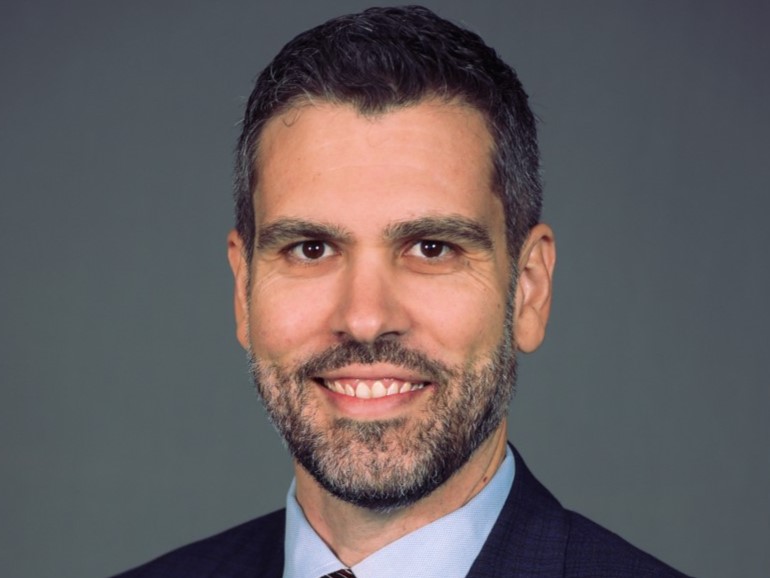
In October, 2026, Dan Reynolds, editor in chief of Risk & Insurance, caught up with Jeff Cole, assistant vice president of national accounts for Sentry® Insurance. The conversation centered around the release of Sentry’s 2026 C-Suite Stress Index: Midyear Report. What follows is a transcript of the discussion, edited for length and clarity.
Risk & Insurance: What are some of the more significant factors contributing to workforce pressures as revealed in Sentry’s C-Suite Stress Index: Midyear Report?
Jeff Cole: C-suite leaders are under pressure to increase productivity, manage costs, and maintain operations. We’re seeing a lot more uncertainty in the business marketplace coming from the combination of labor shortages, supply chain and logistics disruptions, tariffs, trade uncertainty, other geopolitical activity, and now rising business insurance costs. It’s really the culmination of all of those things at the same time that’s creating a lot of workforce pressure.
R&I: Of the factors you just mentioned, which ones are business leaders most concerned about?
JC: There are multiple pressures here, but as we look across all the businesses surveyed, we’ve found that 62% of leaders cite as their primary concern supply chain and logistics disruptions. However, other concerns are not far away. And I think that’s the difference now versus a year or two ago—multiple concerns are ranking closely together when there used to be a spread.
We’re seeing economic pressure cited by 53% of the leaders. That’s up from 44% earlier this year. We’re seeing tariffs and trade uncertainties cited by 52%. And we’re seeing labor shortages cited by 49%.
Labor shortages are especially important in the workforce pressure conversation because they can really intensify operational trade-offs.
When businesses have fewer people available, leaders tend to rely more on things like overtime, faster production schedules, delaying training and fewer breaks. Over time, those decisions can ripple through the entire business and affect a variety of things like safety, quality, retention and, ultimately, claims and even business continuity.
I think the real important aspect here is that those pressures are even more pronounced for smaller companies. In larger companies, if you’re missing a worker or two out of 200, that’s a little bit easier to make up.
But when you only have eight or nine workers and you’re missing one or two because you can’t find a replacement, that’s a large portion of your workforce. That puts a lot of pressure on the remaining workers and on the business to maintain the quality, to maintain the ability to produce products and services at the same standard in the same timeframe.
If you look at the C-suite stress index, 68% of smaller employers—those with 10 to 49 employees—say supply chain logistics is their primary concern. But now more than half—51%–cite labor shortages.
Again, a lot of C-suite leaders are citing multiple concerns, whereas in the past, they were more likely to have a primary concern. It’s all those things coming together that are creating a problem right now.
R&I: With labor shortages driving up reconstruction costs and making it harder to calculate expenses, what kinds of direct losses are organizations seeing as a result of these workplace pressures?
JC: I think the immediate reaction is that we’re going to see losses such as injuries and accompanying claims. But it goes beyond that to things like lower quality work and more rework because people are rushing through.
It’s the number of customer complaints, it’s turnover because your workers are getting frustrated because they’re not producing the quality or quantity that they’re used to producing.
It’s lost time because you’ve got machines breaking down because you’re pushing them too hard. It’s things like auto accidents. People are rushing because you didn’t get the product made in time, so you’re rushing on the road to get it to a customer on time.
All these exposures come together in a variety of different outcomes, and it’s much more than just workplace injuries or workplace close calls; it goes well beyond that.
If you look at the C-suite stress index, again, coming back to some of the numbers, 49% of execs are saying they are seeing more errors and lower quality work. That’s not a great outcome.
Whether you have a large business or a small business, it doesn’t matter. The quality of your output is the key to your survival.
Forty-eight percent of respondents are reporting decreased employee satisfaction. That makes it very difficult not only to retain employees, but to recruit employees
Thirty-two percent are reporting back-end challenges–increased employee injuries or close calls. Already a third of our C-suite execs are reporting more injuries or close calls.
These are really important signals and they point to broad risks across safety, quality, productivity, retention and claims. Everywhere you look there are important risk signals that we’re seeing, and workplace pressure is really causing that.
R&I: Quality problems bring reputational risk right on their heels. Given all of these pressures, how can business leaders build a framework to address the factors contributing to them?
JC: Great question. I think the most important thing here is that the model needs to be practical. This can’t be some theoretical model that takes years to build and months to understand. It has to be very practical. And really, there are five components of what I call a practical model.
One, it’s identification of risk, second, it’s assessment, third, it’s escalation of those risks at the appropriate time, fourth, it’s acting on them, and fifth, it’s monitoring and adjusting. In business, you try something, and if that works, you keep doing it. If it doesn’t, you try something different.
Let’s talk about the first step—identifying signals of workforce pressures. You need to connect with the workforce; the safety staff, the claims team, operational quality, human resources, and look at the financial data. All those departments are looking from a different lens for signals of workforce pressures.
A leading indicator of workforce pressures, for instance, could be overtime levels. If you’re talking to HR, it could be missed breaks, near misses from an accident standpoint, production schedule changes, pace changes, training delays, maintenance delays; those could be leading indicators as well.
Are you having to do more with fewer managers? Is that putting your team at risk? Those are all front-end identification signals.
As you move into the assessment step it’s really understanding how those pressures may affect the broader business. The deep dive on this is the claims data. Once you have an accident, analyze all those claims and that’ll help you.
But the real key is to try and do it before the claims happen. It’s a matter of pointing out things that appear to be at risk and asking the right questions. Is that a risk that we’re willing to take?
As we get into step three, escalation, we determine our risk tolerance and establish thresholds for when those pressures should be escalated to executives.
For instance, maybe your employee population is down by 10%. That becomes something that needs to get escalated quickly. Perhaps you had three near misses in a given month. Even though a claim didn’t happen, you should be escalating that. Identifying thresholds for escalation are very important.
Once you set up thresholds and escalate, it becomes a good conversation to have about “How important is this risk relative to other risks we’re experiencing?” And that gets into acting on it, but you cannot necessarily act on everything you identify.
There’s not enough time in the day, not enough money maybe at the company to do it, you have to prioritize. So, when you talk about acting, you’re talking about escalating those issues that create the biggest risk and acting on those things that do create the risk.
The structure of this is such that once you act, then of course you need to go into the monitoring phase and say, “What did we do to affect that risk? Is it getting better? Are we seeing good results?” And if not, we’re going to need to try something different. And if it is, well, that’s great. Let’s keep doing it and maybe identify some additional risks to go after.
I would say the biggest challenge for smaller businesses is that most don’t have risk managers, where larger companies have risk managers dedicated to this practice. Smaller companies simply don’t have the manpower for that. They don’t have the volume to do it.
Many of them rely on their insurance agent to help them through that process, through identifying what risks exist in the business, how those risks are changing from the workforce pressures we’re seeing, that type of thing.
I think that’s really a key here—for the agent to understand this enterprise risk model and help the customer. The agent doesn’t need to own that model, but they need to help the customer understand how to step through that identification, assessment, escalation, acting, and monitoring of risk.
R&I: What tools should business leaders use to help establish an effective risk management framework?
JC: I think there’s a variety of different areas you should be focusing on. It’s a matter of looking across workforce measurements, safety, claims, operational data, quality, HR, finance, and legal data—really to identify any of the patterns that you’re not going to see visible from just one perspective. And I think that’s the whole key to enterprise risk management. This is not something that lives in just one part of the operation.
It’s a matter of taking indicators from a variety of different perspectives and seeing how they interact. Understanding that interaction should cause you to start asking questions.
In that process, there are leading indicators—things like overtime level, missed breaks, near misses, production changes, training delays, those things we talked about. And then there are lagging indicators, and that’s when something really bad happens. A claim actually happened, and you can analyze the claims.
Say, “We’ve got 18 claims from machine number 32.” Well, you know what? Maybe you should be looking at machine number 32 and the guards on it, the protocols, and the training of the people using it and that type of thing.
Waiting until accidents happen to take action is never the best answer. The best answer is to anticipate risks, to understand what the pressures are, and to take action to limit those risks before accidents happen.
I think one of the most important signals in lagging indicators is tenure-based metrics. There are a lot of people entering the workforce now, and we’ve seen an uptick in claims from those new to the workforce. Maybe they were rushed through training. Maybe they didn’t get appropriate training at all. Maybe they’re trying to do something that they shouldn’t be trying to do because the workforce is constrained right now.
I think looking at tenure-based metrics is a critical element of understanding your workforce and understanding where your biggest risks might be.
R&I: Given the pressures facing businesses and executives highlighted in the C-Suite Stress Index: Midyear Report, how can brokers and carriers better assist business leaders in addressing these workforce challenges?
JC: Addressing the challenge of workforce pressures is really about looking at the issue from all the available perspectives. When you talk about the combination of agents, brokers, risk managers, and insurance providers, each of them has a different perspective on the same issues. So it’s really a matter of them working together.
If you look at specific activities from each of them, agents and brokers should be raising workforce pressures at renewal or even prospecting time—the concerns and observations they’re seeing.
When they learn of significant business changes, they should be talking those through with both the risk manager and the insurance company. Things like adding or removing a manufacturing location, changing production schedules, those types of things. They can also help connect the insurance claims, safety, and operational conversations, and bring the insurance provider resources into the discussion and help focus on those business changes.
When you talk about the risk manager, they’re more in a position to connect those internal signals we talked about. They’re reaching across their organization to HR, claims, operations, quality, finance, legal—all those different aspects—and trying to bring that combined internal perspective. They’re clarifying who owns what activity, determining where the action is needed, all those types of internal actions.
Then along comes the insurance provider. I think it’s a matter of supporting that conversation with claims and safety insights. Sometimes the best lessons learned are those learned by other people.
As we look across our book of business at similar types of businesses, what have we observed there? What have been challenges that those businesses have had? Maybe losses they’ve had that this company has not yet experienced. We can help use that information to prevent those same types of accidents from happening at their company.
So it’s really a matter of working together with the perspective that—whether you’re the agent, the risk manager, or the insurance provider—it’s all about collaboration. Helping the leaders see those workforce pressures before they turn into claims is always what we intend to do. That’s definitely a better way than analyzing claims after they have occurred. &