Newsletters
 Risk Central
 Digital Edition
2025 Product Recalls Increase Amid Shifting US Regulatory Landscape
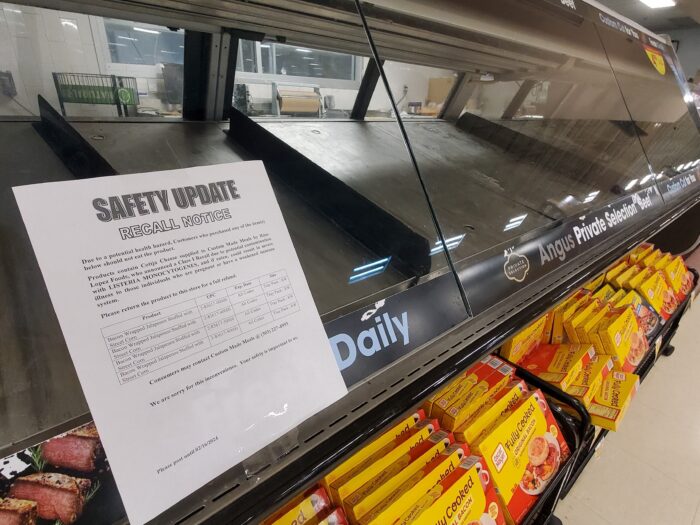
Manufacturers and retailers across multiple industries faced their most challenging product safety environment in years during 2025, with 3,295 recalls affecting nearly 858 million units — a 26% surge in volume of affected units driven by record-breaking activity in food safety and consumer products, according to Sedgwick’s Q4 Product Safety and Recall Index.
The 2025 recall landscape was marked by significant volatility across different sectors, according to Sedgwick’s analysis of data across five industries.
The consumer products sector experienced its highest recall count in 18 years with 414 events, while the Food and Drug Administration recorded 571 food and drink recalls — its highest total in nine years. Pharmaceutical recalls surged 140.2% by unit volume compared to 2024, and U.S. Department of Agriculture agricultural product recalls jumped 239% by weight, reaching an 11-year high of 67.57 million pounds.
The surge wasn’t spread evenly across industries, the report noted. Medical device recalls exceeded 490 million units, representing the second-highest total in 20 years, while automotive recalls declined 6.1% in frequency and hit a 13-year low in units affected.
Beyond recall numbers, enforcement intensified dramatically, according to Sedgwick.
The Consumer Product Safety Commission pursued its first criminal prosecution under consumer safety law, resulting in prison sentences exceeding three years for executives of a dehumidifier manufacturer. The agency also secured a $16.03 million civil penalty — the maximum authorized — against a portable air conditioner manufacturer, along with multimillion-dollar settlements with smartwatch and dry shampoo manufacturers for failing to promptly report product defects.
Political Shifts and Regulatory Uncertainty Reshape Risk Management
The Trump administration’s 2025 priorities fundamentally altered the regulatory environment, according to Sedgwick.
Tariffs on imported materials, vehicles, and vehicle parts created supply chain uncertainty, while tariff threats on semiconductors — essential to automotive and consumer products — added another layer of complexity, the report said. The administration’s focus on reducing regulations translated into budget cuts affecting federal agencies and proposals to overhaul food and pharmaceutical oversight.
These changes created particular challenges for specific sectors. The FDA’s push to close the “generally recognized as safe” (GRAS) loophole for food ingredients and proposals to regulate ultra-processed foods signal coming compliance demands for food and beverage companies, Sedgwick said. In addition, the USDA’s new requirement to include gluten verification in inspection activities could force significant operational changes for food manufacturers and restaurants.
The future of consumer product oversight itself became uncertain when the administration proposed eliminating the Consumer Product Safety Commission entirely, though the agency continued aggressive enforcement throughout the year despite leadership upheaval that left it with only an acting chairman by year’s end, Sedgwick noted.
Pharmaceutical companies face mounting pressure from multiple directions, the report said. The FDA is accelerating drug approvals while simultaneously tightening enforcement of direct-to-consumer advertising, expanding remote regulatory assessments, and pushing manufacturers toward “most-favored-nation” pricing to reduce drug costs for U.S. consumers. Medical device manufacturers must now prepare for FDA expectations around post-market surveillance and AI-enabled software integration throughout a product’s lifecycle.
What’s Ahead: Preparation and Adaptation Are Essential
Companies should expect 2026 to be equally dynamic as regulatory agencies, particularly the FDA, continue unveiling new guidance and enforcement priorities, according to Sedgwick. The medical device sector faces pressure to improve recall communications and efficiency, with government scrutiny intensifying. Automotive manufacturers must adapt to electronic recall notification requirements and navigate a rapidly evolving autonomous vehicle regulatory framework.
For food and drink companies, draft regulations on ultra-processed foods are anticipated in 2026, along with continued focus on allergen labeling and supply chain safety, the report said. Pharmaceutical and medical device manufacturers should monitor ongoing investigations into national security threats posed by imported products, which could result in additional tariffs affecting their supply chains and production costs.
Sedgwick recommended that companies take advantage of opportunities to comment on draft regulations while preparing internal compliance frameworks for the anticipated changes. The combination of unprecedented recall volumes and shifting regulatory priorities means that robust product safety, recall management capabilities, and supply chain resiliency are no longer optional competitive advantages — they’re essential to protecting brand reputation and avoiding substantial financial penalties, the report said.
“Despite shifting priorities and policy changes, product safety remains at the core of U.S. regulatory activities,” said Chris Harvey, senior vice President for Sedgwick. “Regulators across industries are looking to increase oversight, improve the effectiveness of product recalls, and expand post market responsibilities beyond just the manufacturer.
View the full report here. &