Newsletters
 Risk Central
 Digital Edition
The Shifting Landscape of Workers’ Compensation Pain Management
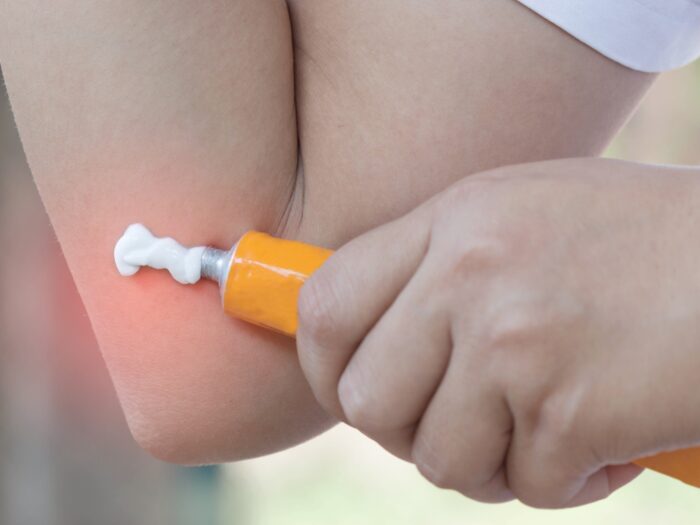
While the sharp decline in opioid prescriptions has reduced drug costs for pain management in workers’ compensation claims, a new analysis reveals that topical medications have become a significant replacement therapy — and a variable cost driver — across state lines, according to National Council on Compensation Insurance research.
Pain management represents roughly 30% of workers’ compensation medical costs nationally. Over the past decade, the workers’ compensation industry has undergone a fundamental shift in how it treats pain, with the most visible change being the dramatic reduction in opioid prescriptions, the NCCI said.
Between 2012 and 2023, opioid costs declined by an average of 2.8% annually across the study states examined. In some states, the reduction has been even more pronounced. Rhode Island saw opioid costs plummet at a rate of 10.1% annually, while Vermont and Utah experienced declines above 8% per year. The transition has been widespread, with opioid costs dropping from a median of $188 per pain management claim in 2012 to just $105 by 2023, the report said.
However, this decline in pharmaceutical spending has been only partially offset by what might appear to be good news, according to the NCCI. Major surgery and physical medicine costs — the two largest components of pain management expenditures at 34% and 14% respectively — have continued climbing, growing at 1.9% and 2.3% annually. This divergence has created a complex cost picture that varies dramatically across state lines, the study found.
The Topical Cost Conundrum
As opioid prescribing has tapered, topical medications have emerged as a filling replacement. The prevalence of topical creams and gels has expanded so significantly in some states that their impact now rivals what opioids once were in the cost structure of pain management drug therapy, the NCCI said.
In 2012, topicals represented a small fraction of drug costs, with median payments of just $38 per claim. By 2023, that figure had grown to $62 per claim nationally — though with remarkable variation across states, the report said. While some states such as Arkansas, Iowa, and Utah have maintained low topical costs per claim, Hawaii now pays $629 per claim for topicals, and Louisiana $277.
The dramatic price variation reflects the nature of topical medications themselves. Even with lower utilization rates than opioids at their peak, topicals command high per-transaction costs. Also, physician-dispensed topicals cost substantially more than their pharmacy-dispensed counterparts. Across all study states, the median physician-dispensed topical costs 1.7 times more per transaction than pharmacy alternatives, NCCI said. In some states like Nebraska, the difference is even more extreme, with physician-dispensed topicals costing 6.7 times more than pharmacy-dispensed versions.
Regulation as a Lever for Cost Control
States have begun experimenting with regulatory approaches to address topical costs, and early evidence suggests these measures can make a difference, according to the report. States with stricter physician dispensing limits — caps on how much physicians can dispense based on average wholesale prices — tend to have lower topical medication costs. Five of the six states with the lowest topical costs per claim have implemented such limits.
Other regulatory strategies show promise as well. States with closed drug formularies, which restrict which drugs physicians can prescribe without prior authorization, tend to maintain below-average topical costs. More recent innovations include broader topical-specific regulations. States such as Colorado, Georgia, Mississippi, and South Carolina have implemented comprehensive topical restrictions that appear to have initially succeeded in controlling costs, the NCCI said.
However, regulations targeting compounded topicals — once a major cost driver — have become less relevant. Physician and pharmacy compounded topicals now represent less than 1% of all topical drug costs, indicating the regulatory focus has outpaced the actual problem in that area.
Obtain the full report here. &