Newsletters
 Risk Central
 Digital Edition
Small Construction Firms Account for Half of Industry Fatalities Despite Employing Just Over a Third of Workers
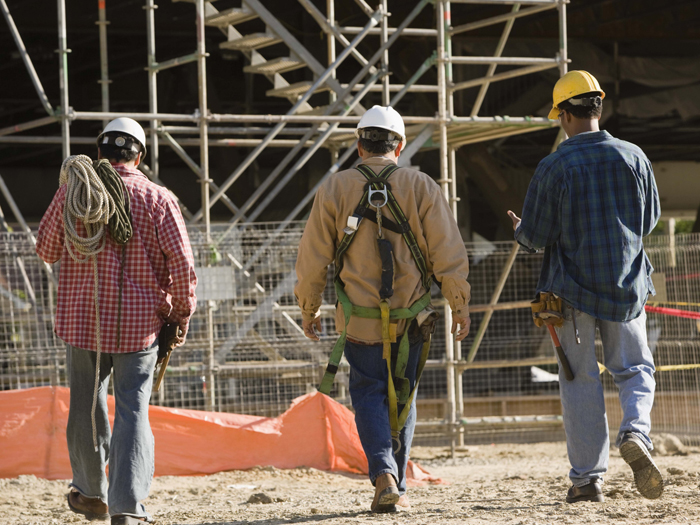
Small construction establishments — those with fewer than 20 employees — accounted for about half of all construction worker fatalities while employing roughly 36.5% of the industry’s payroll workforce, according to a data bulletin published by CPWR — The Center for Construction Research and Training.
The findings underscore a persistent safety gap tied to employer size, with implications for how the construction sector manages risk across its most fragmented segment.
From 2014 to 2023, 91% of construction establishments employed fewer than 20 people, averaging 2.5 million workers annually. An additional 2.9 million workers operated as nonemployer establishments — primarily independent contractors with no paid employees — which represented 78.1% of all construction establishments in 2021, the report said.
Fatal and Nonfatal Injuries Skew Toward the Smallest Firms
The injury data paint a stark picture for small construction firms. In 2022, establishments with 10 or fewer employees accounted for 42.4% of fatal workplace injuries in construction, while those with 11 to 19 employees accounted for another 8.1%, CPWR found. By comparison, only 22.7% of construction payroll employees worked for establishments with one to nine workers.
From 2011 to 2022, the number of fatal injuries at establishments with one to 10 employees increased 27.5%, rising to 463 from 363 deaths. Fatal injuries across all of construction grew 39.8% during the same period, according to data from the Bureau of Labor Statistics Census of Fatal Occupational Injuries.
Nonfatal injuries followed a similar pattern. In 2024, the days-away-from-work injury rate for establishments with 11 to 49 employees was three times that of establishments with 1,000 or more employees — 1.2 vs. 0.4 per 100 full-time workers, the bulletin said. Establishments with one to 10 employees had a rate of 0.8, twice that of the largest firms. CPWR noted that nonfatal figures should be treated as a baseline because of “known underreporting among small establishments.”
A Growing Independent Workforce Outside OSHA Protections
The number of nonemployer construction establishments grew 20.8% from 2014 to 2023, rising from 2.4 million to 2.9 million, CPWR reported. Specialty trade contractors made up the largest share at 66.1% of nonemployer establishments, followed by construction of buildings at 32.5%.
The report flagged that nonemployer establishments “are not typically covered under OSHA protections,” a gap that compounds the safety challenges facing the industry’s smallest operators. Workers at these establishments also lack the institutional safety infrastructure that larger employers tend to provide.
Obtain the full report here. &