Newsletters
 Risk Central
 Digital Edition
NC Supreme Court Narrows ‘Joint Employment’ Doctrine in Workers’ Comp Case
A North Carolina Supreme Court ruling clarifying the “joint employment” doctrine has direct implications for workers’ compensation liability and insurance coverage in the state.
In Lassiter vs. Robeson County Sheriff’s Department*, the court determined that a highway contractor was not a joint employer of an off-duty sheriff’s deputy injured on its worksite. The Dec. 12, 2025 decision reversed a lower court’s finding and placed sole responsibility for the workers’ compensation claim on the sheriff’s department and its insurer, reinforcing that control over the details of the work is the key factor in establishing an employment relationship.
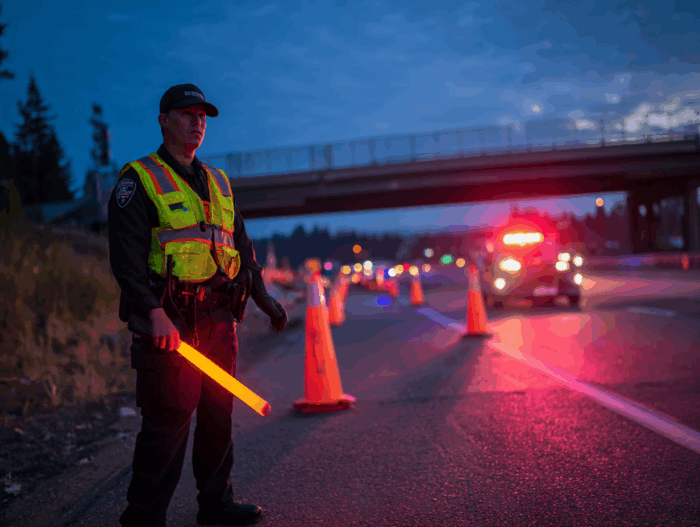
The case arose after Stephen Lassiter, a deputy with the Robeson County Sheriff’s Office (RCSO), was seriously injured when struck by a vehicle. At the time, Lassiter was working an approved off-duty assignment directing traffic for Truesdell Corporation, a contractor performing bridge repairs on I-95. Truesdell’s state contract required it to design and implement a traffic control plan using uniformed law enforcement officers.
While Truesdell paid the officers directly, RCSO supervisors managed all staffing, including selecting officers, assigning their specific posts based on Truesdell’s plan, and overseeing them on-site. Following his injury, Lassiter filed a workers’ compensation claim against both RCSO and Truesdell, sparking a dispute over which entity, and its respective insurer, was liable.
Lassiter and RCSO argued that Truesdell qualified as a joint employer, making its carrier, The Phoenix Insurance Co., jointly liable for the claim They contended that Truesdell’s responsibility for the overall traffic control plan, its determination of where officers were needed, and its direct payment to Lassiter established sufficient control.
In response, Truesdell argued it lacked the essential control to be considered an employer. It maintained that RCSO supervisors exclusively managed the officers, who used their own professional training and judgment to perform their duties. Truesdell asserted it merely outlined the general need for traffic control without directing how the officers accomplished the task.
In its analysis, the Supreme Court focused on which party had the right to control the manner and method of Lassiter’s work. The court found that Truesdell’s influence was limited to designating locations and the overall objective. Crucially, all direct supervision came from RCSO personnel.
RCSO leaders selected the officers, assigned their positions, set their hours, and held the authority to remove them from the job. The court noted that Lassiter relied on his law enforcement experience, not instructions from Truesdell, to manage traffic. The opinion states, “The crucial test . . . is whether he passes under the [alleged employer]’s right of control with regard not only to the work to be done but also to the manner of performing it.”
Ultimately, the court reversed the Court of Appeals, concluding that Truesdell did not exercise the detailed control necessary to be deemed a joint employer. The ruling holds that the Robeson County Sheriff’s Department was Lassiter’s sole employer at the time of the accident, leaving its insurer, Synergy Coverage Solutions, solely responsible for the workers’ compensation benefits.
View the opinion here. &