Newsletters
 Risk Central
 Digital Edition
Life Sciences Sector Experiences Unprecedented Growth Amid Rising Operational Challenges

The life sciences sector is experiencing a period of extraordinary growth, driven by demographic shifts and technological innovation that are fundamentally reshaping the industry landscape. This expansion, while creating significant opportunities, has also introduced complex operational and risk management challenges that companies must navigate to maintain their competitive edge.
“The biggest thing driving it is our aging population. The population is not getting any younger, which has created growth from a demand and need perspective,” said Brad John, Head of Life Sciences at The Hartford. “This demographic shift has fueled research initiatives and the development of treatments for ailments that typically emerge later in life, though they can occur throughout life as well.”
A Perfect Storm of Growth Factors
The current surge in life sciences activity stems from multiple converging factors. Beyond the aging population, technological advances are enabling entirely new treatment pathways and mechanisms of action for products targeting various diseases. State governments, recognizing the economic potential, have positioned life sciences as a cornerstone of local economic development strategies.
“Various jurisdictions, particularly states, play a significant role,” John said. ” Many states view life sciences as bread and butter for local economic growth.”
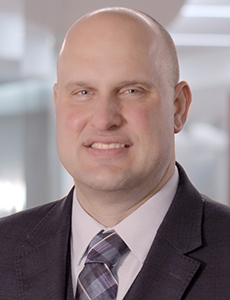
Brad John, head of life sciences, The Hartford
Traditional biotech hubs like Boston, San Francisco, and Research Triangle Park in North Carolina continue to thrive, while emerging markets with specialized focuses are gaining traction. The Woodlands, Texas, for instance, has developed a niche in cancer research, creating what John describes as “an outsized demand for people, space, and additional resources that will likely continue to grow as we move forward.”
The cumulative effect of these factors is creating an impact on the industry greater than what has been observed in previous years. Whether this growth qualifies as truly “unprecedented” may depend on perspective, but the outsized impact compared to historical patterns is undeniable.
Substantive Shortages Strain Operations
As companies race to capitalize on growth opportunities, they’re encountering significant operational hurdles that threaten to constrain expansion. Two critical shortages—facilities and talent—are forcing organizations to adopt creative, sometimes risky solutions.
According to a CBRE study referenced by John, demand for research and development space is expected to increase approximately 40 percent year over year for 2025 compared to last year. This dramatic surge has created a severe supply-demand imbalance that’s forcing companies to explore unconventional solutions.
“When supply is limited and demand increases, it puts a damper on opportunities and forces people to look at different solutions,” John said. “We’re seeing a lot of repurposing in various forms, such as flexible leasing or changing the type of facility from one to another.”
Companies are increasingly utilizing spaces that historically haven’t served R&D purposes, a strategy that introduces new risks. The challenge is particularly acute given the significant capital expenditure required to establish a proper research facility.
“Setting up a facility, particularly for research and development, represents a significant capital expenditure,” John noted. “Leaders in these companies are actively seeking new and creative ways to address the problem without exhausting all available resources for that particular need.”
The talent shortage presents an equally formidable challenge. Companies are responding with various initiatives including internal retraining programs, condensed course loads, and on-the-job training efforts. Organizations are broadening employees’ skill sets to meet current demands, but the underlying macro factors driving the shortage show no signs of abating.
“I anticipate the talent shortage will persist as the underlying macro factors driving this situation aren’t temporary,” John said. “The challenge of finding and developing the right talent presents both a significant hurdle and a substantial opportunity for companies in our space.”
Emerging Risks Require Sophisticated Insurance Solutions
The rapid expansion and operational adaptations in the life sciences sector have created a complex risk landscape that demands careful management and appropriate insurance coverage. Facility repurposing, while addressing space shortages, introduces significant contamination and operational risks.
“These risks can take many different forms. It could be that the facility was never properly transitioned, or that some of the design was faulty,” John explained. “Often, it involves trying to stretch and use a particular facility or layout for something it was originally never intended for.”
Water damage claims have increased notably in repurposed facilities, frequently translating into contamination issues due to unpurified, non-processed water entering sterile or aseptic environments. When contamination occurs, the impact extends far beyond the initial incident.
“When facing microbial load or bacterial contamination, you must conduct a deep clean and reinvest in the facility,” John said. “You’ll need to identify the root cause and implement preventive measures. This process demands significant time, energy, and capital resources.”
These resources end up diverted from advancing the company’s core mission and objectives, potentially derailing critical development timelines or strategic goals. The challenge for insurance carriers is staying ahead of these evolving risks while providing comprehensive coverage solutions.
The Hartford has responded to these challenges by emphasizing risk engineering services and proactive risk management. The company is seeing increased demand from clients seeking to identify potential hazards before they become costly problems.
“The Hartford is definitely seeing an increase in client desire to engage our risk engineering team,” John said. “These teams identify potential services and help assess risks on the front end.”
The rapid pace of innovation, particularly in areas like artificial intelligence, is creating coverage complexities that cross multiple domains. John notes that AI presents different risk profiles depending on whether it’s the product itself or part of the process enabling product delivery.
“You need a partner able to respond when these types of exposures aren’t as clearly defined as they’ve been historically,” John said. “These exposures cross multiple domains—part digital, part cyber, part product liability, and part professional liability.”
For life sciences companies navigating this growth period, John recommends a systematic approach to risk management. First, identify specific operational needs. Second, recognize the risks associated with chosen solutions. Finally, partner with an experienced carrier that can contribute meaningfully to risk management conversations.
“Companies need a partner with a broad appetite willing to take on these various exposures and offer comprehensive product solutions that address all these risks in one or multiple offerings,” John said. “Additionally, the solution must be scalable.”
Looking ahead, the life sciences sector’s growth trajectory shows no signs of slowing. Companies that successfully balance aggressive expansion with thoughtful risk management will be best positioned to capitalize on the opportunities ahead. As John observes, there are always “unknown unknowns” in the life sciences sector, making it essential to work with partners who stay current with industry trends and emerging risks.
“If you’re not aware of the new trends, new technologies, and new potential coverage issues, partnering with an experienced carrier can help avoid the missteps. Agents should pair their life science clients with carrier specialists that know the unique challenges that come with expansion in the pharmaceutical and life sciences industries. The insurer can help companies prepare for and respond to through specialized coverage solutions and innovative risk engineering,” John said. &