Newsletters
 Risk Central
 Digital Edition
Insurance Investment Management in the Spotlight
In January of 2026, The Institutes, in conjunction with recently added affiliate InsuranceAUM.com, announced the creation of a new designation, the Chartered Insurance Investment ManagerTM, or CIIMTM. The designation is designed to bolster the knowledge and skills of insurance investment managers, an important and intriguing profession within the insurance universe. More detailed information about the designation, outlining course requirements and estimated time commitments, can be found here.
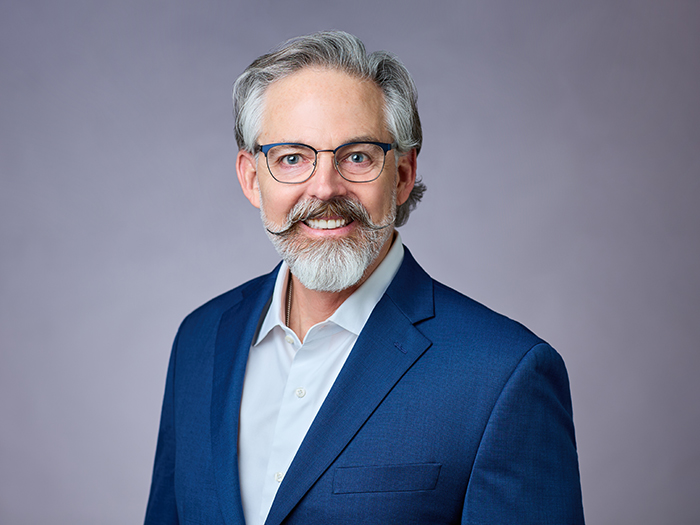
In late January, Dan Reynolds, the editor-in-chief of Risk & Insurance, caught up with Stewart Foley, CFA, the founder and senior advisor of InsuranceAUM.com to find out more about the designation and about the career paths of insurance investment managers. What follows is a transcript of that discussion, edited for length and clarity. Risk & Insurance is an affiliate of The Institutes.
Risk & Insurance: Great to get the chance to meet you Stewart. What was the motivation behind creating this designation?
Stewart Foley: Insurance companies, according to Statista, manage about 30% of the world’s invested assets, and that total corpus is approaching $40 trillion. Up until now, there has been no textbook or real resources on how to manage the complex Rubik’s cube, if you will, of considerations when running insurance money.
There is a lot of interest in this area, and it has typically required on-the-job training that takes years and years to acquire.
What we tried to do was find subject matter experts on a broad spectrum of topics that provide a foundational understanding of insurance asset management.
R&I: Who should consider pursuing this designation?
SF: The most direct audience includes insurance investment professionals who work for insurance companies, those at asset management firms in this field, and consultants who advise insurance companies. Beyond that, there are insurance professionals who aren’t necessarily involved on the investment side of the house but would like to know more.
This could include C-suite executives, investment committees of boards, and other board members. Regulators and NAIC staff are also top of mind. I think you could see some interest from the academic community as well.
It’s a big audience, but the core would be folks who are actually in this business, particularly those earlier in their careers. I also think RMI students and new graduates out of college can create a competitive advantage by upskilling themselves with this credential.
R&I: Is insurance asset management taught in undergraduate risk management programs, and do people typically set out to enter this field?
SF: It is largely not taught in risk management schools. I certainly don’t have exhaustive research, but I’m not aware of this topic being taught. The majority of people in this industry got here by happenstance—it wasn’t a plan.
I’ve met one person in the last thirty-odd years of doing this who said to me, “I set out to do this. My dad was in the investment area at Prudential or wherever, and this was what I wanted to do.” Other than that one person, I’ve never heard of anyone who set out to enter this field.
It used to be that insurance companies had a relatively narrow band of asset classes that they would buy. When I started in this business, there wasn’t nearly the interest and fervor that there is around it now. After a protracted period of ten years of very low interest rates, insurance companies began to broaden the spectrum of asset classes they’ll buy.
It’s gotten a whole lot more interesting, and it requires a much more diverse set of skills than it used to. I always say that the insurance industry has changed more in the last three years than it has in the last thirty. There are many reasons for that, but there’s certainly an increased interest in this particular area of asset management.
R&I: What knowledge can professionals immediately apply in their roles after completing the courses from The Institutes Knowledge Group and earning the designation?
SF: There are some core things that are universal to insurance companies, and very few things that are universally applied. These include the regulatory environment, which is very important when managing insurance assets, the ratings process, how liabilities are considered in the investment strategy of the business, risk management, and statutory accounting, which only exists in the insurance industry.
This is not intended to be a master’s degree in insurance asset management. It is meant to be broad and somewhat fundamental in trying to reduce the amount of time that senior folks spend educating junior folks on the rules of the game, if you will.
R&I: What pain points or blind spots do insurance investment professionals encounter in their roles that this designation could help address?
SF: I’ll give you a great example. I spent many years managing core fixed income for insurance companies, and I had essentially no visibility into any other asset classes. I was interested in learning about those asset classes, but there’s no curriculum available.
Only the managers of these asset classes publish anything about them—there aren’t academics publishing papers on this stuff. So it’s very difficult to figure out how other asset classes work.
My thinking is that The Institutes’ designation will help you broaden your skill set even if you’re an insurance investment professional today. I’ve been at this for over 30 years, and we went out and found about 40 subject matter experts on all of these assignments. What that tells you is that nobody knows it all.
There’s a lot to know, and we took an innovative approach that The Institutes Knowledge Group facilitated where we’re taking the knowledge out of the subject matter experts and creating a legitimate curriculum that stands up to academic standards. Many professionals know one facet or maybe two or three, but we haven’t found anyone yet that knows it all. So you can certainly improve yourself and broaden your skill set.
R&I: What makes this partnership with The Institutes Knowledge Group particularly meaningful and effective?
SF: The Institutes is the go-to source for professional development in every aspect of insurance, with the exception of investments. Part of that is because the folks who really know this business are out making a very good living implementing those skills. This partnership is really an attempt to democratize that knowledge.
I’m a first-generation college student, and I believe strongly that education is the great equalizer. In my own mind, I picture someone who is a first-generation college student who can create a competitive advantage for themselves by getting this credential and making themselves more competitive with the significant number of world-class asset management firms and insurance investors.
InsuranceAUM.com’s slogan is “the home of the world’s smartest money.” The reason for that is not that everyone in the insurance space has a better crystal ball than the next person. It’s that insurance asset management is far more complicated due to the externalities of managing those assets.
You’re managing assets for an operating entity that is writing business on an ongoing basis—the liabilities, the loss experience, the capital position, the place of domicile—a host of externalities that other institutional investors don’t have to deal with.
In one way, this rounds out The Institutes’ otherwise excellent offerings, and we’re thrilled to be a part of it.
R&I: What is your elevator pitch to an insurance executive about why they should devote resources to getting their teams educated on the investment side of the business?
SF: In almost every case, the investment area of an insurance company is a significant source of revenue and profit. It simply makes sense that more people in your organization have a better understanding of that part of the business.
There’s always been a divide between the operations side of the company and the investments side. What CIIM attempts to do is bridge that gap. It’s the same way I would encourage an insurance investment professional managing money for a property and casualty carrier to get their CPCU® designation so that they have a better understanding of risk factors.
On both sides of the house, you’re pricing risk. You’re deploying resources, taking on risk, and pricing that risk—whether that’s underwriting a potential insured or buying an investment.
The core skill set is similar, though the vocabulary and issues are very different. My point to an executive would be to: upskill your team so that everybody has a better understanding of all facets of the company.
R&I: Is there an educational path that you would recommend for students interested in insurance investment careers?
SF: I was a college professor for a number of years, and the obvious choice for academic pursuit in this field is a major in finance. A lot of folks in the investment area come out of finance programs. However, I believe graduates from risk management schools are also excellent candidates for this work.
People with a risk management background understand insurance, and it’s easier to teach the investment side than it is to teach the insurance side. Individuals with a foundation in insurance who have an interest in the investment area are well-positioned for success.
This area needs talent, and it’s almost impossible to find someone who already knows insurance. You typically have to teach them all of that. This designation provides a structured curriculum where candidates can learn many facets of this field.
I would encourage anyone coming out of school, or even while still in school, to take a look at the Chartered Insurance Investment Manager (CIIM). It’s a great way to upskill yourself and create a competitive advantage when interviewing for an internship, which is a great way to get started, or a full-time position. &