Newsletters
 Risk Central
 Digital Edition
HUB’s Recent Nonprofit Summit Through the Eyes of Scott Konrad
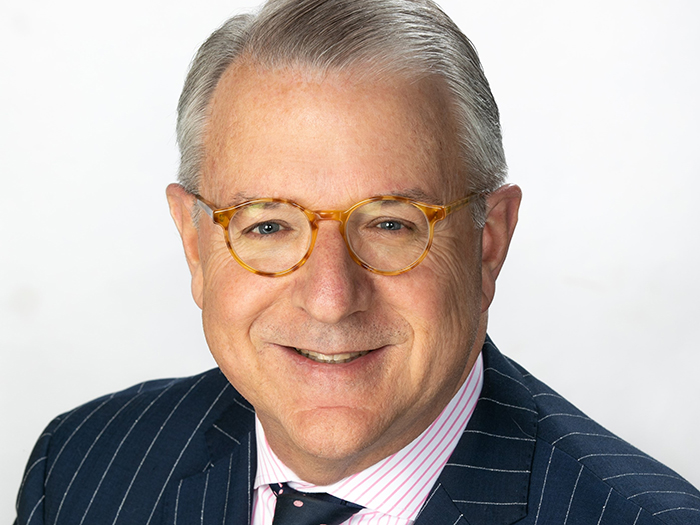
In mid-September, Dan Reynolds, editor in chief of Risk & Insurance, sat down with Scott Konrad, North American Nonprofit Practice Leader for HUB International. The two had just participated in HUB’s Nonprofit Summit in Philadelphia, which was the third annual installment of the initiative. What follows is a transcript of that discussion, edited for length and clarity.
Risk & Insurance: Thanks for giving us some of your time, Scott. What was the purpose in establishing this annual event?
Scott Konrad: The Summit’s all about learning, education, and building community. We launched our enterprise-wide Nonprofit specialty practice three years ago this past summer and it’s grown quickly. At this point, we have about 400 practitioners across North America who’ve declared Nonprofit as their major and are working throughout the charitable sector.
That count doesn’t include people working in Healthcare or Education, which we’ve set up as separate verticals. When we define nonprofit, we’re looking at everything else: arts and culture, human services, associations, foundations, religious entities, and international aid, relief, and development organizations.
Our practitioners are all electronically connected on a listserv and we meet virtually a half-dozen times a year, but the Summit provides an opportunity to bring us together face-to-face. It’s actually a subset of the practice that attends each year, with about 50 people out of the 400 total members nominated by their regional leadership to attend. We come together to learn from each other, exchange experiences, and explore how we can serve this sector more effectively.
R&I: What were your key takeaways from this year’s summit, and how do you assess its overall impact?
SK: The Summit exceeded our expectations, with overwhelmingly positive feedback both externally and internally. Everyone loved Philadelphia, and many attendees experienced the city – my old hometown — for the first time. On Thursday evening, I took a small group on a walking tour from the West End down Walnut Street to Society Hill, highlighting landmarks like the Bellevue Stratford (where Legionnaire’s disease first broke out in 1976), the Academy of Music, and Independence Hall, and strolling through the charming cobblestone streets of Delancey Street.
Beyond the location, the Summit provided a nourishing, mission-critical forum for our practitioners and centers of influence to connect with each other. None of us is an island—we all depend on each other to deliver results. So our clients benefit from creative solutions drawn from shared expertise, not just the advice of one or two service team members.
The Summit elevates this collaborative approach to a whole new level.
R&I: What are the key differences in underwriting and placing coverage for nonprofit organizations versus for-profit businesses?
SK: The two sectors are similar in that insurers working with nonprofits have the same basic mission as those working with for-profit entities: they’re both trying to collect more premium than they pay out in claims. But the nonprofit audience is quite different. Charitable organizations don’t have the luxury of passing on general and administrative expense increases to customers by raising the price of widgets.
Nonprofits are really getting squeezed. Their top-line revenue isn’t where they’d like it to be for a variety of reasons, and expense creep’s a phenomenon across the board. While these economics may not be an insurance company’s problem directly, it underscores the importance for both insurers and brokers to help these organizations control their costs.
I’d say we do a solid job here at leveraging our market relationships and expertise for the transactional piece of the business, but it doesn’t stop there. As a class, nonprofit buyers desperately need good help to keep a lid on their loss costs and manage their risks effectively. That’s the real value gap that we all fill.
R&I: How do the current pressures facing nonprofits compare to those of previous decades?
SK: I’ve been in the insurance business for 48 years, with at least 80% of that time working in the nonprofit sector. I’ve experienced roughly four market cycles over my career and can definitively say I’ve never seen anything like this before. The charitable and nonprofit sector is really in a difficult place.
Circumstances vary, but consider the prototypical global NGO working in aid, relief, and development. When USAID funding stopped, it happened instantly and NGOs immediately felt the bite. I have one organization with a workforce of 700 people working in dozens of countries that had to sever 20% of its workforce in one fell swoop and cut back programmatically.
On the other hand, in the domestic human services sector, it’s more of a trickle-down effect. I have clients that receive state or local government funding to provide certain human services, and that funding trickles down from the federal level. While it takes time for federal cuts to reach the city or state level and ultimately the nonprofit, they’ll eventually feel the effects.
We’re going to see contraction in the sector through headcount reductions or programmatic cuts. I think this will also accelerate mergers and acquisitions, as two nonprofits doing substantially the same work may not be able to survive independently and will need to marry to continue their missions. I fear that many nonprofits, particularly smaller ones, simply may not survive.
According to IRS stats, there are almost 2 million tax-exempt entities, but about 95% of these are organizations with annual revenues of $1 million or less. I’m not talking about insurance budgets, but total annual revenues. These folks are going to have a really tough time.
R&I: What risks and challenges are nonprofits facing around mergers and acquisitions and how can brokers and underwriters help?
SK: Every merger and acquisition comes with risk. On the for-profit side, HUB’s very active in the M&A segment, working with many businesses on due diligence reviews. We expect to apply those same skills to the nonprofit sector.
More broadly, we need to be enterprise-focused and creative to solve nonprofit needs. Beyond nonprofit-specific challenges, the insurance market at-large is dealing with more frequent and severe weather events. We’re seeing significant property damage in places we never expected, along with social inflation and nuclear verdicts that are limiting underwriting appetite.
We need to be more resourceful, whether that’s exploring alternative risk financing mechanisms like captive insurance facilities, introducing value-added services, or simply holding these nonprofits’ hands. We need to prove that we care and will be there for them over the long haul.
R&I: Has the sophistication of risk managers in the nonprofit sector evolved over the decades?
SK: Absolutely. While it’s dangerous to generalize, nonprofits are much more risk-aware now than they were in the mid-1980s when I first entered the sector. Organizations like the Nonprofit Risk Management Center—a nonprofit outside Washington that exists specifically to serve other nonprofits in the areas of risk and insurance—have been instrumental in this evolution.
Thanks to these initiatives and the work of specialists in the sector, nonprofits now have their eyes open to a much greater degree. We see boards of directors embracing enterprise risk management and driving it throughout their organizations. Nonprofits are now much better equipped to deal with hazard risk, operational risk, financial risk, and strategic risk across their businesses.
While they may not have full-time dedicated risk managers, they do recognize the need for that kind of expertise and are willing to pay for it. That’s where specialists like us can really make an impact on an organization’s economic viability, vitality, and resilience.
R&I: What advice would you give to younger brokers who are breaking into the business or pursuing a career serving nonprofits?
SK: I spend a lot of time trying to recruit missionaries into my practice, some more seasoned than others, but I’ve also brought four or five young people into our industry in the last couple of years. We’re seeing a brain drain as the baby boomer generation goes off into the sunset, and we need new talent on the other end of the spectrum.
With respect to nonprofits in particular, my first piece of advice is to immerse yourself in the sector to understand what makes it tick, what the big picture trends are, and what challenges buyers face. We need to be able to see the world through the buyer’s lens and then connect the dots over to our skill set.
I’d also say be curious and be patient. Don’t sell too hard—that’s the kiss of death! Become a problem solver, not a product peddler.
If you can do all those things, you’re going to make some lifelong friends and enjoy an incredibly rewarding career. &