Newsletters
 Risk Central
 Digital Edition
How AI Is Reshaping Claims Handling — And Why Human Connection Matters More Than Ever

The workers’ compensation sector of the insurance industry is in the midst of a significant technological transformation. Artificial intelligence and automation are rapidly changing how claims organizations operate, shifting the role of claims adjusters from task-driven administrators to outcome-focused specialists. Yet amid this digital evolution, an unexpected trend is emerging: the more technology handles routine work, the more critical human skills become.
For claims professionals who have spent years buried in administrative tasks, this shift represents both a challenge and an opportunity. The question facing the industry is not whether to adopt AI, but how to implement it in ways that enhance rather than diminish the human elements that drive successful claims outcomes.
“I think the biggest thing is making sure we don’t lose sight of the human touch,” said Ryan Murphy, VP of Product for Enterprise Claims at CorVel. “As great as artificial intelligence is and as useful as it can be within a claims organization or any industry, the human touch is really what makes the difference at the end of the day.”
From Task-Driven to Outcome-Driven: A New Era for Claims Specialists
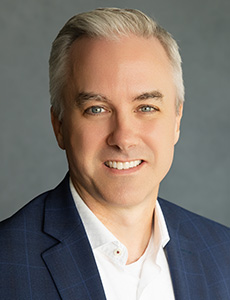
Ryan Murphy, VP of Product for Enterprise Claims, CorVel
Historically, claims adjusters have operated in a task-driven environment, spending significant portions of their day on administrative functions. Chasing documents, following up with multiple parties, handling claim assignments, and documenting activity consumed hours that could otherwise be spent on substantive claim management.
“Previously, adjusters spent much of their time chasing documents and people, and handling administrative work like claim assignments and documentation of activity,” Murphy said. “Now, automation is taking some of that off the desk.”
This shift is fundamentally changing how claims specialists approach their work. Rather than jumping from task to task and checking boxes, professionals can now take a more strategic view of their caseloads.
“Essentially, this is returning time back to the claim specialist so they can focus on the management of the claim,” Murphy said. “Rather than simply completing day-to-day tasks and checking the box, they can be more thoughtful and intentional with the management of the claim.”
The organizational impact extends beyond individual productivity. AI technology is proving valuable for operational management, helping supervisors evaluate caseloads and make informed staffing decisions. However, Murphy emphasized that human oversight remains essential.
“We use technology to identify optimal caseloads, allowing claims specialists to handle claims more efficiently while focusing on the most critical aspects of each claim. It is essential that the information generated by AI is reviewed and validated by a human to ensure its accuracy. Additionally, AI can provide valuable context to this information.”
One significant benefit of more manageable caseloads is reduced litigation risk. When claims specialists are constantly reactive, putting out fires rather than proactively managing files, communication gaps emerge. Those gaps often lead to escalations and, ultimately, litigation.
“Gaps in communication or long stretches between touchpoints in a file tend to lead to litigation or escalations within the claim operation,” Murphy said. “Technology certainly has a place in reducing these escalations because it enables teams to address issues promptly and focus on what really matters.”
Reaching Injured Workers Where They Are
Beyond internal workflow improvements, technology is transforming how claims organizations communicate with injured workers. Text messaging, in particular, has emerged as a powerful tool for improving both the quality and responsiveness of interactions.
The traditional challenge is familiar to any claims professional: phone tag. Investigations drag on because adjusters cannot reach injured workers, and injured workers cannot reach adjusters. This frustration compounds stress during an already difficult time for someone dealing with a workplace injury.
“Historically, not that long ago and sometimes even today, you would have a difficult time getting ahold of somebody, and your investigation would drag on because you’re playing phone tag,” Murphy said.
Text messaging solves this problem by giving injured workers more control over the interaction while simultaneously improving responsiveness.
“Being able to send a text message lets them know — for example, ‘Dan, I’m going to be calling you in twenty minutes,’ with a little bit of context about what that’s about,” Murphy explained. “Are you going to be around? Yes. They recognize your phone number, answer the phone, and you’re able to have that interaction and get it done quicker and more timely.”
The benefits extend beyond simple scheduling efficiency. Texting helps set expectations throughout the claims process, which is particularly valuable for workers experiencing their first claim.
“It adds context to the process and makes the injured worker more comfortable, especially if it’s the first time they’ve had to deal with it,” Murphy said. “When you’re sitting in the claim specialist position, it’s what you do all day, but you can forget that this might be Dan’s first claim.”
This proactive communication approach — explaining the process, clarifying roles, and outlining how the claims specialist will help the injured worker return to health and work — serves a dual purpose. It improves the claimant experience while also helping avoid escalations that can complicate claims.
“When we text someone to set up a conversation, people respond more quickly and are more receptive to the process,” Murphy said.
Returning to What Works: Technology Enables Human Connection
Perhaps the most paradoxical outcome of increased automation is how it enables claims specialists to employ traditional techniques that technology itself had displaced.
“It’s interesting how technology can bring you forward while simultaneously bringing you back to where you were — to actual phone conversations as opposed to doing everything through email,” Murphy said. “It’s somewhat paradoxical when you think about it.”
For years, increasing caseloads and administrative burdens pushed claims professionals toward email as the default communication method. It was efficient for managing volume but sacrificed the relationship-building that comes from voice-to-voice conversation.
“Technology is pulling you forward, but it also allows you to employ some of the old techniques that were successful and remain successful today,” Murphy said. “You just haven’t had the time to do them.”
Employee feedback reflects this shift, though Murphy noted that recognition of the change often comes gradually.
“It returns time to people, so they’re now able to make those connections and actually get on the phone with someone as opposed to corresponding simply through email,” he said. “It’s a slow process. It takes time to reach that point where you realize you’re getting more and more time back.”
As claims specialists gain experience with AI-assisted workflows, they begin to recognize the transformation in their daily work.
“They can look back and say, ‘My gosh, I’m doing things that I haven’t been able to do before,'” Murphy said. “So it’s a slow recognition of it, but they certainly are recognizing it.”
This evolution addresses a common concern about AI adoption: the fear that automation will eliminate jobs. Murphy offered a different perspective.
“I don’t think it’s any threat of job loss. It’s really about making your role more prominent within the process, allowing you to focus on your core competencies while also being more empathetic and ensuring that human connection,” he said.
The technology enables specialization, allowing claims professionals to concentrate on investigations, settlement strategies, and claim evaluations rather than administrative tasks.
“While AI can help present and organize information in an orderly fashion, the claim specialist will always be necessary because they’re the human factor,” Murphy said. “They make that critical connection with the injured worker, the employer, and all the other parties to the claim.”
Looking ahead, the successful integration of AI in claims management will depend on maintaining this balance between technological efficiency and human judgment.
“We need to ensure that empathy comes through from the claim specialist and that injured workers are still able to reach out and connect whenever they have a question,” Murphy said. “At the same time, we should use technology to our advantage as claim specialists to make sure someone’s available when people want to talk.”
For claims organizations navigating this transformation, the message is clear: AI is a tool that amplifies human capability rather than a replacement for it.
“Human interaction and intervention are critical,” Murphy said. “Technology is wonderful, but without someone there to use it correctly and effectively, it won’t deliver the results we need.” &