Newsletters
 Risk Central
 Digital Edition
Homeowners Underestimate Flood Risk Despite Growing Awareness, Survey Finds
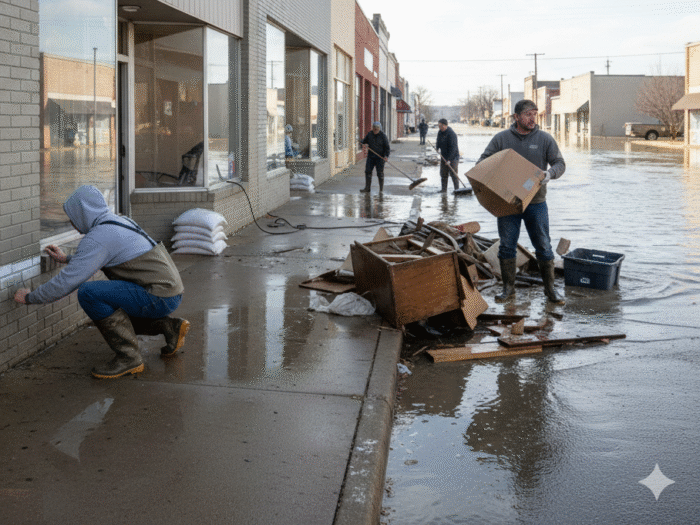
Most homeowners and business owners acknowledge that flooding has intensified in recent years, yet this recognition has not translated into meaningful protective steps, including purchasing flood insurance, according to Chubb’s 2026 Flood Risk and Resilience Survey.
The survey of more than 1,500 high-net-worth property owners, commercial businesses and agents and brokers highlights a fundamental gap in how property owners perceive flood danger, and in understanding of how flood insurance works.
Most respondents agree that flooding has become more common, more intense and more expensive to remediate than ever before, according to Chubb’s report, yet many homeowners and commercial businesses are not yet convinced that they personally are at a higher risk of sustaining damage and losses due to flooding.
For example, 84% of HNW homeowners said they agree that flooding is more common now that it was five years ago, yet 62% of homeowners who haven’t purchased flood insurance for their primary residence cited “low risk of flooding” as a top reason for going without.
Geographic proximity to water bodies presents a particularly stark case study, according to Chubb. The survey found that 82% of HNW homeowners reside within three miles of an ocean, lake, river or other body of water, yet only 48% reported serious concern about flooding. The remaining 52% showed little or no concern despite their elevated exposure.
Commercial businesses exhibited even lower concern levels, with less than a quarter expressing extreme worry about flood risk despite similar proximity to water.
“Many people underestimate their current flood risk based on a normalcy bias: If it hasn’t happened to them before, they’re assuming it won’t happen to them in the future, even if the risk is objectively high. Combine that with an optimism bias – they understand the risk, but believe it’s someone else’s problem – and the result is a false sense of security and delayed urgency,” said Louis Hobson, Senior Vice President, North America Flood Insurance, Chubb.
The root of this perception problem lies partly in how property owners obtain information, according to the report.
Government-issued flood maps—which 70% of homeowners and 52% of commercial businesses rely on—frequently fail to capture the modern flood reality. Many of these maps do not adequately account for the surge in extreme rainfall events, which have become increasingly common.
According to U.S. government statistics, 99% of U.S. counties have been impacted by flooding since 1996, the report said. in addition, nine of the top 10 years for severe one-day precipitation events have occurred since 1995.
Insurance Misconceptions Perpetuate Underprotection
Beyond misunderstanding personal risk, property owners harbor significant misconceptions about insurance coverage for flooding, according to Chubb.
More than one in 10 HNW homeowners without flood insurance mistakenly believe their standard property policies cover flooding from natural disasters. This false sense of security represents a critical knowledge gap that brokers identify as a top challenge; 49% of personal lines brokers and agents cited this misconception as one of the most common obstacles when discussing flood coverage with clients.
Cost concerns compound the insurance problem. Among commercial businesses, 36% cited premium costs as a primary barrier to purchasing flood insurance, while 24% reported that limited policy availability complicated their search for coverage. Even those who have secured flood insurance may harbor dangerous misconceptions about their protection levels.
The survey revealed that over 90% of commercial businesses with flood insurance believe their coverage is adequate, yet only 43% reported that their insurance fully covered damages from recent flooding events. The remaining 56% found their policies covered only most or some costs, leaving significant gaps.
The financial consequences of flooding can be severe. Nearly three-quarters of commercial businesses that experienced flooding faced repair bills exceeding $50,000, with a quarter enduring damages between $100,000 and $500,000, the report noted.
Resilience Measures Remain Underutilized Despite Recognition
Property owners demonstrate impressive awareness of resilience strategies—from basic drainage systems and flood barriers to technology solutions like water sensors and drones. However, knowledge has failed to drive implementation, Chubb found: While nearly half of homeowners expressed confidence in these protective measures, fewer than a third had actually deployed them.
Commercial businesses showed greater urgency and follow-through, with 58% actively seeking resilience tools and services. This disparity likely reflects the fact that for businesses, flooding threatens operational continuity and revenue, not merely structures, the report said.
Agents and brokers play a critical role in bridging these gaps, according to Chubb. Among homeowners who implemented flood prevention and mitigation measures, 52% cited advice from trusted experts as influential in their decisions.
Obtain the full report here. &