Newsletters
 Risk Central
 Digital Edition
Focus on Charity: 5 Questions for Crum & Forster CEO Marc Adee
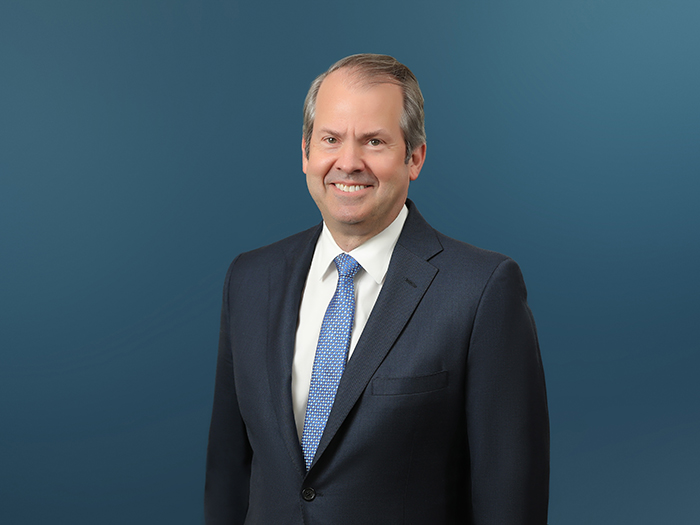
In late 2025, Dan Reynolds, the editor in chief of Risk & Insurance, caught up with Marc Adee, the CEO of Crum & Forster. The occasion was the announcement that the insurance firm made a substantial commitment to addressing food insecurity in vulnerable populations.
The company announced that it had made its largest contributions ever to Feeding America, enough to fund 10 million meals among seven regional food banks. The company also committed funds to nourish.NJ, with which it has a longstanding relationship, and Operation Homefront, which seeks to alleviate food insecurity among veterans of the U.S. Armed Forces. What follows is a transcript of that discussion, edited for length and clarity.
Risk & Insurance: Thanks for meeting with us Marc. How long has Crum & Forster been involved with Feeding America, nourish.NJ, and Operation Homefront?
Marc Adee: Feeding America is a new partnership that started in January 2025, but we have been supporting some Feeding America partner foodbanks for many years. We began supporting Operation Homefront in 2023. We’ve been partners with nourish.NJ for 18+ years (they were formally known as the Community Soup Kitchen).
The way we approach charitable impact is that it all bubbles up from within the organization. I believe it was around 2021, shortly after COVID, when we examined how to conduct charitable activities and formed a charitable impact committee.
The committee was much closer to the mood of the employee base — and probably the wider population — than I would be. The charitable impact committee, however, came back with a clear message: food insecurity was much closer to what employees care about.
R&I: What impact does being in a company that is upfront and active about charitable giving have on employee engagement?
MA: I think it does have an impact. It’s part of our overall culture. Certainly, I feel that insurance — the product we sell — is a social good in the first place, which I think a lot of people overlook.
Beyond that, we give back to the communities as part of our culture, and I think people appreciate that. There’s a generational expectation now that companies should do this. It’s consistent with how we think about our place in the world — we’ve done well, so we should give back.
That’s one of the reasons we have a ground-up approach rather than top-down. We try to get people involved in volunteer activities. For example, if we make a big contribution to nourish.NJ, we hope that some of our people will go and actively participate — see how it works, see why we’re doing it, see who’s getting the help, which brings it home.
That demonstrates it isn’t just lip service; we’re actually doing things. We also encourage people to serve on charity boards, which provides good leadership experience and helps round people out before they move up at Crum & Forster.
R&I: Is charitable giving more important or central to the worldview of younger employees in their twenties and thirties compared to previous generations?
MA: I think it is. If you think back to the eighties, that wasn’t really a central theme for people coming into business. You may have come to that personally as you moved up in management, but it wasn’t one of the things that was necessarily front and center back then.
Now I think it is. People look to differentiate and want to feel good about the company and what they’re doing. For us, the interesting part is trying to get those younger people who are interested in us doing charitable things to then participate themselves.
That extra step where they’re actually active and doing some of the work enriches the experience and makes them feel better about the company. I do think that’s true.
Now, let’s not say that everybody else doesn’t appreciate it as well now that we’re doing it, but I do think there’s some expectation. Certainly, it has to be authentic and real — not just something you say you do or talk about and then don’t do.
R&I: What does it mean to you personally to be part of an organization that makes such substantial contributions to those in need?
MA: This situation was particularly interesting because there was a moment in time where many people were going to be in a difficult place. With the government shutdown and other circumstances, our partners at food banks and food security organizations were in a tough position. It was really meaningful that we could do something not only significant but also timely.
We didn’t have to go through lengthy deliberation — everyone was aligned that this was the right thing to do at the right time. The decision came together within the course of a weekend, and that was a crucial weekend. People were predicting huge need, and we could help alleviate that in a timely fashion.
Given the size of the contribution, it became clear to me that now was the time to act if we were going to do something. Many organizations might have waited and deliberated longer, but we recognized we needed to move immediately because that’s when they needed it most. Six weeks later, they might not need it, or the situation might have evolved in a way that our contribution wouldn’t have had as much impact.
R&I: What final thoughts would you like to share about your company’s involvement in these efforts?
MA: It’s part of our culture and (parent company)Fairfax Investment Holding’s culture. This particular instance we discussed demonstrates what companies can do to help out in crunch times.
My main point is that what we inherently do is a social good, and I think that gets lost because people just don’t understand it. Simply put, nothing happens without insurance.
Beyond that core function, we also engage in charitable activities on top of what we do normally. Both are valuable contributions. &