Newsletters
 Risk Central
 Digital Edition
Sponsored Content by One Call
Translating Medical Imaging Into Actionable Insights: How Radiologists Are Improving Workers’ Compensation Care
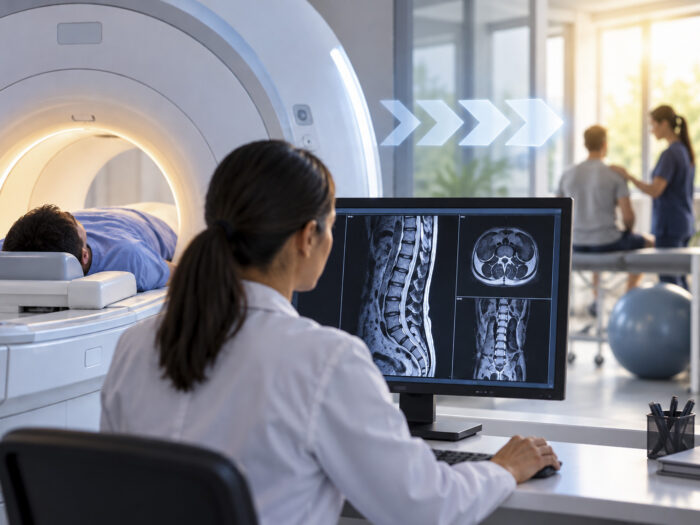
In workers’ compensation cases, medical imaging plays a critical role in determining treatment pathways and outcomes for injured workers. Yet a persistent communication gap exists between radiologists and the non-physician professionals — adjusters, trainers, and nurse practitioners — who must interpret imaging findings and make care decisions based on those reports.
This gap is not due to a lack of information. Radiologists provide comprehensive, clinically accurate reports based on their specialized expertise in musculoskeletal imaging. Because these reports are traditionally written for physician audiences, including orthopedic specialists, they often contain terminology and descriptive detail that may not align with the day-to-day workflow or background of non-physicians. As a result, determining key distinctions—such as whether findings may be acute, chronic, or clinically significant—can require additional interpretation that is not always straightforward.
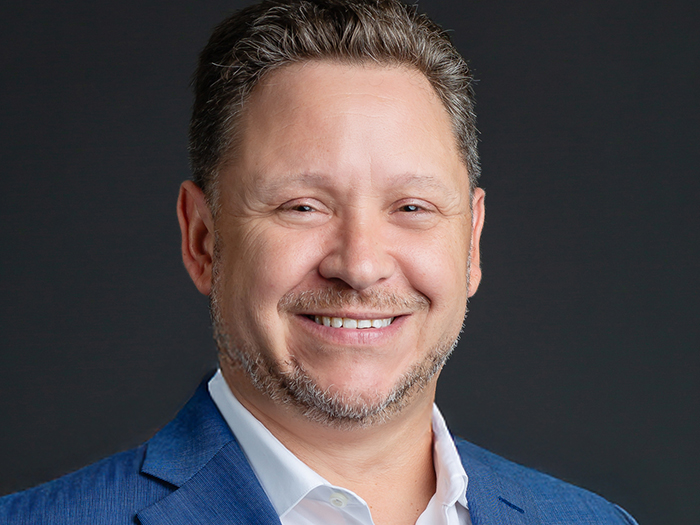
“As radiologists and doctors, we write reports for other physicians, using specialized medical language,” said Jonathan Luchs, MD, FACR, the head of One Call’s Radiology Advisory Board and Chief Medical Officer at Premier Radiology Services.

Jonathan Luchs, MD, FACR, Head of One Call’s Radiology Advisory Board and Chief Medical Officer, Premier Radiology Services
“While this specialized medical language is used to be as specific and descriptive as possible to our referring clinical physician colleagues, it can be confusing to the non-physician.”
This communication challenge has implications beyond clarity. It affects how workers move through the system, which care pathways they’re directed toward, and ultimately, clinical outcomes.
Through a strategic partnership between One Call and Premier Radiology Services, One Call’s clients — including insurance companies, third-party administrators, and self-insured organizations — gain access to the expertise of more than 80 sub-specialized radiologists. The partnership leverages radiologists who are fellowship-trained in multiple subspecialties, such as musculoskeletal radiology, neuroradiology, and body imaging. Their combined expertise ensures that One Call’s clients continue to receive diagnostic imaging interpretation that aligns with industry best practices and ultimately, provides injured workers with the best possible outcomes.
The Role of Timing in Treatment Decisions
Understanding whether an MRI finding is acute, subacute, or chronic is not merely an academic exercise. It directly influences how an injured worker should be treated.
For decades, the standard approach was conservative: physical therapy first, imaging later. If a worker didn’t improve after several months of therapy, then an MRI might be ordered. But by that point, initial healing has often begun, or conversely, the lack of targeted treatment may have created additional problems.
“It used to be, go to physical therapy for two or three months, and then if the patient doesn’t do well, order an MRI,” Dr. Luchs said. “But at that point healing has already started, or it’s worsened.”
Carriers and self-insured employers have begun questioning this timeline. Early MRI imaging — within the first two months following injury — can help identify the nature and age of injuries, allowing clinicians to prescribe appropriate treatment from the outset rather than diagnosing based on symptoms alone.
The concern that early MRIs would significantly increase costs has not typically borne out: Several large, self‑insured employers working with radiologists at Premier Radiology Services have observed that earlier imaging can help guide workers toward more efficient, targeted care pathways, which may contribute to reducing unnecessary or prolonged treatments.
“Obtaining an MRI early in the recovery process — at a cost of only a few hundred dollars — gives the care team clearer insight into the injury and helps determine the most appropriate treatment pathway,” Dr. Luchs said.
Decoding the Physics of Injury

Brian Murphy, PT, DPT, COMT, Vice President of Specialty Channel Strategy, One Call
The ability to determine injury timing from an MRI rests on fundamental physics. Understanding this science helps explain why specialized communication matters.
An MRI works differently from X-rays or CT scans. While those modalities measure tissue absorption of radiation, MRI manipulates hydrogen protons within tissue allowing the study to determine if the tissue has been recently injured or chronically deformed.
When tissue tears acutely, cell walls rupture and release previously tightly bound hydrogen protons. These mobile protons create a characteristically high signal on the MRI — a telltale sign of recent injury. As tissue heals over weeks and months, new healing tissue forms, binding those protons again, and the signal decreases. This measurable change allows radiologists to determine whether an abnormality is weeks old or years old.
“You can tell the difference in whether what you are observing just happened or if it happened a long time ago,” Dr. Luchs said. “That high signal from those movable protons is a sign to radiologists that this just happened.”
Findings can be identified as acute (zero to two months), subacute (two to six months), and chronic (six months or more).
This principle applies even in complex cases. A 50-year-old factory worker with pre-existing arthritis who suffers an acute knee injury may have both chronic degenerative changes and an acute tear superimposed on that degeneration. An MRI can distinguish between the two, clarifying which findings resulted from the current injury and which preceded it.
Yet this nuance — the ability to differentiate acute from chronic findings — remains absent from many standard radiologic reports. Radiologists trained to communicate with surgeons may not explicitly state injury timing because the surgeon has examined the patient and already knows the injury is acute. A non-examining adjuster, however, needs this information explicitly stated.
Creating Clarity for Better Decisions
Recognizing this gap, One Call and Premier Radiology Services developed an approach specifically designed to translate imaging findings into actionable language for workers’ compensation professionals.
Rather than rereading entire imaging studies, the Age of Injury (AOI) report focuses on commenting on the primary radiologist’s findings and explaining what they mean for injury timing and care. The AOI report uses clear terminology: acute, subacute and chronic. A summary section lists each positive finding and categorizes it simply, removing ambiguity.
“We extract the key details from the primary AOI report and explain what the findings mean, including whether they may represent acute changes and what conditions are commonly associated,” Dr. Luchs said. “The intent is to make the information quick and easy to interpret by clearly summarizing the MRI report and imaging findings.”
“AOI brings objective clarity to claims by adding specialized and independent medical insight to support care teams and it improves efficiency and enables faster and more informed claim decisions,” said Brian Murphy, PT, DPT, COMT, Vice President of Specialty Channel Strategy, One Call. “By supporting care teams in moving from uncertainty to confidence, AOI supports claims efficiency and smooths the road to recovery for injured workers. It’s an evidence-based tool to enhance both recovery timelines and the human experience of the claims process for the injured worker.”
The radiologists providing these assessments are fellowship-trained subspecialists in musculoskeletal imaging — a specialty concentrating on the evaluation of bones, joints, muscles, spine, etc. This specialization matters.
“Musculoskeletal radiologists spend their day analyzing imaging studies of bones, joint, muscle, nerves, ligaments, tendons, spine, and so forth,” Dr. Luchs said. “Musculoskeletal radiologists tend to have excellent working relationships with their clinical team colleagues — Orthopedic/Spine Surgeons, Trainers, Physical Therapists, etc.” “Musculoskeletal Radiologist are not only experts in recognizing and diagnosing imaging pathology but also have a strong understanding of mechanism of injury.”
This approach transforms the utility of imaging for everyone in the system. Adjusters gain clarity about injury characteristics and can determine appropriate care pathways. Physical therapists and trainers further understand how to structure rehabilitation. Orthopedic surgeons reading the AOI report gain an additional expert opinion about timing and findings.
Perhaps most importantly, injured workers experience better outcomes when care teams clearly understand the imaging findings.
The solution evolved from recognition that traditional independent medical exams, while helpful for carriers, weren’t designed to optimize patient care or improve clinical decision-making. “We asked ourselves: How can we create a report that is geared toward the care of the patient?” Dr. Luchs said.
As imaging is increasingly ordered earlier in the injury timeline and radiologist shortages persist, clear communication about findings becomes even more critical. Adjusters and other professionals need to extract maximum value from imaging to guide decision-making efficiently.
The principles underlying this approach — understanding MRI physics, recognizing the distinction between acute and chronic findings, and translating specialized language for non-specialist audiences — represent fundamental improvements in how workers’ compensation systems can leverage diagnostic imaging to serve injured workers more effectively.
To learn more about One Call, visit https://onecallcm.com/.
To learn more about Diagnostics solutions, visit https://onecallcm.com/solutions/diagnostics/.


This article was produced by the R&I Brand Studio, a unit of the advertising department of Risk & Insurance, in collaboration with One Call. The editorial staff of Risk & Insurance had no role in its preparation.