Newsletters
 Risk Central
 Digital Edition
Sponsored: Optum Workers' Comp and Auto No-Fault
How Workers’ Compensation Organizations Can Bridge Critical Talent and Knowledge Gaps

Workers’ compensation is facing a well-documented but urgent dilemma. As the average age of industry professionals continues to rise, experienced employees are retiring at an accelerating pace, taking decades of institutional knowledge with them. Organizations are struggling to fill specialized roles in fields such as data analytics, account management, complex claims adjusting, and regulatory compliance. Meanwhile, polls show that younger professionals rarely view insurance as a career destination, leaving companies vying for limited talent in an increasingly competitive employment market.
The challenges created by a shortage of trained professionals threaten operational efficiency, claims outcomes, and the industry’s ability to serve injured workers effectively. Industry leaders, who oversee not only current service delivery but focus on emerging needs and future trends, are becoming increasingly concerned.
“We are concerned about future skills gaps in our organization, and we are hearing from our business partners that they are also worried about losing some of their most experienced professionals,” said Dionne Lacey-Artis, Chief Business Officer at Optum Workers’ Comp and Auto No-Fault.
“This becomes particularly critical for the complex side — the catastrophic claims. When you think about workers’ comp, it follows the eighty-twenty rule: most claims are easy ones that come in and out, but that 20% of really difficult claims need people who have specialized knowledge and experience.”
Identifying the Core Skills Crisis
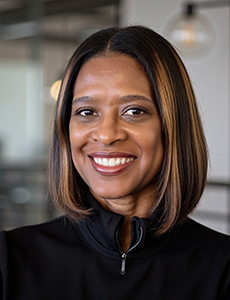
Dionne Lacey-Artis, Chief Business Officer, Optum Workers’ Comp and Auto No-Fault
There are a number of areas where the talent shortage is already evident. Organizations report difficulty recruiting professionals who can transform raw data into actionable insights — a capability that is critical for improving outcomes across the industry.
“We rely on data in this industry and continue to discover better ways to turn data into the types of information that will allow us to provide enhanced support to clients and injured workers. But we’re worried that some of this hard-learned knowledge will be lost if our most experienced individuals retire,” Lacey-Artis said. “So we are working hard to pass this knowledge along to younger employees and new hires, who also bring in new concepts and techniques.”
Another critical area involves regulatory expertise. With workers’ compensation laws varying by state and constantly evolving, organizations need professionals who understand compliance requirements and can build the relationships necessary to navigate this complex landscape.
The shortage of leadership talent represents perhaps the most pressing challenge. With recent retirements, the pipeline of individuals prepared to step into senior roles to support the industry is fairly thin.
“I would say a critical challenge in our industry involves senior leaders. We’re losing a lot of them,” Lacey-Artis noted. “The pressing question is: what are we doing to reach, mentor, and develop the next group of leaders to help us make the most important decisions in the future?”
Tackling the Knowledge Transfer Problem in a Hybrid Work Environment
The shift to hybrid and fully remote work has created an unexpected paradox: while remote flexibility appeals to many workers, it simultaneously complicates knowledge transfer from experienced professionals to the next generation.
“Knowledge transfer is incredibly difficult when people aren’t physically together, and a significant number of workplaces currently use this model,” Lacey-Artis explained. “But hybrid and remote work is probably essential for the future if we want to attract young professionals and other talent to this industry.”
Organizations that have tackled this challenge effectively employ a multi-layered approach to learning and development. Rather than relying on single training events, forward-thinking companies are structuring knowledge transfer across multiple touchpoints designed to meet employees where they are.
“In my organization, we have what we call Tuesday Training sessions where we bring people together digitally to refresh their knowledge or learn new material. But even when you bring all those folks together and make allowances for questions, many people won’t ask questions in a large group,” Lacey-Artis said.
“So, we take it another step. When they get into their smaller pods — their department meetings — where they feel comfortable with the people they work with most intimately, we give them the opportunity to ask questions. Lastly, we use one-on-one meetings to allow employees to discuss material, ask questions, and provide feedback.”
This tiered approach ensures that learning is reinforced at multiple levels and that retention gaps can be identified and addressed. The one-on-one component proves particularly valuable for assessing whether knowledge transfer has been effective.
“This helps us ensure we’re being intentional about whether they learned what we needed them to learn, how they feel about it, and whether there are things we should be doing differently,” Lacey-Artis explained. “I think all of those things have to be done in a way that meets people where they are to help train them for the future.”
Building a Talent Pipeline Before It’s Too Late
Rather than waiting passively for individuals to enter the industry, forward-thinking organizations are taking proactive steps to build awareness about insurance careers among students who’ve never considered the field and people who work in other industries.
The challenge is significant: many people lack basic knowledge about insurance as an industry, let alone workers’ compensation specifically.
“When we ask people to raise their hands and tell us a little bit about what they know about insurance, most of the time there are very few hands raised,” Lacey-Artis said. “Sometimes there’s a little bit of tentativeness — they raise their hands but they’re still unsure what it is.”
Organizations are responding by partnering with high schools and community programs to introduce students to insurance careers, often providing financial support for licensing requirements. This approach targets not only college-bound students but also economically disadvantaged youth who might find stable employment in the industry. Lacey-Artis took this concept a step further by teaming with several other industry leaders to establish WRMC (Workers’ Compensation, Risk, Managed Care, and Claims), a 501(c)(3) non-profit organization designed to attract talented economically disadvantaged high school seniors to the workers’ compensation industry.
“We’re really trying to position ourselves to attract that next generation of talent. When you think about how technologically savvy this group is, when you think about how they care about their impact on the world, we are really trying to find people who can be leaders,” Lacey-Artis said. “We are mentoring young people who have shown an interest in the profession, so they get to know what’s really going on. But we do it in a very compelling way.”
The ripple effects extend beyond the students themselves. “Not only are we introducing it to them, but then we find out that their parents are like, ‘I could do that,'” Lacey-Artis noted. “So as we are bringing new talent in, we’re changing communities for the better. And we’re developing people who can become leaders.”
Building Pathways for Career Growth and Job Satisfaction
Creating transparent career pathways is essential for retaining newly recruited talent. Employees expect to understand how they can advance within an organization, not merely hope advancement might occur.
“Employees don’t just want to feel that career progression might happen — they want to know how to make it happen. You have to clearly outline that path for them, and you have to map it honestly,” Lacey-Artis said. “What they’re really looking for is the ability to make an impact with a company that genuinely cares about their future growth, no matter what that looks like.”
Lacey-Artis encourages organizations to invest in mentorship programs and find opportunities to signal genuine commitment to employee development. This investment demonstrates care for employees’ growth regardless of whether they ultimately remain with the company.
Ensuring flexibility and access to modern technology are equally critical. Younger professionals have not only become accustomed to flexible work environments but expect to use contemporary tools to accomplish their work, not legacy systems.
Lacey-Artis is committed to making sure that current and future employees understand the importance of workers’ compensation services. “We also need to invest in elevating the purpose and impact of the work. People want to make a meaningful impact, and you can make a significant impact on your communities by supporting injured workers and injured parties.”
Turning Urgency into Opportunity
Looking ahead, the industry must recognize that the expected retirement wave represents both a crisis and an opportunity to reshape how organizations develop and deploy talent. Success requires immediate action on multiple fronts: building talent pipelines through community partnerships, structuring knowledge transfer across hybrid work environments, creating transparent career advancement pathways, and fundamentally reimagining how the industry markets itself to younger professionals.
“If people aren’t thinking about this, they need to take time for an assessment and look carefully at how they’re working with their employees internally,” Lacey-Artis said.
“More importantly, they need to evaluate what they’re doing to support bringing new people into the industry. It’s for their benefit to understand this, and to bring in that diversity of thought.”
To learn more, visit https://workcompauto.optum.com/.


This article was produced by the R&I Brand Studio, a unit of the advertising department of Risk & Insurance, in collaboration with Optum Workers’ Comp and Auto No-Fault. The editorial staff of Risk & Insurance had no role in its preparation.