Newsletters
 Risk Central
 Digital Edition
Sponsored: Munich Re
How Convective Storms Are Rewriting the Risk Landscape — and What Property Owners Can Do About It

For decades, hurricanes, earthquakes and wildfires grabbed the bulk of the headlines about catastrophic property risk. But in recent years, a different peril has surged to the forefront: severe convective storms, also referred to as severe thunderstorms, including damaging straight‑line winds of 58 mph or greater, large hail with a diameter of 1 inch or greater (about the size of a quarter), and tornadoes. According to Munich Re, severe thunderstorm losses in the United States amounted to $56bn in 2025, of which $42bn was insured – significantly higher than the 10-year average — a figure that would have been almost unimaginable a generation ago. For commercial property owners and their insurers, this shift demands a fundamental rethinking of how risk is assessed and managed.
“Convective storms are no longer a ‘secondary peril,'” said Maurice Marvi, a property loss control expert at Munich Re Specialty — North America.
“The frequency and severity of these events have increased to a point where they are driving some of the largest insured losses we see in any given year. That changes the conversation significantly for anyone with property exposure.”
The forces behind this escalation are multifaceted. Warmer atmospheric temperatures carry more moisture, which can fuel more intense thunderstorms, larger hail, and more powerful straight-line winds. At the same time, urban sprawl has pushed development into areas that were once open land, placing more structures in the path of destructive weather. What used to be a hailstorm over a cornfield could now be a hailstorm over a commercial district.
Compounding the challenge is the geographic unpredictability of these events. While “Tornado Alley” in the central United States remains a hotspot, damaging convective storms are increasingly striking regions that historically saw less severe weather activity — parts of the Southeast, Mid-Atlantic, and even the Northeast. In recent years, major hail and wind events have caused significant losses in states not traditionally associated with severe storm risk.
“We’re seeing convective storm damage across much larger parts of the country than people expect,” Marvi said. “It’s not confined to one region anymore. The exposure footprint has widened considerably, and that catches a lot of property owners off guard.”
Building a Stronger Defense: Risk Mitigation Best Practices

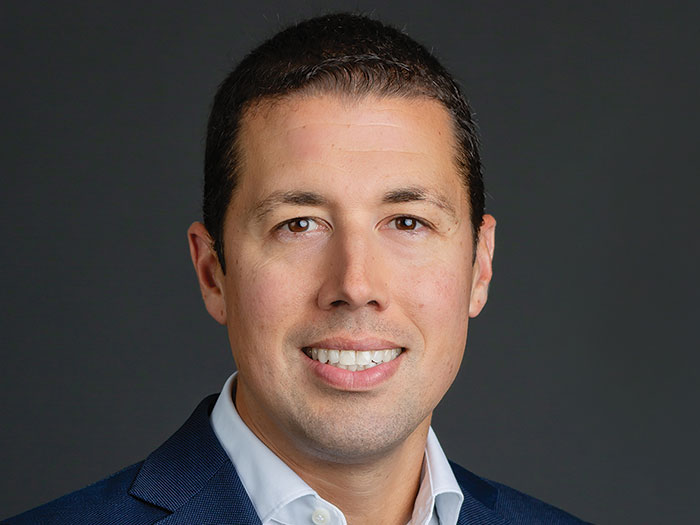
Maurice Marvi, Property Loss Control Expert, Munich Re Specialty — North America
While no property can be made completely immune to severe weather, there are proven strategies that can dramatically reduce the likelihood and severity of losses. The key, experts say, is moving from a reactive posture — dealing with damage after it occurs — to a proactive one that addresses vulnerabilities before the next storm hits.
One of the most critical steps is regular roof inspections. The roof is the first line of defense against hail, wind, and wind-driven rain, yet it is often a neglected component of a building’s exterior envelope. Over time, roofing materials degrade due to UV exposure, thermal cycling, and minor weather events that may not produce an obvious leak but steadily compromise the system’s integrity.
“A roof that looks fine from ground level can have significant damage that’s only visible upon close inspection,” Marvi said. “We recommend property owners conduct thorough roof assessments on a regular schedule — not just after a known storm event. Catching deterioration early is far less expensive than dealing with a catastrophic failure during a major storm.”
These inspections should evaluate membrane condition, flashing integrity, the securement of rooftop equipment, and the condition of edge metal and coping. For properties with older roofing systems, an assessment can also identify whether an upgrade to more impact-resistant materials — such as those rated by UL or FM Approvals — would be a worthwhile investment.
Beyond the roof, adequate spacing between buildings is another frequently overlooked factor in convective storm resilience. When structures are built too close together, windborne debris from one building can easily damage neighboring properties. Dumpsters, outdoor furniture, unsecured equipment, signage, and construction materials near building exteriors can all become dangerous projectiles in high winds.
“Spacing and housekeeping around the property matter more than people realize,” Marvi said.
“We’ve seen cases where the primary wind damage to a building was minimal, but debris from an adjacent property caused extensive harm. Maintaining clear zones and securing loose items is a straightforward step that can prevent significant losses.”
Other best practices include ensuring that doors, windows, garage doors and loading dock openings are rated for the wind speeds common to the region, maintaining proper drainage systems to prevent water intrusion during heavy rain events, and developing emergency preparation plans that can be activated quickly when severe weather warnings are issued.
How Munich Re Specialty Supports Proactive Risk Management
Knowing what to do and having the resources and expertise to actually do it are two different things — and that gap is where Munich Re Specialty focuses much of its effort.
As a specialty insurer with deep expertise in commercial property risk, Munich Re Specialty works directly with insureds and their brokers to identify vulnerabilities and develop tailored loss prevention strategies. Rather than simply underwriting risk and waiting for claims, the company takes an active role in helping policyholders strengthen their properties against convective storm damage.
“Our approach goes well beyond the underwriting process,” Marvi said. “We deploy risk engineers who visit properties, evaluate exposures, and provide detailed, actionable recommendations. We want to help our insureds avoid losses in the first place, not just respond to them after the fact.”
Munich Re Specialty’s risk engineering team conducts on-site property assessments that evaluate a building’s structural integrity, roofing systems, exterior envelope and surrounding site conditions. These assessments result in comprehensive reports that prioritize recommendations based on their potential impact on loss reduction. The team also provides guidance on building code compliance, material selection, and maintenance best practices.
Crucially, Munich Re Specialty brings a data-driven perspective to these consultations. Drawing on Munich Re’s extensive global database of natural catastrophe events and loss experience, the team helps property owners understand how their specific exposures compare to broader trends and where their most significant vulnerabilities lie.
“We have the benefit of seeing loss patterns across a very large portfolio and across many years,” Marvi said. “That gives us data-driven insights that an individual property owner might not have access to. We can say, based on real loss data, ‘Here are the improvements that will give you the greatest potential return in terms of reduced risk.’ That kind of specificity is what makes the difference between a generic checklist and a meaningful risk mitigation plan.”
Munich Re Specialty also places a strong emphasis on ongoing relationships with its insureds, providing updated guidance as storm patterns evolve and new building technologies become available. The goal is to create a continuous cycle of assessment, improvement, and reassessment that keeps pace with a changing risk environment.
Preparing for What’s Ahead
Looking forward, the trend toward more frequent and more damaging convective storms shows no signs of reversing. For property owners and the insurance industry alike, the imperative is clear: invest in mitigation now, or pay significantly more in losses later.
“The properties that perform best in severe convective storms are the ones where the owner took the time — before the storm — to understand their exposures and act on expert recommendations,” Marvi said.
“That kind of preparation doesn’t eliminate risk, but it can dramatically change the outcome when a storm does strike. And with the way these events are trending, it’s not a matter of if — it’s a matter of when.”
To learn more, please visit https://munichrespecialty.com/na.


This article was produced by the R&I Brand Studio, a unit of the advertising department of Risk & Insurance, in collaboration with Munich Re Specialty. The editorial staff of Risk & Insurance had no role in its preparation.