Newsletters
 Risk Central
 Digital Edition
Sponsored: AXA XL
How Companies Can Better Manage Risk as Markets Fluctuate

As insurance markets fluctuate — recent examples being casualty lines experiencing significant pricing pressure and capacity constraints affecting everything from commercial auto to CAT-exposed property coverage a few years ago — organizations may find themselves caught between two inadequate options: accepting coverage at higher prices or bearing risk entirely on their own.
The challenges in casualty are not insignificant. Over the past few years, increased litigation costs and enormous adjudicated settlements have made traditional commercial insurance in those lines increasingly expensive and hard to access. For companies with the sophistication and risk appetite to manage a portion of their own risk, this presents an opportunity, but one that requires a strategic approach and the right partner.
“We see that casualty (coverage difficulties) are here to stay because, over the past couple of years with social inflation and nuclear verdicts, we don’t see that coming to an end,” said Sylvain Bouteillé, Head of Specialty and of Alternative Risk Solutions at AXA XL. “The results of most casualty underwriters are not that great, so we can’t expect big discounts or significant price decreases on casualty products anytime soon.”
This market reality is driving a significant shift in how forward-thinking companies approach risk financing. Rather than viewing insurance in its traditional function, many are exploring alternative structures that allow them to assume larger portions of their risk while still maintaining protection against catastrophic losses.
Toward that end, AXA XL has created the above-referenced dedicated alternative risk solutions unit, headed by Bouteillé, that is meant to be a center of excellence for the entire organization in looking at creative risk solutions for clients.
The Rising Demand for Better Control of Risk Management
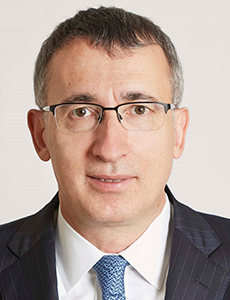
Sylvain Bouteillé, Head of Specialty and Alternative Risk Solutions, AXA XL
The push toward alternative risk solutions isn’t driven by a desire to go without insurance. Rather, it reflects a fundamental change in how companies view their capacity to deploy risk management resources in a way that is effective and affordable.
“More and more companies want to take care of their own destiny,” Bouteillé said. “Companies want to use these risk-sharing mechanisms more and more, and sometimes they have to use them more and more.”
This shift is particularly pronounced in hard-hit sectors like transportation. For companies operating large fleets of vehicles, the traditional property-and-casualty market has become increasingly unaffordable. Commercial auto represents one of the most challenging areas in traditional insurance right now, with underwriters maintaining strict disciplinary measures and broad rate increases.
“We’re seeing increased activity nearly every week tied to larger fleets or higher hazard exposures,” said Alonso Tello, Head of Captives at AXA XL. “Long haul trucking, for example, is what we’re encountering quite frequently.”
Beyond commercial auto, companies across industries are facing a fundamental problem: the coverage and pricing they can access through traditional channels no longer aligns with their actual risk profile and risk management capabilities. This gap between what the market provides and what companies need has created an opening for more creative risk financing structures.
Tello’s specialty, captives, are one of those structures. An insurance captive is a vehicle whereby companies essentially pay premiums into their own insurance company, to help manage their risk retention and hopefully generate an underwriting profit. Captives are becoming increasingly popular and better understood.
However, captives have limitations. A captive may not be licensed to write insurance in certain jurisdictions, or it may not have the capacity or market credibility to serve as the primary carrier for certain lines of business. This is where fronting carriers enter the picture.
“In captive fronting, the carrier typically gets involved when a client’s captive is not licensed or doesn’t have the ability to issue policies where they’re needed for their corporate parent and its affiliates,” Tello said. “That’s where the fronting carrier comes in.”
From the client’s perspective, the benefits are substantial. A fronting carrier with strong credit ratings — both from AXA XL and its parent company AXA — enables a captive to execute on its risk retention strategy. The fronting carrier assumes the nominal rating responsibility while the captive retains the economic benefit of favorable claims experience.
The range of solutions available to companies is broader than many may realize. Single-parent captives, cell captives, group captives, and various hybrid structures each offer distinct advantages depending on a company’s size, complexity, and risk profile.
Understanding Structured Risk Solutions
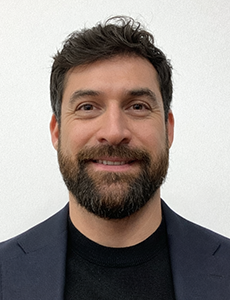
Alonso Tello, Head of Captives, AXA XL
Another approach gaining traction are structured risk solutions (SRS), a hybrid arrangement that combines elements of risk sharing with risk transfer protection. SRS structures help companies achieve larger self-insured retentions while maintaining a safety net against worst-case scenarios.
The mechanics are straightforward but elegant. Rather than requiring a company to fund its full expected losses upfront, SRS spreads the funding obligation across multiple years. The carrier and the company essentially agree on an expected loss amount — say $15 million over three years — and the company funds this amount gradually, typically in equal annual installments.
“If a client expects $15 million of accumulated losses over three years, but they don’t know whether those losses will occur in year one, year two, or year three, they agree to fund $15 million over time — $5 million each year,” Bouteillé explained. “At the end of the three-year period, if the losses were less than $15 million, we return the difference. If losses exceed $15 million, the risk transfer would kick in.”
This structure offers a significant advantage for companies that experience uneven loss patterns. A company might suffer substantial losses in one year and minimal losses in others. Without a structured approach, this volatility forces difficult decisions about cash flow and risk management.
“The client could experience $10 million in losses during year one and zero in years two and three,” Bouteillé noted. “With our structure, they would have a $5 million expense in year one, $5 million in year two, and $5 million in year three, even though they lost $10 million in year one alone. This provides certainty about their expenses if they’re willing to retain some risk.”
Building a Centralized Approach
Recognizing the growing demand and the complexity of some of these risk transfer and retention strategies, AXA XL recently reorganized its operations to create the above-mentioned dedicated Alternative Risk Solutions unit. Rather than spreading expertise across various departments, the company consolidated its captive fronting, structured risk solutions, and group captive operations under one organizational umbrella.
The rationale is practical. When a client begins exploring larger retentions, the conversation naturally evolves across multiple dimensions. Should they establish a captive? Would a structured risk solution be more appropriate? Would a hybrid approach combining both elements make sense?
“Previously, if you accessed a specific underwriter, they might not have enough time or experience to weigh in on the conversation,” Tello said. “Now we can have those conversations with our brokers and clients quite quickly and efficiently.”
This centralized expertise also allows AXA XL to serve as a strategic advisor rather than simply a vendor. The team constantly works on transactions across different sectors and risk profiles, developing insights and solutions that can be adapted and replicated for other clients.
“Insurance innovation doesn’t come from an R&D lab,” Bouteillé said. “It comes from talking to clients, working on transactions, finding solutions, and testing solutions with your clients. When they say, ‘That’s interesting, we could do this,’ you can replicate it if it makes sense.”
Strategic Versus Reactive Risk Decisions
It’s important to note that many companies approach alternative risk solutions reactively, emerging from current market pain rather than from long-term strategy. When casualty rates spike, or when property coverage becomes scarce, companies suddenly become interested in alternatives.
However, the most sophisticated organizations take a more strategic view. Rather than reacting to the market cycle of the moment, they build long-term risk financing strategies designed to stabilize costs and secure capacity across multiple years and multiple lines of business.
“We would like [decision makers] to be more strategic and less transactional, rather than coming to us only when they have a problem,” Bouteillé said. “But the reality is that the vast majority of these deals are dependent on market cycles — specifically, prices and availability of coverage.”
Whether approached strategically or reactively, the underlying principle remains the same: alternative risk solutions allow companies to align their insurance structure with their actual risk appetite and risk management capabilities, rather than conforming to whatever the traditional market provides.
As markets continue to undergo very natural ebbs and flows, and companies seek greater control over their risk management destinies, strategic approaches like the ones that AXA XL advocates are likely to become increasingly central to how sophisticated organizations structure their total risk financing and risk mitigation approach.
To learn more, visit https://axaxl.com/insurance/product-families/structured-risk-solutions.
The information contained herein is intended for informational purposes only. Insurance coverage in any particular case will depend upon the type of policy in effect, the terms, conditions and exclusions in any such policy, and the facts of each unique situation. No representation is made that any specific insurance coverage would apply in the circumstances outlined herein. Please refer to the individual policy forms for specific coverage details.
AXA XL is a division of AXA Group providing products and services through three business groups: AXA XL Insurance, AXA XL Reinsurance and AXA XL Risk Consulting. In the US, the AXA XL insurance companies are: AXA XL Insurance Company Americas, Greenwich Insurance Company, Indian Harbor Insurance Company, XL Insurance America, Inc., XL Specialty Insurance Company and T.H.E. Insurance Company. Not all of the insurers do business in all jurisdictions nor is coverage available in all jurisdictions. Information accurate as of June 2026.


This article was produced by the R&I Brand Studio, a unit of the advertising department of Risk & Insurance, in collaboration with AXA XL. The editorial staff of Risk & Insurance had no role in its preparation.