Newsletters
 Risk Central
 Digital Edition
Sponsored: Munich Re
How Big Projects Are Testing the Limits of Construction Insurance Capacity
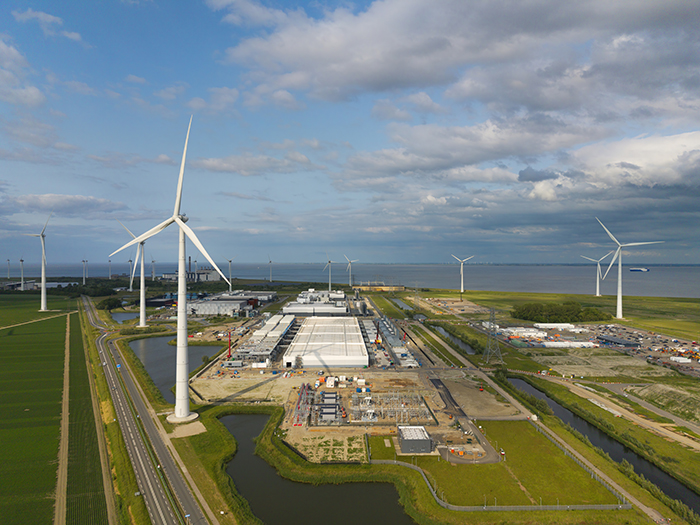
The explosion in data center construction across the United States has created a perplexing set of challenges for the insurance industry. These massive projects, often exceeding multiple billions of dollars in value, are pushing the boundaries of available insurance capacity while introducing new layers of complexity.
“In the area of construction insurance or builders risk insurance, as it’s called in the US market, we’re definitely going through interesting times,” said Esdras Martinez, Property Engineering Underwriter at Munich Re Facultative & Corporate (Munich Re F&C), a business unit of Munich Reinsurance America, Inc. “Data centers are going up across the country everywhere, particularly in the center of the country. These are significant-sized projects with huge fire exposure and high values.”
A New Era of Risk Management Challenges

Esdras Martinez, Property Engineering Underwriter, Munich Re Facultative & Corporate
The scale of modern data center projects has reached unprecedented levels, with individual facilities often representing investments that no single insurance company can handle alone. Martinez noted that Munich Re F&C typically can deploy large capacities of up to $ 250mn, but today’s data centers often far exceed these thresholds.
“These projects cannot be handled by one insurance company,” Martinez explained. “The terms and conditions need to be aligned with multiple insurers, which makes it more challenging for everyone – the client, the broker, and the insurance company.”
What makes these projects particularly challenging isn’t just their size. Data centers are increasingly being built in areas with significant natural catastrophe exposure, particularly in the Midwest where convective storms – combinations of hail and tornado activity – pose substantial risks.
“There are certain projects which have really reached the limit of available capacity in the market, where brokers try to scratch capacity from every corner and still don’t have enough,” Martinez said. “This has been observed with these mega data centers.”
The construction features of data centers add another layer of complexity. Unlike traditional construction projects, data centers often involve phased handovers where portions of the facility become operational while construction continues in other sections. This can create unique challenges for insurance coverage as the project transitions between construction and operational phases.
“You need to understand whether the actual server equipment, which is the core equipment in data centers, is included or excluded,” Martinez noted. “Sometimes it is covered, sometimes it isn’t. There is a need to clarify how it ties in not just with property insurance, but also with installation coverage that might come after the construction insurance.” Ultimately insurance coverage needs to mirror the financing structure.
Time element coverage represents yet another challenge. When companies want to insure not only physical damage during construction but also potential lost revenue from project delays – known as “delay in start-up” coverage – the complexity and financial stakes increase dramatically.
“On top of the size and complexity, there is an enormous time crunch because these companies, often large tech companies in the US, would like to have these facilities finished essentially yesterday,” Martinez said. “Whenever you have a tight timeline to a construction project, you have to be extra careful about how you’re still going to do things the right way despite the rush.”
Communication as the Foundation of Risk Management
Given these mounting complexities, early and transparent communication between project owners, brokers, and insurance companies has become more critical than ever. Martinez emphasized that avoiding surprises is the key to developing appropriate insurance solutions.
“If we know at every given time what the project entails and what the challenges are, we can develop something,” Martinez said. “You can adapt your insurance product. I think the challenge is ensuring sufficient and timely communication. Uncertainty will always be met with less capacity, with less favorable terms for the clients,” Martinez explained. Conversely, “good communication will facilitate carriers to engage in dialogue and tailor solutions to meet the challenges as described above.”
Coverage Misconceptions
Many risk managers also need to understand the limitations of traditional insurance coverage. One of the most common misconceptions involves what triggers coverage under a construction policy.
“With traditional insurance physical damage needs to occur. Something needs to break in order to trigger your insurance,” Martinez emphasized. He noted that project delays caused by supply chain issues, labor shortages, or contract disputes – while potentially costly – do not trigger traditional property coverage unless there is actual physical damage.
“If delivery of equipment is delayed, and nothing has broken or exploded,” Martinez said. “You are going to be late, but that cannot be recovered under the insurance product.”
This understanding is crucial as construction projects face increasing economic pressures. Inflation, labor shortages, supply chain disruptions, and sudden changes in vendor pricing can all add volatility to projects, but many of these risks fall outside traditional insurance coverage.
While many of the reasons for delays remain within the realm of “entrepreneurial risks”, some can be addressed by alternative risk transfer solutions. For example, including products based on parametric triggers linked to major events like natural catastrophes can help mitigate some of these potential risks.
A Comprehensive Approach to Complex Risks
Munich Re F&C addresses these challenges through what Martinez described as a “trifecta” approach combining technical underwriting, risk engineering, and responsive claims handling.
“We implement a technical underwriting approach, which is based on understanding what it is that we are insuring,” Martinez said. “We pride ourselves in asking the right questions, understanding it, having enough experience and enough modeling capabilities to then translate that know-how into a customized insurance product.”
The company’s risk engineering capabilities provide additional value beyond basic risk assessment. When Munich Re F&C sends risk engineers to project sites, they bring a global perspective and best practices from similar projects worldwide.
“Usually, a client appreciates having a risk engineer on-site because the risk engineer has seen many examples across the world,” Martinez noted. “So, it’s a chance for any company to have a bit of an insight on how others in the same space do things according to best practice.”
For data centers specifically, risk engineers focus on critical features like fire protection systems – understanding not just their presence but their effectiveness, timing, and extent of coverage throughout the facility.
The claims component rounds out Munich Re F&C’s approach, providing crucial support when losses do occur. “This is where it gets most interesting and where most clients would see the highest benefit because it also gets emotional,” Martinez said. “What is the response from claims? How fast? What’s the timeliness of the response?”
Martinez emphasized that Munich Re F&C’s claims teams focus on paying the right amount based on the contractual agreement, ensuring clients receive what they purchased while understanding why certain costs may fall outside their coverage.
While the challenges facing data center construction insurance are substantial, they’re not insurmountable. Martinez noted that despite concerns about tornado exposure in the Midwest, where many data centers are being built, the industry has been fortunate so far. “To my knowledge, luckily, not yet,” he said when asked about direct tornado hits on data centers.
“Although these buildings look very solid and massive, the truth is that a direct hit could most likely cause substantial damage according to our modeling,” Martinez warned.
Looking ahead, the demand for data centers shows no signs of slowing. “The demand for data centers seems nearly insatiable, with multiple new projects emerging each week,” Martinez observed. “It’s incredible how many are being planned, and most of them are actually proceeding to construction.”
As this construction boom continues, the insurance industry will need to continue evolving its approaches, building capacity, and working closely with project owners to understand and address the unique risks these facilities present. For companies embarking on these massive projects, early engagement with experienced insurance partners who understand both the technical complexities and the market dynamics will be essential to securing adequate coverage and managing risk effectively.
To learn more about Munich Re F&C’s comprehensive insurance solutions for large-scale construction projects, visit https://www.munichre.com/en/solutions/for-industry-clients/covers-and-services-for-construction-projects.html.
The information presented here is not intended to be legal, underwriting, financial or any other type of professional advice and the recipient should consult with its own counsel or other advisors to verify the accuracy and completeness of any information used, and to determine its applicability to the recipient’s particular circumstances. Any descriptions of coverage are meant to be general in nature and do not include nor are intended to include all of the actual terms, benefits and limitations found in an insurance policy. The insurance policy and not any descriptions or representations made here will form the contract between the insured and insurance company, and governs in all cases. Munich Reinsurance America, Inc. and its affiliates disclaim any and all liability whatsoever resulting from reliance upon this information.


This article was produced by the R&I Brand Studio, a unit of the advertising department of Risk & Insurance, in collaboration with Munich Re. The editorial staff of Risk & Insurance had no role in its preparation.