Newsletters
 Risk Central
 Digital Edition
Sponsored Content by One Call
Extending the Runway: Why Earlier Engagement is the Key to Better DME Outcomes

When an injured worker faces surgery, the road to recovery involves far more than the procedure itself. Discharge planning, ambulatory aids, transportation, language and rehabilitation services all need to align seamlessly for recovery to progress without setbacks. Yet in many claims, coordination of durable medical equipment (DME) doesn’t begin until an order is written — sometimes only a day before surgery.
That reactive posture can leave claims management teams scrambling and injured workers navigating unnecessary friction during an already stressful time. Increasingly, industry leaders are recognizing that one of the greatest opportunities to improve patient satisfaction, outcomes and simultaneously manage costs exists well before the DME order is ever written.
“The greatest opportunity comes from really extending the runway,” said Danielle Flynn, National Product Leader, DME and Home Health at One Call. “DME is a component of a larger treatment plan, but by the time the DME order is written, many key decisions have already been made. When stakeholders can engage earlier, we create more time — more time to anticipate needs, more time to identify and remove barriers, to coordinate care, and to support the injured worker’s recovery before it becomes time sensitive.”
Best Practices: Treat Surgery Approval as the Trigger for Engagement
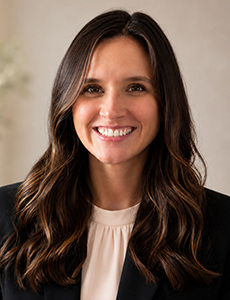
Danielle Flynn, National Product Leader, DME and Home Health, One Call
Rather than waiting for a written DME order, forward-thinking organizations are using surgery approval as the starting point for coordination. The approved procedure itself provides a valuable roadmap of what an injured worker is likely to need throughout recovery.
“A total knee replacement has well-established recovery protocols that help us identify mobility limitations, rehab needs, and support requirements,” Flynn said. “When One Call manages care coordination, we’re able to look at the patient holistically — considering the surgery plan, their goals, their functional work status, co-morbidities, and their home environment — to gain insight into the journey they’re going to take.”
Importantly, earlier engagement isn’t about second-guessing the treating physician. “We don’t want to change the treatment plan because, ultimately, that’s up to the treating provider,” Flynn said. “We just want to align all the right stakeholders around it and stop looking solely at what equipment is going to be needed, focusing instead on what is going to support the injured worker and the claim to recover successfully.”
Best practices include:
- Use surgery approval as a workflow trigger. Engage DME and ancillary partners immediately, rather than waiting for prescriptions.
- Bring stakeholders together early. Claims professionals, nurse case managers, treating providers, and ancillary partners each bring unique expertise. Earlier collaboration means smoother transitions, fewer delays, and less administrative burden.
- Combine clinical insight with product expertise. Evidence-based planning is essential, but so is deep product knowledge. “There are a lot of DME products out there, and they all serve a different purpose with different treatment opportunities,” Flynn said. “When you take the clinical experience, the evidence-based planning, and add the deep product knowledge and bring them together, that’s really when we can make better informed decisions.”
- Consider appropriate alternatives. A rental option may be just as clinically beneficial as a purchase within the expected recovery window — an example of how earlier planning supports both the injured worker and cost management.
The Consequences of Waiting
When coordination doesn’t begin until after a DME order is written, injured workers can still recover successfully, but the margin for adjustment narrows considerably.
“It’s like losing a little bit of runway. You can still take off and reach your destination, but you’re going to have fewer options and maybe less room to adjust along the way,” Flynn said. “You’re essentially shifting from planning DME to executing it.”
The consequences show up across clinical, operational, and financial dimensions:
- Compressed timelines. Teams find themselves reacting quickly rather than planning proactively, increasing the risk of last-minute issues.
- Coordination gaps. Injured workers may be uncertain about who to contact, what to expect, or where their equipment will be delivered — adding stress during a difficult time.
- Fewer financial options. Late engagement limits opportunities to evaluate appropriate alternatives, substitutions, and utilization management strategies.
- Barriers for complex cases. Consider an injured worker in a rural area who needs a wheelchair, home health services, and transportation. If planning doesn’t begin until one day before surgery, there’s far less chance to intervene and get the right services in place.
“Waiting isn’t failure, it’s more of a lost opportunity,” Flynn said. “Advanced planning really gives stakeholders more options to make informed decisions, improve coordination, support a better injured worker experience, and, ultimately, achieve better outcomes.”
Uncertainty and unexpected barriers also directly affect the injured worker’s experience, something the industry increasingly recognizes as tied to recovery outcomes. “Each stakeholder, whether that be a claims professional, case manager, treating doctor, DME partner, or ancillary partner, brings their own perspective and area of expertise,” Flynn said.
“The earlier we get involved, the more communication improves. Transitions become smoother, delays are reduced, and administrative burden is lessened.”
A Proactive Approach in Practice
To illustrate what earlier engagement looks like, Flynn described a hypothetically injured worker (“Susie”) who needs a hip replacement. Because of her clinical profile and limited home support, she’s considered higher risk.
Rather than waiting until after surgery, planning begins before the procedure is even approved. The treating physician, nurse case manager, adjuster, and ancillary partner collaborate early. Together, they identify that inpatient rehabilitation will likely be needed following discharge due to her lack of in-home support.
That early alignment allows discharge planning, equipment, transportation, and rehab services to all be established before surgery takes place.
“We have smooth transitions from hospital to rehab to home, and we don’t have any delays like extended hospital stays,” Flynn said. “Everybody has a part to play, and they’re all working from the same plan. They have the appropriate equipment and services where they need to be at the right time. Recovery can become the focus, not the logistics.”
For the claims organization, the payoff is fewer last-minute issues, smoother transitions, and clearer communication across every stakeholder. “It’s a recovery process that’s coordinated from the very beginning,” Flynn said. “We think that creates greater accountability, strengthens partnerships, and ultimately delivers a better experience for the injured worker.”
Shifting From Reactive to Proactive
Transitioning to a proactive DME strategy doesn’t require a dramatic overhaul. It starts with building workflows around a single trigger: surgery approval.
“Once surgery is approved, don’t wait — engage your partner immediately,” Flynn said. “The earlier we begin planning together, the more opportunities we have to align expectations, identify risks, coordinate services, and develop a recovery strategy tailored to what the injured worker needs.”
While DME is currently a focal point in workers’ compensation, Flynn noted that many post-surgical patients also require additional services beyond equipment — services that benefit from the same early-engagement mindset. With nearly 18 years of experience in the workers’ compensation industry, Flynn emphasized that the goal is to make it simple for stakeholders to engage the moment surgery is approved.
“More collaboration can happen when you have more time,” she said. Extending the runway, it turns out, may be the most practical step organizations can take toward better recoveries, smoother claims, and more sustainable costs.
To learn more, visit www.onecallcm.com.


This article was produced by the R&I Brand Studio, a unit of the advertising department of Risk & Insurance, in collaboration with One Call. The editorial staff of Risk & Insurance had no role in its preparation.