 Newsletters
 Risk Central
 Digital Edition
Carisk’s Nathan Scoggin on Value-Based Care
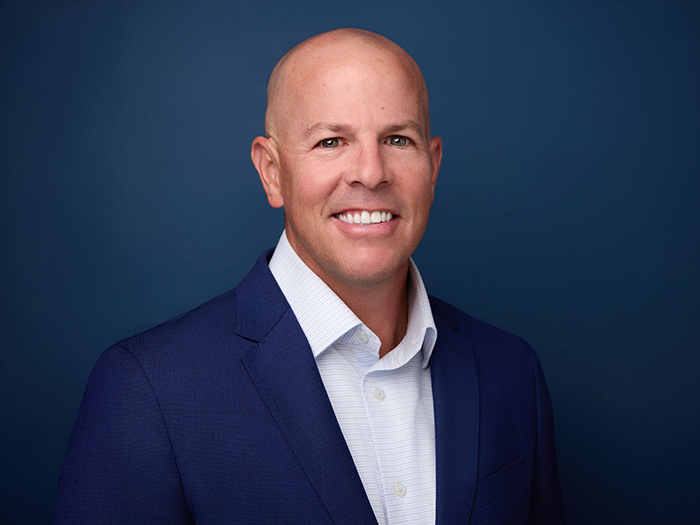
While at the National Comp conference in Las Vegas in late September, Dan Reynolds, editor in chief of Risk & Insurance, caught up with Nathan Scoggin, chief product and strategy officer for Carisk Partners. What follows is a transcript of that discussion, edited for length and clarity.
Risk & Insurance: Thanks for your time Nathan and nice to meet you. Our conversation today centers on value-based care. How would you define value-based care?
Nathan Scoggin: Nice to meet you, Dan. Simply put, value-based care is a version of health care delivery that pays for clinical and financial results versus volume. These arrangements typically include shared goals between providers and payers that focus on the total cost of care and improving clinical outcomes during a performance period when compared to previous years. And importantly, there is often an element of financial risk involved that allows providers to share a portion of the savings they generate for the payer.
These models empower providers and value-based care managers to truly focus on delivering the most efficient and effective clinical services to either an individual or a population of patients that they’ve taken responsibility for.
R&I: What is the role of data analytics in delivering value-based care outcomes?
NS: Data is really the foundation of all value-based care programs. Evaluating a value-based care program requires setting financial benchmarks, assessing provider networks and utilization, and measuring clinical outcomes. All of this relies on sophisticated analytic processes that can make or break a program.
R&I: How long has VBC been in play in general healthcare?
NS: Several versions of these programs have been introduced by CMMI, and you must give CMS a lot of credit for continuing to stick with these programs to let the enterprises try to solve these problems. CMMI’s goal is to have 100% Traditional Medicare beneficiaries in an accountable care relationship by 2030. The commitment from the federal government is there, and the VBC market is growing to support it.
R&I: What is the current state of value-based care in workers’ compensation?
NS: It’s limited. There are very few companies doing anything truly value-based, where there are risk arrangements that are centered on clinical requirements and financial targets with a patient sitting at the center—I’m proud to say that Carisk is leading the way.
I would say that Carisk may be the only fully committed entity because not only do we commit to a clinical outcome, but we take downside risk with a committed margin cap. Our windfall protection program truly aligns us with our clients by refunding excessive profits and puts us at risk for any cost beyond our original contract price. We’re truly at risk for each one of these claims.
What’s encouraging is that there are a lot of common threads between what’s happening in the value-based care space over the past few years and what we have as foundational pieces of the workers’ comp system.
VBC providers typically have either PCP’s, specialists, or care managers advocating for patients who are navigating the healthcare system. In workers’ comp, the claims manager, supported by an ecosystem of specialty vendors, supports and guides the patient through the treatment plan.
Where VBC providers have financial benchmarks and clinical outcome requirements to align to, in workers’ comp, we have fee schedules and claim closure expectations.
What’s missing in workers’ comp is generally the willingness to allocate clinical and financial responsibility at either a population or condition level. Efforts to move in this direction with surgical bundle programs are still evolving, and we’ll see how they perform over time. It takes significant pressure to drive the cost of care down and a sophisticated ecosystem of payers and vendors to successfully execute these value-based care models.
R&I: Is that one of the reasons why the progress and traction in workers’ comp has not been as substantial as expected?
NS: I think it will take a large and willing partner on the client side to lead WC into VBC. There are probably five to 10 entities in comp that could lead the way, given the size of their patient populations.
I think there are several VBC vendors who can translate their value propositions into the workers’ comp space. They’d have to do some work to transform pieces of their workflow into the requirements of the claims management process, but hopefully we’ll see steps in that direction.
R&I: How does provider selection and management work within value-based care arrangements?
NS: You have to think about not just the selection of the provider but, more importantly, the selection of the clinical service. In a VBC environment, you’re forced to be disciplined about treatment plan design — which clinical services are necessary, which providers should be delivering those services, in what site of care, how often, and for what price. This is especially true when it comes to surgical services.
R&I: How realistic is the hope that value-based care can help control health care costs for employers in the context of workers’ compensation claims?
NS: It will require real commitment from employers and carriers. The challenge that employers face, particularly when talking to HR decision makers outside of workers’ comp, is that they’re providing healthcare benefits to employees whose experience they really need to care about.
It’s challenging for them to get too involved in the health care delivery component unless a patient issue arises. So it’s really more about the availability of benefits than the forcing mechanism of using all of these services in a meaningful way.
We have that forcing mechanism in comp through direction of care and other regulatory elements that empower vendors like us to support patients in meaningful ways. I think there’s some will that’s required. Loss ratios may need to change a little bit to create the fire that’s required to really drive down the cost of care.
I believe there’s a lot of opportunity in workers’ comp, but it will take the buying community to force that change.
R&I: Is there anything else on this topic that we haven’t covered?
NS: By and large, in workers’ comp, we’re often the beneficiaries of innovations being pushed down to us by the federal government. It’s our job to take the best of those things that are happening and find ways to filter them into workers’ comp in a way that comp carriers, employers, and TPAs can benefit from. &