Newsletters
 Risk Central
 Digital Edition
Beyond the Buzzwords: CorVel’s Jason Wheeler on AI’s Real Role in Workers’ Compensation
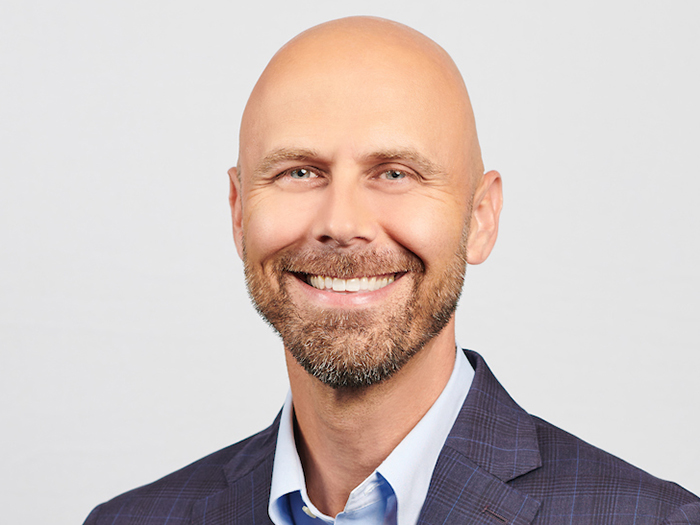
As artificial intelligence reshapes industry conversations, the workers’ compensation sector faces a critical question: How can organizations harness AI’s potential while maintaining the human connection essential to claims resolution?
Jason Wheeler, vice president of sales and account management at CorVel, believes the answer lies in partnership and in taking time to teach AI systems what success looks like.
With 400,000 insurance professionals expected to age out in the next 10-15 years, Wheeler argues that 2026 will be pivotal: organizations that slow down to build proper foundations will ultimately move faster than those chasing first-to-market status.
At the heart of his vision is a simple metric: whether injured workers feel cared for, not just processed.
Michelle Kerr, workers’ comp editor of Risk & Insurance, caught up with Wheeler in late 2025. What follows is a transcript of their discussion edited for length and clarity.
Risk & Insurance: We’re all talking about having AI as a partner. What should that look like in practice?
Jason Wheeler: When I think about AI, two words come to mind: acceleration and synthesis. Rather than replacing thought, which is a common concern, it’s really about accelerating thought. Synthesis is taking massive amounts of information to arrive at clearer insights and better outcomes.
But for the industry to fully benefit from AI, we need to understand what it means to “introduce ourselves” to it. In the context of business and claims, to be successful, we have to teach that system our workflows, our goals, what good looks like. If we skip that foundational step, I don’t think AI is really going to reach its potential.
I used to be a claims person myself, and it’s a heavy administrative job. The beauty of what we’re seeing now is that we can take a lot of that off the adjuster’s plate by summarizing and organizing documents, removing menial tasks, and surfacing that next best action. That frees up adjusters to do the part of the job that only humans can do well: listening, guiding, and building trust with injured workers.
By 2026, the teams that win will be the ones who slow down long enough to teach the systems what “good” looks like, and then let AI accelerate the work.
R&I: Once AI changes the nature of the job, what are we going to see in terms of talent recruitment and development?
JW: We’ve all heard about the aging workforce, “the silver tsunami”. The numbers I’ve seen project around 400,000 people aging out of the insurance industry in the next 10 to 15 years. And specifically in claims, we’re not replacing them fast enough. We’re not seeing the same volume coming out of four-year colleges anymore. Risk management programs aren’t really bolstering claims as a career like they used to, so we’re having to find them in different ways.
We believe talent development is our first responsibility. That’s why we built CorVel University. It’s both a training program and recruitment tool. We’re looking at two-year schools, former teachers, police officers. We find the people who have the core skills for what it takes to be a claims professional, who care for others, and fit our culture. We’ve been doing this for over two years now and we’re seeing a 90% retention rate.
We bring in people for a week in our Irvine, California office, then several weeks virtual with trainers, with continued follow-up over the next four to six months. People want opportunities to learn, grow, contribute, and to be recognized. It’s really giving them a clear pathway with clarity, especially for younger folks, they want to know what it’s going to take to get where they want to go.
R&I: Even though everybody says the best claim is the one that never happens, we’re still focused on claims as our metric rather than injuries prevented. What needs to change?
JW: The more data becomes actionable, the more it opens the door for better prevention. The best time to work on a claim is actually before it happens. We’re doing that by helping our clients better understand their program so they can focus on safety and prevention in ways they haven’t before.
The real shift is employers creating a culture where safety is a priority that’s recognized, celebrated and supported with accountability. You measure the wins you never see and give credit for the injuries that don’t happen. It’s also about moving from hindsight to real-time, so leaders can act before an injury happens. When employers build that kind of culture, prevention stops being a buzzword and starts showing up in the results.
R&I: What sort of guardrails are going to be most important as employers adopt AI?
JW: We were the first TPA to have a functioning AI module summarizing medical documents. There was anxiety about data and security, but people are getting more comfortable.
The only way to keep trust is to be straightforward about what AI can do and what it can’t. In terms of guardrails, it starts with clarity on the data, where it comes from, how we use it, and what decisions it will never make on its own. The second piece is human oversight. AI can accelerate, but people still own the judgment. That line cannot get fuzzy. When the process is clean, the output is clean, and the trust grows.
Regulation typically lags. Our industry has to set the standard early, communicate early, and show our work. If we do that, trust becomes a strength instead of something we risk losing.
R&I: What advice would you give employers as they begin adopting AI? Where do you see them stumble?
JW: Organizations stumble if they treat AI like a side project. You can’t bolt it on and hope for the best. It has to be built into the workflow.
My advice: pick a process, master it, then scale it. Trying to modernize everything at once creates confusion. Take one workflow, plug in AI, measure the changes, lock in the steps, and build a blueprint you can apply across the whole business. Build momentum instead of chaos. AI doesn’t fail because the technology’s bad. It fails because leaders skip the part where they slow down and actually teach the system what good really looks like.
R&I: If we’re having this conversation at the end of 2026, what would you expect will have changed?
JW: I think the worker should feel like they’re seen, not just a claim. I’m kind of a fundamentals guy. You have a human being whose life has been disrupted by some type of injury, and it’s our job to minimize it.
When done right, AI and human partnership, the experience for that injured person should be: everything gets faster and delays start to disappear. It becomes more predictable, where they understand what’s happening and what comes next. There’s less confusion, which ultimately leads to reduced litigation. And it becomes more human. The time we save on administration gets invested in real relationships and empathy and support.
You can measure it by litigation rates, if we’re seeing litigation rates slowly creep down, that’s a reflection of taking care of people and providing a better experience. Fewer attorneys involved, less turnover, fewer complex claims, stronger safety culture, higher trust.
But the standard we all have to work for is a worker that feels cared for. Everything else is just noise. &