Newsletters
 Risk Central
 Digital Edition
8 Questions for Philadelphia Insurance Companies’ Scott Bayer
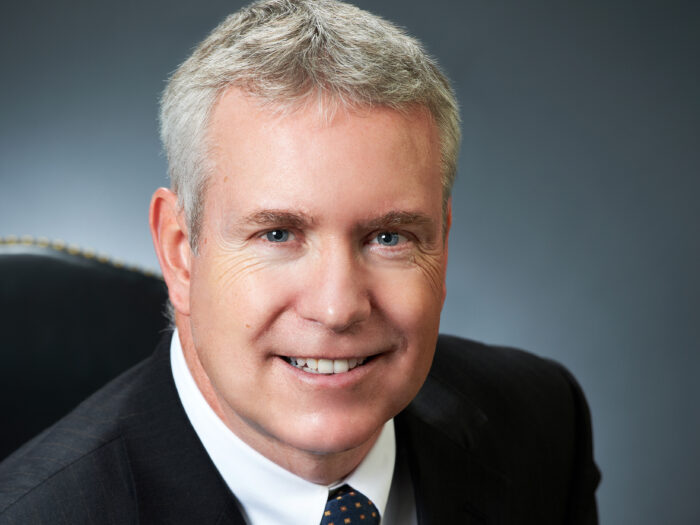
In early December, Dan Reynolds, editor-in-chief of Risk & Insurance, caught up with Scott Bayer, senior vice president for E&S Insurance Solutions with Philadelphia Insurance Companies. What follows is a transcript of that discussion, edited for length and clarity.
Risk & Insurance: Scott, you have been in the E&S space for a long time. What has watching this tremendous growth in the space meant to you as a professional?
Scott Bayer: It’s been incredible. When I started in 1990 in the E&S space, it was about a $2.5 billion industry out of roughly $200 billion for the entire P&C industry at the time. Now it’s in excess of $100 billion. So it’s no longer this small niche player — it’s much larger and the product offering is tremendous.
If you look at the E&S companies back then, many companies were not known to retail agents or insurers. The company I worked for was owned by one of the largest reinsurers in the world, and I had to go into an agent’s office and explain who we were, who we were owned by, what our name was. They’d never heard of us.
Today, some of the companies or groups are so large and well-known and provide an enormous amount of financial security. When I walk into an agent’s office with PHLY, people understand who Philadelphia Insurance Companies is, that it’s a Tokio Marine company, what the financial security attached to that is, and they see us in the marketplace. There’s no more justifying who you are and what you do. People know who you are, see you in the newspaper, and understand your financial security. It’s so much more widely known, accepted, and becoming more mainstream.
I remember when I started, E&S was really providing products that no one else wanted. It was a true market of last resort. When you look at it today, and you look at some of the offerings within the industry, it goes from very light to very moderate to extreme, and it covers the full spectrum of what a risk is. I’ve seen everything from small package business to extremely difficult pharmaceutical or aeronautical equipment. What it covers now versus what it did back then — where it was really just tougher business that nobody else wanted — is night and day.
Today, it’s much more widely accepted across the industry. And agents no longer have that aversion to E&S. Before, it was “I want to place this with any other company other than an E&S company.” That aversion has gone away with the security and strength of the companies behind the industry.
R&I: With market volatility and market changes, how does business that might have been considered a standard lines solution find its way into E&S?
SB: If you look at the freedom of form and rate that E&S has, and the ability to move quickly, it helps tremendously with market offerings and opportunities at any given time. Because we’re not relying on states to get back to us with filings or compliance issues, it makes it significantly easier to work, to move, to fluctuate, and to basically absorb new exposures or change with an existing exposure in ways that a standard market can’t. It’s been tremendous, and it’s why I like the industry so much.
It’s why I’ve stuck with it for 35 years. When I started 35 years ago, I didn’t understand at the time, but people would tell me, “Oh, once you start this, you never want to leave. You never want to do that standard market business again.” And I didn’t know what they were talking about.
I was 25 years old. I barely understood what insurance meant at the time, but I get it now. What I’ve done in the last 35 years has been enjoyable, and I continuously speak to younger people as they get into this industry, telling them that they should look at this part of it because it’s fun and exciting.
R&I: There’s been a lot of change in the workforce over the past five years. From your perspective as a veteran working to develop younger talent, how are remote and hybrid work arrangements affecting talent development?
SB: It’s strange to me. For years and years, I was always the youngest guy in the room. And somehow or another, I became that veteran you mentioned.
When I look back to when I started, there was no Internet. We didn’t have computers. So how did you learn to underwrite? I started my career with Aetna, and they still had school training. They made you train for a year before they let you underwrite an account, and that was a tremendous foundation.
However, when I think about how I really learned E&S underwriting, it’s a different animal. What I took from that experience was learning the thought process. And what I did was basically learn from others around me. I was lucky enough to sit on a floor with six or seven other underwriters, many very experienced, and I would listen to phone calls. I would listen to referrals, and I would listen to discussions. I would go out to lunch or dinner with agents and underwriters and learn from them what to do and, to be honest, what not to do. There were a number of conversations where I heard something and thought, “Alright, I’ve learned what not to do there, and what to do if that should ever cross my desk.”
So in today’s hybrid environment, my concern is: what kind of exposure are younger underwriters getting day to day? What kind of conversations are they overhearing? Because looking back, I learned so much from those around me.
At one of the companies I used to work for, we would sit in a room and triage files. In the days when there was paper, we’d walk into a conference room with numerous files and talk about them, discuss them, and basically come out with piles of non-opportunities and opportunities. I learned tremendously from that — what to do, what not to do — from the experience within the room. When you’re working on a computer remotely or hybrid, my concern is: are we sharing enough from the veterans to the newer underwriters about what to do and what not to do?
Now granted, exposures are changing daily. So sometimes, while I like to say I don’t know everything, I learn a lot from the newer underwriters who understand more than I do, especially on technology. So it goes both ways. I won’t say they’re going to learn everything from us. We’re going to learn from them as well.
There has to be an emphasis when people are together that they’re sharing that information openly and not holding back, making sure that those conversations are taking place. Because if they’re not, we’re going to let things drop, and the industry will be in trouble for that.
R&I: Do you think younger underwriters are getting enough training, or are we looking at a serious knowledge gap?
SB: There are two ways to look at it. If you look at informal training — the part of the day when a risk crosses an underwriter’s desk and discussions take place, exposures are analyzed, and marketing is discussed — that tends to be more of an issue in a hybrid work environment. However, when you look at technical training, PHLY is very much a leader in this category. In the technical part, we’re providing newer underwriters with a tremendous amount of leadership training, daily technical training, and financial training that was not available early in my career.
Early in my career, I was lucky enough to get trained day one through that first year. However, I did not see training again until I switched employers. Today, we don’t leave underwriters out on an island. We allow them to have access to additional training to further their career and their understanding, because we understand that if an underwriter understands the bigger part of the industry — the metrics involved, the results, what drives those results — they’re able to transform that to what is on their desk.
That makes decision-making a little bit easier. That makes understanding a little bit easier. So we’re definitely pushing that out within PHLY, giving new managers training, allowing people to hone their leadership skills and develop as junior executives within the company.
What we’re talking about with the hybrid environment is more the concern with daily underwriting and communicating there, and that’s a changing world. I think some things may get dropped over time, but what we’re gaining by providing more technical and formal training will probably dwarf that. We’re probably going to lose a little bit on the hybrid environment side.
R&I: As E&S has evolved and become better understood by agents, are there certain types of risks that E&S will essentially own where standard markets really can’t compete?
SB: New exposures, new risks, things that standard markets are unable to perform a filing or really build a rate around — those will always come into the E&S market first.
A perfect example is cyber, which really kind of settled in the E&S market until we had enough data. The metrics basically were behind the filings of rate and form, so that they could move that over to admitted. So you’ll always see E&S as a petri dish for those new exposures.
However, there are some exposures that never move. If I look back from when I underwrote back in the day, residential construction, new construction, transportation, some difficult products like that — obviously, some of the heavier property coverages — they never fall within that standard market comfort level of risk. They tend not to move out of the E&S market.
So the E&S market retains those, but it also grabs those new exposures. It grabs some more of that mainstream exposure as well that stays in this market just for ease of doing business. As I mentioned earlier, where before it was kind of the worst of the worst, E&S is much more expanded now. You see those three segments kind of building upon what it is today and what it will be tomorrow and growing even larger.
R&I: Technology gets a lot of attention, particularly AI. What platforms and technologies are E&S carriers employing to help clients mitigate and manage risk effectively?
SB: If you look at the AI universe and what it is now, it’s helping companies — E&S companies especially — be much more efficient in what they’re looking at. It doesn’t directly mitigate risk, but we’re seeing companies become much more honed in on what they do versus wasting time. That’s a big part of it.
If you look at exactly mitigating risk, I have two examples of what PHLY does with respect to risk management. One product we have is called PHLYSENSE, which is a property monitoring solution with real-time alerts when water is detected or temperature reaches a certain level. In the days of freezing pipes, that is so important. PHLYSENSE is a tremendous tool for mitigating risk and keeping losses from happening, and it helps the overall insured.
Another platform that PHLY has is PHLYTRAC, which helps us on the auto side. It’s a GPS telematics solution that collects driver behavior data such as speeding, hard braking, and sudden acceleration. There’s a tremendous amount of information available to the insured to allow them to mitigate their losses. Fleets with PHLYTRAC have seen a 19% reduction in loss frequency. So, there are many different ways for technology to help mitigate loss that weren’t available way back when.
As I look back at my career, not to make a joke, but I sat next to another underwriter, and there was a computer next to us that neither one of us knew what it did. Once in a while, we would turn it on, look at it, and then turn it off again.
But the technology today is exceptional on the front end and the back end. On the front end, it helps carriers, wholesalers, and retailers really hone in on what they do, limit wasted time and improve efficiency. On the back end, it helps mitigate risk.
When I look at risk management in general and talk about mitigating risk, this sounds a little cliché, but I think it improves society. You could say insurers make more money and insureds save some money, but what is it really doing? It’s making us safer. Property loss or liability loss involves something being damaged or people getting hurt, and if we’re able to slow that down somewhat, it’s making the world a better place. I don’t want to put this in risk managers’ heads and inflate them anymore, but I think it really helps all of us create a better society. It really trickles down.
R&I: In the E&S space, do internal risk management departments work in conjunction with underwriting teams?
SB: Definitely. If I look at risk management within PHLY, I’ve been here 13 years, and the expansion and benefit of risk management has really exploded. We have representation in that department across the country with daily interaction with agents, insureds, and wholesalers that help mitigate risk and really help us sell the insurance because it shows the value they provide on a daily basis. It’s tremendous what they’re able to provide.
If I look back at the beginning of my career, risk management and E&S were two different silos. Nobody really talked about risk management with E&S because it was looked at as an industry that really just controlled risk through form and rate. Now we don’t want that to happen. We want to work in conjunction with the insured to make the account a better account. We’re not looking to rent the business for a couple of years and have them move back to the standard market. We’re looking to work with the insured to make sure that we have a good relationship, that we help mitigate their risk, that we build rapport over time, and that it stays with us for a long time.
It’s much different than 20 or 30 years ago when E&S would rent businesses for a couple of years before it went back to the standard markets. We’re able to provide a lot more service to the insureds that really benefits their risk and improves the relationship over time.
R&I: Is there anything else about E&S and its evolution that’s important for readers to understand?
SB: The big thing is just how mainstream it’s become and how acceptable it is now. I’m always amazed. I was at the Wholesale & Specialty Insurance Association (WSIA) convention — if you ever go to those things, they’ve gotten incredibly large. I think the first one I went to had like 200 people, and now it’s almost 10,000 people. And the amount of product that is available in the E&S industry is just mind-boggling.
For someone who’s been doing it for so long and had to fight for the industry early on, to see how well accepted it is — it’s great to see. It really provides a great future for many people, including a lot of underwriters in this industry. &